Should You Judge a Cover by the Book?

Should You Judge a Cover by the Book?

A deep dive into why the aesthetics of a book cover shape our reading experience — and whether that judgement is fair.

Read More Buy Now

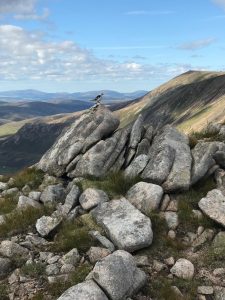
Lament for Eilidh MacLeod

Back in Scotland, on a visit to a friend in her 70s, She talked about two girls from Barra Who were caught up in the Manchester bombing She thought of…

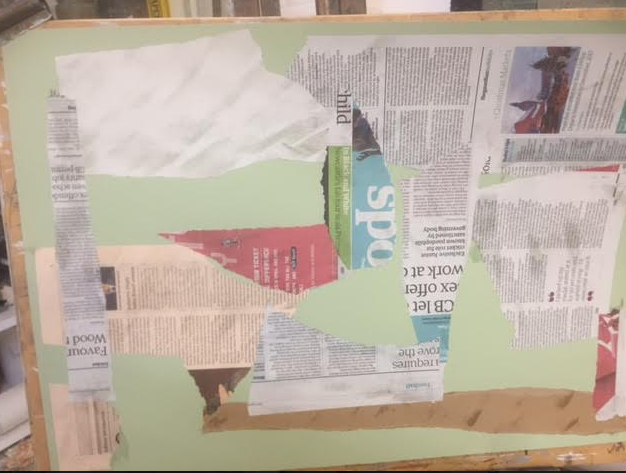
Finding Art in the News.

Finding Art in the News.

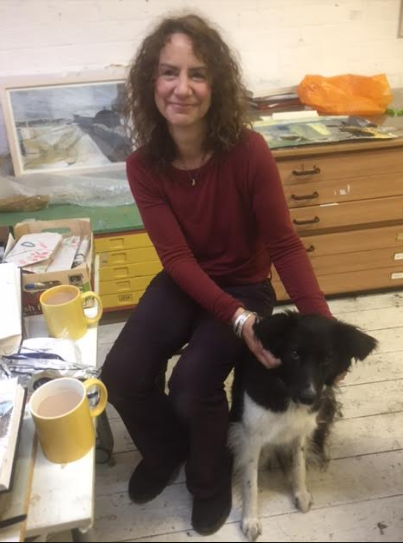
Real newspapers can be used for many things that their digital counterparts never could – from lining the veg box to making paper boats and beyond. Artist Jane Couroussopoulos finds a novel use for the pile of old Guardians she keeps in her studio, turning them into works of art.


Jane and Poppy in the studio.

A Visit to the Doctor: Why American Health Care is Sick

American health care is a racket run by scammers who prey on the sick and the worried. Its health professionals behave like escorts in a hostess bar, prompting drunk punters to order the most expensive drinks, knowing they will get a portion of the proceeds. It is a fundamentally dishonest system, heartless and duplicitous. But as well as its immoral base, it is bankrupting America where health spending is heading for one pound in every five of economic activity. My personal experience is trivial but salutary. This morning I received two bills for seeking medical help, totalling $600. As a freelance content creator this is a sum that in itself will cause stress. I am kicking myself for going near the doctor in the first place. It turned out that what was ailing me would get better by itself – which it did, within a week. 

Brexit is an immediate threat: – Remainers should vote SNP; Indyref 2 is a battle for another day.

Every democratic election is a choice, to a certain extent, between the bad and the worse. In that sense, it is much like life. There is seldom a perfect option. And every voter who takes pencil in hand in the privacy of the polling booth will assess the issues, compromise on some and prioritise others.

In the First Past the Post Westminster election, we also vote for – or against – an individual whose name appears on the ballot. It seems likely that across the UK on Thursday night some big names will lose their seats and be subjected to the kind of ritual humiliation by media that goes with the job of MP these days. Alex Salmond and Angus Robertson may be among them.

I am not a nationalist but I will be voting SNP. More specifically, I will vote for Tommy Sheppard in Edinburgh East. Sheppard seems to be a man who takes an international view, not a narrow nationalist one. But my decision is based on his party’s strong pro-EU stance. In the event of a hung Parliament – unlikely though that may be  – the SNP would be a voice for staying in the single market, the customs union, for freedom of movement.

Rowling, Kuenssberg Enter Rape Clause Debate – But Low Response From England.

UJK Rowling made an influential contribution to the debate on the so-called “rape clause’  by tweeting about it this week to her ten million followers. And BBC journalist Laura Kuenssberg came in for criticism for a tweet accusing the SNP of trying to make political capital out of it. But despite the social media interest, the issue doesn’t seem to have the same traction in England as it does in Scotland. A petition calling for a debate in Westminster has attracted few signatures south of the border, in contrast to an impassioned debate at Holyrood, where all four main parties except the Conservatives oppose it.

The Scottish Economy – Could it Survive as an Independent Country?

The debate about the Scottish economy centres largely on GERS which looks at public expenditure – the taxes raised in Scotland and the government spending. These suggest an independent Scotland would have a massive deficit.

This reflects the fact that Scotland has a shrunken private sector. Scotland has a very big public sector and those people are paid, of course, with money that has to be raised from taxation. So if Scotland were to have a sustainable future as an independent country, it would have to expand its private sector and create more profitable businesses.

The SNP and 50 Years of Parliamentary Democracy, some dramatic moments.

November 2017 marks the 50th anniversary of Winnie Ewing’s election as the first SNP MP. Here is the late Arnold Kemp’s account of some of the history of the SNP in Parliament after that iconic moment. (Excerpted from “The Hollow Drum” and the anthology of his journalism “Confusion to our Enemies” )

The devolution years really began for me in 1967. It was after midnight and on the Scotsman we were holding the Glasgow edition for the result of the Hamilton by-election. Seconds after the declaration – a stunning victory for the SNP candidate Mrs Winifred Ewing over Labour – David Bradford, one of the political editors, came on the line and bawled out the intro which I took down in longhand and sent to the composing room. I can remember that it began with the phrase, ‘The rising tide of Scottish nationalism …’ and it expressed the mood of excitement. Mrs Ewing, though she lost the seat later, launched the SNP into the stratosphere of concentrated London media attention and from her victory is often traced the party’s modern prominence.

The Brief: Three Reasons Why Brexit Means the Break-Up of the UK

Talking to English friends recently, it has become apparent to me that they don’t really think that the United Kingdom is in the process of breaking up as a result of Brexit. It will all blow over, they insist, when everyone realises what a great success Brexit is. Things will unfold like England after the Reformation – sure there were difficult times, some beheadings. A massive land grab by the aristocracy. Bloody Mary. But then it all came good under Elizabeth 1. And that is how it will be again. But my perspective as a Scot is pretty clear. Brexit spells the end of the UK. Here’s why:

1 Northern Ireland

Northern Ireland voted to remain in the European Union. So a UK-wide Brexit would mean that for the convenience of the English, Ireland and the European Union would be expected to undertake the trouble and expense of enforcing a border across 300 miles of the island of Ireland. Fuck that for a game of soldiers.

How Le Monde Sees Brexit and the Scottish Referendum

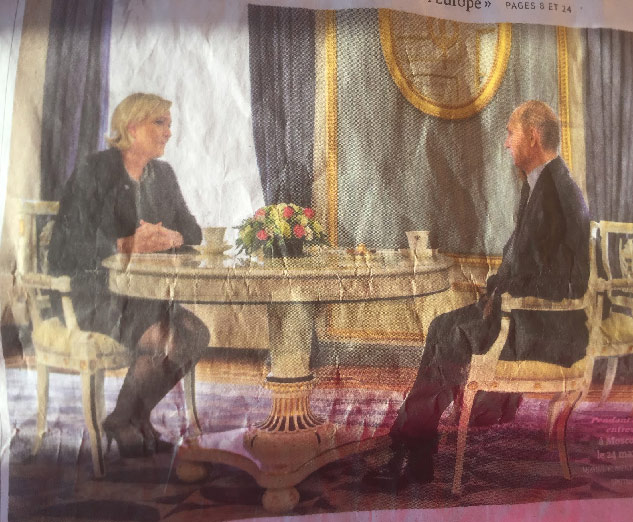
The week that ‘Article 30’ was triggered by Nicola Sturgeon and ‘Article 50’ was triggered by Theresa May’s letter, I was in France and over a cafe creme each morning, read about it all in Le Monde. This great European newspaper with its painstaking reportage and thoughtful opinion; sophisticated use of photography, and broad agenda of international news, illuminated the situation and it is always interesting to see oursels as ithers see us, as the poet said.

At their meeting in Glasgow, May said to Sturgeon about the referendum call: “Ce n’est pas le bon moment.” Some things just sound better in French. In English her: “Now is not the time,” has a rather nanny-ish ring, it’s one of those circular phrases that May likes. I can imagine a character saying this in Alice In Wonderland and the White Rabbit replying, irritated, looking at his watch: “The time is always now, don’t you know anything?” But “Ce n’est pas le bon moment,” sounds faintly desperate. It reminds me of the Jacques Brel classic “Ne me quitte pas,” with its lines “Oublier le temps..et le temps perdu” (Forget the time and the time that’s past). This song, of course, would also do as a soundtrack for Brexit.

A Thought for the Day the Scottish Parliament Votes for a New Independence Referendum

(Below this piece is a response from Bob Tait, in which he recounts being called a “rootless cosmpolitan” by the poet Hugh MacDiarmid.)

Recently, listening to Radio Four’s ‘Thought for the Day’, a programme that is intended for a moment of religiously-inspired reflection in the morning news cycle, I heard the Reverend Giles Fraser denouncing “rootless cosmopolitans’.I was surprised and horrified as to me this phrase connotes ‘Jews’. It has a history – the ideological separation of non-ethnic Germans from the rest of the population by the Nazi regime.

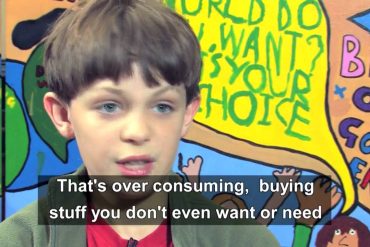
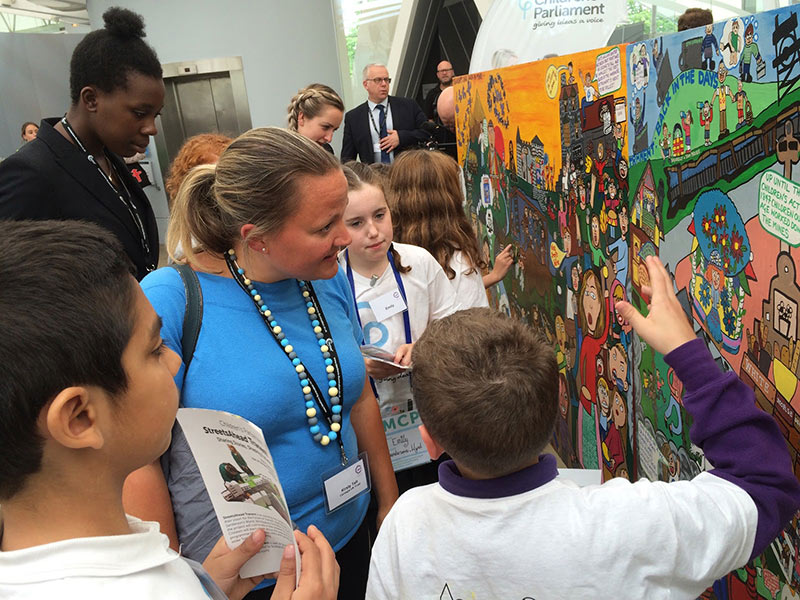
Children tell the Scottish Cabinet what they want.

Children’s Parliament Imagineers show off their mural.

On a recent afternoon, as a weak Spring sun shone over Edinburgh’s Charlotte Square picking out crocuses in the square’s central garden, the door of  Bute House  – official residence of Scotland’s First Minister – opened and a group emerged from a lengthy consultation with the Scottish Cabinet. They huddled together on the steps, reporting to an accompanying cameraman about the event. But as they did so they began to hop around and skip up and down the steps in a manner most unusual for the dignitaries who generally emerge from discussing affairs of state there.

These delegates were all primary school children –  a small group from the Children’s Parliament (CP) which had come to talk to Nicola Sturgeon and Education Minister John Swinney, as well as other members of the Cabinet and Scottish Government officials about what is important to children in Scotland today.

Stupid and hardworking is the most dangerous kind of leader.

A week has passed since the inauguration – a busy one indeed for President Trump, who has attempted to reverse the previous administration’s policy on health care, the environment, trade, immigration, national security and housing. It set me trying to remember the old Army saying about the different types of army officers

There are four characteristics, clever, stupid, hard-working,lazy. Every officer has two. “The clever and lazy you make Chief of Staff, because he will not try to do everybody else’s work, and will always have time to think. The clever and industrious you make his deputy. The stupid and lazy you put into a line battalion, and kick him into doing a job of work. The stupid and industrious you must get rid of at once, because he is a national danger.” From Hansard in 1942, reporting a debate in the House of Lords. According to a site called “Quote Investigator”, It’s based on an article quoting a German general in a British magazine, the Army, Navy & Air Force Gazette from 1933.

Bookshops of Boston 1: Commonwealth Books

Bookshops of Boston 1: Commonwealth Books

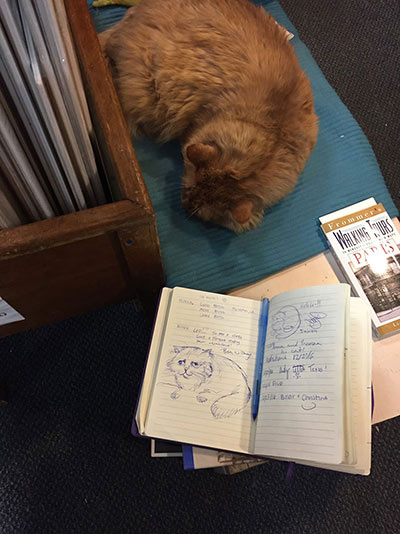
Leo perusing the shelves of Commonwealth Books

Will bookshops survive the digital revolution? Perhaps some of them may. There is a special pleasure in reading on paper, browsing real books, picking them up and gathering in a moment a sense of their heft and gravitas. This January, among other things, I plan to read more, and to read more weirdly and widely, rambling without the direction or the cognisance of algorithms.

So on a snowy Sunday afternoon shopping for dull household items in Boston’s January sales, my feet turned as they often do towards the alley that houses Commonwealth Books. It’s a fascinating second-hand bookstore which is also the residence of a large ginger cat named Leo. Leo reminds me of a real-life version of the fictional ‘Bagpuss’, a shop-dwelling cloth cat whose magical adventure were narrated by Oliver Postgate on the BBC when I was a child.

From the battle for the White House to the pitch invasion at Hampden, ten most-read blogs of 2016.

Photo: Rob Bruce

I read somewhere that the character of a century is revealed half way through the second decade: – 1914 outbreak of WW1 and we know the rest, Versailles leading inexorably to the rise of Hitler; 1815 the Congress of Vienna brings a negotiated end to the Napoleonic wars and a decision to end the slave trade; 1713 Treaty of Utrecht establishes the Peace of Utrecht; 1618, beginning of the 30 Years War; 1517, Martin Luther nails his 95 theses to the door of a German church and the Reformation rolls out.