
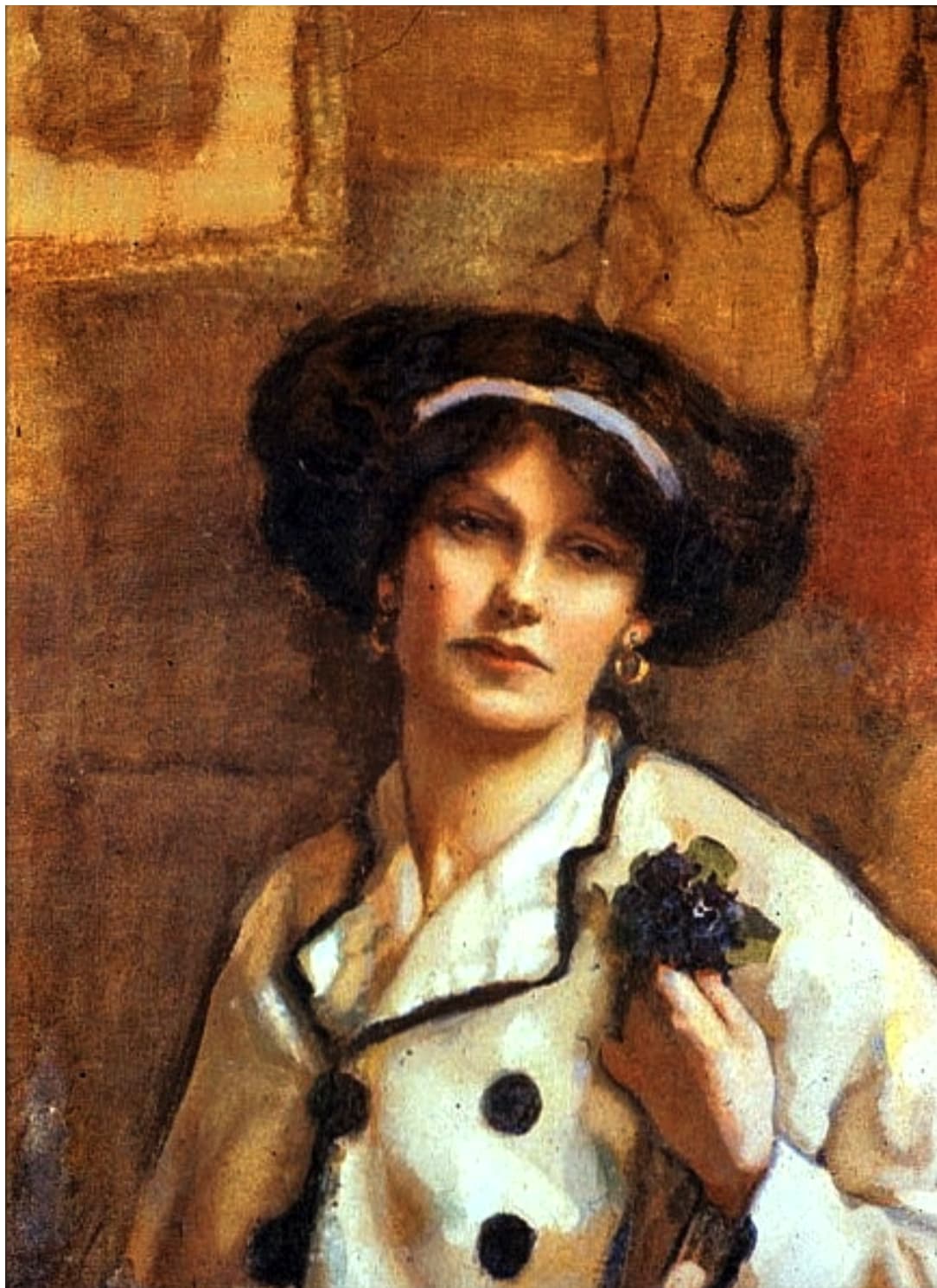
After visiting the National Gallery of Scotland last week, one of my young associates asked what I knew of Norah Neilson Gray, to whom we are distantly related.
I know that my late father, Arnold Kemp, thought her work was underappreciated. Perhaps that is changing. One of Gray’s portraits, Golden Eyes, was recently acquired by the Milwaukee Art Museum and now hangs in their Impressionism Gallery. (Art expert Rupert Maas discusses it here).
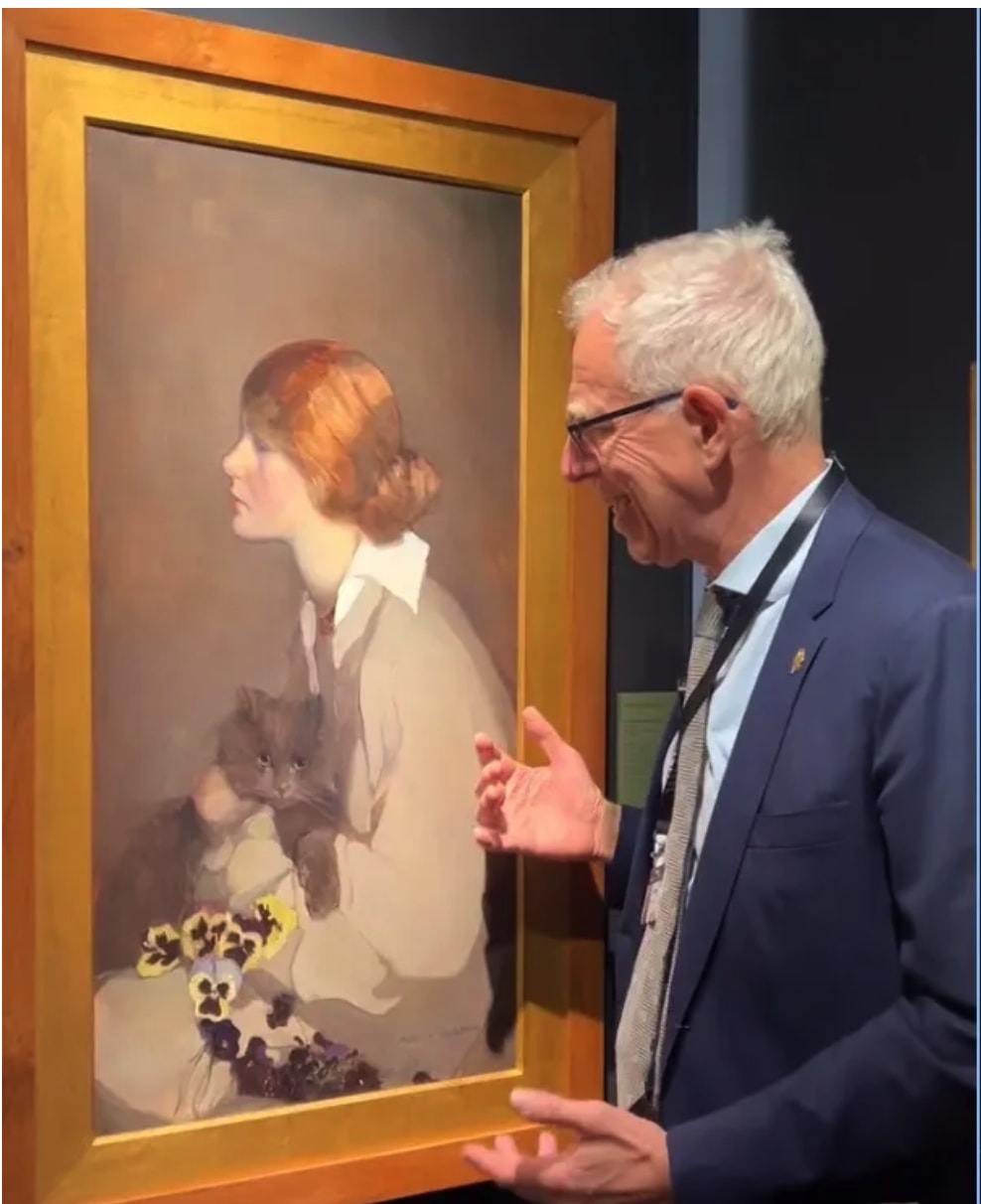
Gray is now recognised as part of a dynamic group of early 20th-century female artists known as “The Glasgow Girls.” Though many enjoyed success during their lifetimes, they were largely overlooked by art history for much of the 20th century. Interest in their work has grown in recent years.
The National Museum of Scotland displays one Gray; Kelvingrove has several. The Imperial War Museum in London has one. There are likely more in European collections, though not all are on public display.
Below is an essay Arnold wrote in the late 1990s for his travelogue Sentimental Tourist, reflecting on Norah and her sister Tina, who became one of two senior women doctors employed in Glasgow in the Second World War.
Tina and Norah, by Arnold Kemp
Once, Helensburgh was said to have more millionaires than any other part of Scotland: whisky barons, ship-owners, and industrial magnates escaped from the smoke of Glasgow and built mansions within easy reach of the city by train.
Some of the old money lingers in the town and there are traces of the old grandeur; Charles Rennie Mackintosh’s Hill House is preserved by the National Trust for Scotland… Otherwise Helensburgh is mostly a town of commuters and the retired and as a resort is distinctly faded.
The fish-and-chip shops are frying up for lunch as I turn the car up the hill in search of Carisbrook, where the Gray family lived at the turn of the century. Tina Gray, who was born here in 1884, was my grandfather’s cousin. She died in 1986 aged 102, and left an extensive memoir written when she was 90. Among her sisters was the distinguished painter, Norah Neilson Gray.
This is affluent suburbia at the west end of Helensburgh, of flowering trees and secluded gardens. Carisbrook, where the Grays lived, is a three-storey stone villa in West King Street in ample gardens with topiary bushes and fine trees. Since Tina’s day, there has been much new building, and the hillside is now crowded with houses, but Carisbrook still has the view she described, straight down Sutherland Street and over the water to the sugar refineries of Greenock. The children played in a garden planted with walnut, cherry, pear, and chestnut. I suppose it must have rained in Helensburgh then just as much as it does now but the Arcadia of Tina’s recollected childhood was filled with sunshine.
Tina Gray had what is usually called a sheltered childhood. Helensburgh was a remote from the great industrial furnace on which its wealth depended and it was possible to grow up in more or less complete ignorance of poverty and disease. She and her brothers and sisters were the children of Norah Neilson, a sister of my great grandfather William Strathenry Kemp’s wife Clementina. Norah was a sweet-natured woman who married an affable and indulgent man called G. W. Gray. He was in the ship-owning business and commuted to Glasgow by train along with the rest of the bowler–hat brigade.
They had seven children. An older group of three – Gerty, Adie and Jim – had just a year between them. They were followed by a boy who died in infancy. The younger three, or ‘these three’ as they were called, were Muriel, Norah, and Tina; there were three years between the first two and Tina was two years younger than Norah. Tina was born in 1884 and thus a contemporary of Helensburgh’s famous son, John Logie Baird (1886-1946), who invented the world’s first practicable television system in 1929.
As the family was growing up, the West Highland railway was being built up on the hillside and the telephone was being introduced to those who could afford it. Mr Gray, however, still had a foot in the past. When they visited one of his ships, the Blairlogie, lying at Greenock, Tina noted that it was a sailing vessel of course. The phrase implies some sort of loyalty to craft of the old kind for by then steam had fairly generally taken over commercial traffic. Craigendoran pier, built for steamers, had opened in 1883. Perhaps the emphasis reflected simply a prejudice against steam in a town where the Royal Northern Yacht Club, stuffed with millionaires, was at the apex of social life.
The Grays were kindly and caring parents. Christmas was celebrated in this part of Scotland, and Tina recollected the happiness of their celebrations before roaring fires. The Sabbath was enforced but not severely. After church on a Sunday they had an early dinner, with a roast and dessert. Mrs Gray read Pilgrim’s Progress or some other improving book. Novels were not allowed, of course, but this prohibition did not extend to magazines. For evening prayers, led by Mr Gray in the dining room, the family were joined by Nurse, a Highland woman who enchanted the children with fairy tales and Gaelic songs and who worked for their mother for 25 years. The smells of the leather chairs were a vivid memory for Tina into old age.
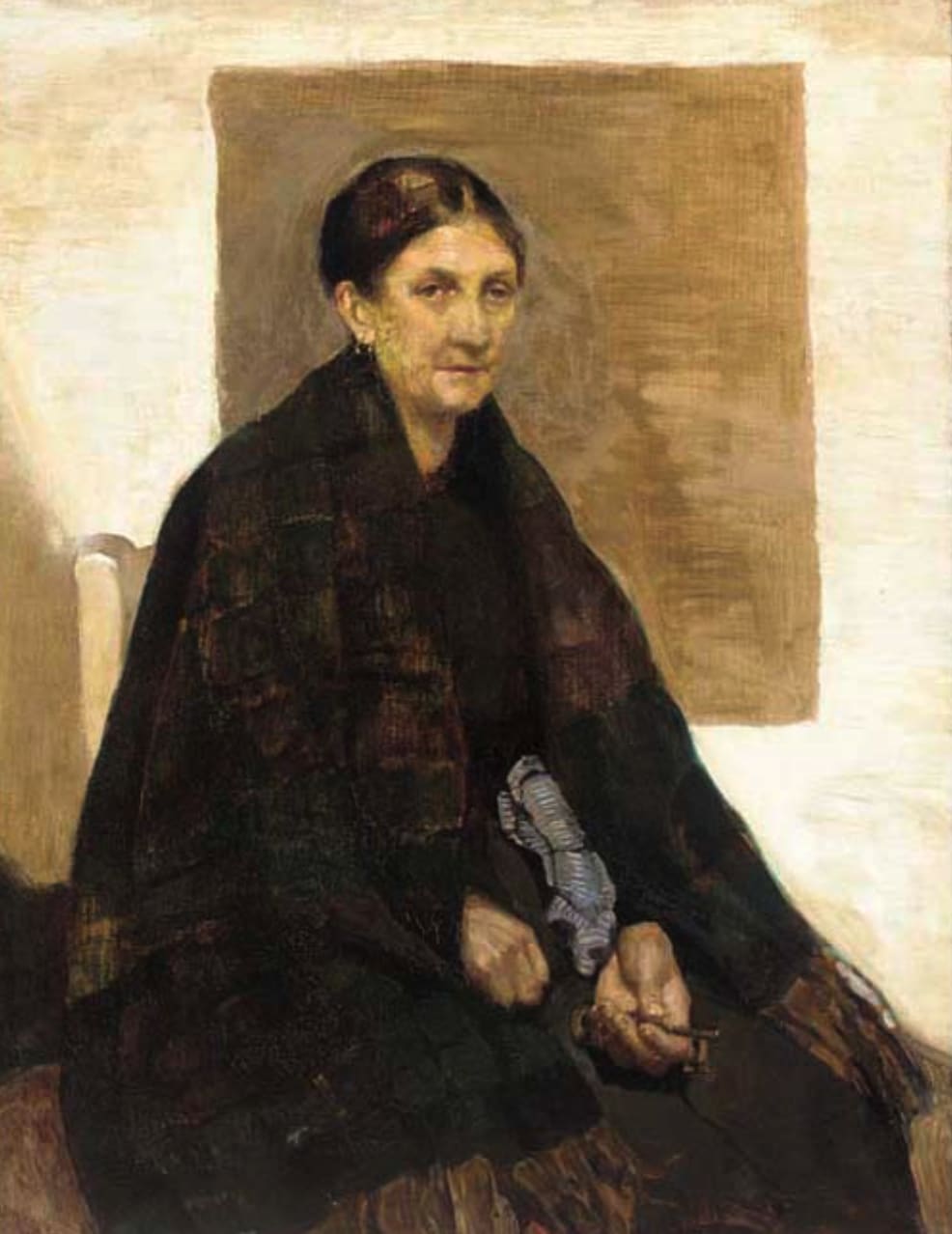
Tina was carried through the turnstiles at the first Glasgow Exhibition of 1888, recalling in her memoir the smell of hot sugar and peppermint from pandrops forming in a huge mixer and the burning sweetness of hot chocolate at Assafry’s stall. In cold winters they skated on the pond in the kitchen garden, using wooden skates with buckled straps. They learned to do the ‘tea-pot’ and became quite accomplished. During the great frost of 1895 Loch Lomond was frozen well beyond Luss. Mr Gray hired a wagonette to take the family to lunch in the Luss Hotel before skating on the loch. They found the hotel surrounded by enormous crowds and eaten out of everything. Its supplies in those days came by steamer from Balloch and the proprietor had no idea when more would arrive. Mr Gray snapped up the last packet of water biscuits from the local shop. The loch, Tina recalled, was like an interminable white field. People from the Vale of Leven were skating up in a steady single line towards a wide crack which had opened near Luss and over which the Royal Humane Society had placed a gangway; an opportunist in a peaked cap, acting entirely on his own behalf, stood beside it and charged sixpence a crossing.
There were outings up the Gareloch on the paddle steamer, the Balmoral Castle; a blind fiddler entertained the passengers but Tina was terrified by his blank and staring eyes. In summer the tennis club was the social centre of the Helensburgh middle class. Tina’s oldest sister, Gerty, was the only girl in the club to serve overhand, but lost in the championship finals to a rival who served underhand, a new-fangled idea in those days, Her brother Jim won the men’s singles, beating Bonar Law, the future Prime Minister, born in Canada but brought up in Glasgow. Their parents practised archery in the garden.
At school, dancing classes were held with the boys from Larchfield Academy, where W. H. Auden was later a teacher. Tina acquired a life-long aversion to the smell of olive oil after having as a partner a boy whose nurse used it to slick down his rebellious hair. Other social highlights were the cattle show, the Larchfield sports day, and of course, the Clyde Fortnight when from a steamer they would all follow the races among the great yachts. Holidays were spent at the house of two aunts on Loch Long, Aunt Jessie and Aunt Eliza, where they bathed and waded and messed around in boats, gorged on the raspberries, strawberries, and gooseberries in the large kitchen garden, and with some trepidation ate sheip’s heid, that old Scots delicacy now neglected but still in the culinary repertoire of the aunts.
A shadow fell across paradise with the failure of the City of Glasgow Bank. Mr Gray had inherited trusteeship for a young cousin and had to make good the boy’s loss. This reverse crippled him financially and the worry seriously upset his wife’s health. Tina believed the failure to have happened sometime in her childhood, noting it as the end of a tranquil period of unsullied happiness. Since the bank crashed before her birth, in 1878 with liabilities of £6 million, a number of inferences are possible: perhaps she did not learn of her parents’ anxieties until she was old enough to comprehend them; perhaps the extent of Mr Gray’s liability did not become apparent until some years after the collapse; or perhaps his business was failing generally. Economies were enforced: the greenhouse was no longer heated; the pony was sold; her parents abandoned their hobby of archery.
In 1893. Tina wept when Adie who had specialised in electricity at Glasgow Technical College, left with a cable-laying ship for the West Indies. In 1898 the family returned from a holiday at Bridge of Ericht, during which they climbed Schiehallion, to find Helensburgh alive with the rumblings of the Boer War. Its rights and wrongs aroused acute controversy and even at school there were rival factions. When Ladysmith was relieved flags were flown from windows and church towers in a spontaneous burst of joy.
The end of the Boer War was followed by the death of Queen Victoria. All the shops were draped in black and purple and the flags were at half-mast. Gerty, Norah, and Tina went to Glasgow to hear the Proclamation of King Edward VII. They got a very good position beside the railings round one of the statues in front of the City Chambers. The day almost ended in disaster: after the Proclamation a huge crowd of people who had gone to the Trongate thinking the Proclamation was to be read there swept into George Square. The girls were crushed against the railings, which began to bend under the weight. It was an unnerving and horrible experience but they were able to extricate themselves through gaps in the crowd. There were some fears that the girls might contract smallpox; there was an outbreak in Glasgow at the time, but it was successfully contained by one of the first programmes of mass vaccination.
THE SCHOOL attended by the girls was kept by two old-fashioned ladies. Some of the lessons were given by a master from Larchfield. One day he arrived drunk: he stared at a slate and said nothing. A horrified headmistress escorted him from the room and he was replaced by a senior teacher of unusual lucidity. Tina was lucky enough to be promoted to his class where she received a good grounding in arithmetic. Her sister Gerty said one day: ‘Of course, Tina is not clever like the rest of us’. This tactless statement had a stimulating effect, for Tina applied herself, determined to prove her sister wrong. She went up to Glasgow with her mother to sit the Junior Cambridge at Queen Margaret College. They stayed in rooms at Charing Cross where everything – chairs, table covers, curtains – smelled of soot. They were awakened each morning by the noise of horses’ hooves on the granite setts as they left a stable nearby to start their day’s work of pulling the trams, jingling and clattering as they passed along. Electric trams were only just beginning to be introduced.
Norah’s exceptional artistic talent had become apparent. When she left school she went to a studio at Craigendoran run by the Misses Park and Ross who, according to their prospectus, had been pupils of Bongereau and Fleury. The visiting artists included John Lavery, not yet then famous but one of the ‘Glasgow Boys’. Tina was not without talent herself; she and a couple of her schoolmates accompanied Norah to the classes. But when Norah started attending Glasgow School of Art, Tina gave up art for a while and dabbled in a historical novel. Adie, home from the West Indies, advised her to read good stylists like Macaulay. She did so and, in her father’s extensive library, also read Froude, Ruskin, Montaigne, and Walpole.
The School of Art, where Norah enrolled in 1901 and was for a time joined by Tina, was under the dynamic leadership of Francis (‘Fra’) Newbery. He involved it closely with the Arts and Crafts Movement; with his wife he developed classes in applied arts like needlework and metalwork. Women were given increasing prominence and by 1901 accounted for 47 per cent of the students. The east wing of Charles Rennie Mackintosh’s pioneering masterpiece in Renfrew Street was open, though shortage of funds delayed completion of the whole building until 1910. The life classes were taken by a Belgian, M. Delville, who made a considerable impression on the girls:
He was not tall, but slender. The bones of his face were beautifully modelled. He had very black rather long hair and a small black beard. His complexion was very pale with a greenish tinge and his eyes were an extraordinary turquoise blue. He had very beautiful slender hands and wore a ring with a huge turquoise. He spoke very little English and was pleased if you could do a bit of French.
It was an extraordinary period of artistic innovation. Through the School of Art, and around the friendship of James Guthrie and E. A. Walton, formed the loose and informal group that became known as the Glasgow School, or the Glasgow Boys. They were assisted by the art dealer, Alexander Reid, who brought many examples of influential European paintings to Glasgow, and they were strongly influenced by Whistler. A little later, around the start of the First World War, the Glasgow Style developed from the work of Mackintosh, Jessie M. King, and others. A Scottish response to Art Nouveau, it derived its simple, elongated and stylised shapes from plants or emaciated human forms; for the latter reason it became known as the ‘Spook School’. Its impact was considerable and it was taken up by some of the larger department stores in the décor of their tearooms. Tina remembered Jessie M. Kin wearing a flowing cloak and a wide, Spanish-looking hat.
The family’s interests were now centred on Glasgow. Jim was a brilliant classics scholar at the university; Muriel won a bursary, took first-class honours and became the second woman to be appointed to the staff of the university when she joined the English department. Carisbrook was sold and Tina was heartbroken by the farewell to a much-loved house. They took a flat in Sardinia Terrace in the West End of Glasgow. It was some consolation that during that blazing summer of 1901 they were able to enjoy the second Glasgow Exhibition in Kelvingrove Park. They took out a season ticket and would wander about listening to the bands or taking tea in the outdoor cafes.
In their first winter in town, pin pong was all the rage. Everybody was playing it, and if you walked up any street you could hear the sound of the balls from every house. Tina developed severe neuralgia which began every morning at about ten o’clock and grew steadily worse. By 6 p.m. it vanished and she played ping pong all evening with no pain at all. Norah had started using her as a model on Saturday mornings and noticed her illness. Her father treated her with port wine and quinine and after about a week the pain stopped. Thus liberated, she ‘came out’ by going to her first dance, in a chiffon dress with tiny spots and a deep flat collar trimmed with lace. The outfit was completed with a white gauze fan with sequins, long four-button white gloves, and white satin slippers. Watched by their chaperones, the girls danced the One-Step, the Smokey Moke, the Lancers, Viennese waltzes, and eightsome reels. One man made an impression. He was a good dancer but looked, Norah said, like a dissipated angel. Tina danced with him in Glasgow that night and later at dances in Helensburgh, but he is the last man to make any significant appearance in her memoir other than in the role of professional mentor.
Gerty was very pretty, with blue-black hair and a peachy complexion, and Norah, now 23, painted her portrait. She was wearing a chalk white linen dress with an emerald green silk parasol behind her. Her mother and Tina persuaded her to send it to the Royal Academy; it was accepted. Afterwards, she showed regularly in the Paris Salon, where she was awarded both a bronze and a silver medal. Her paintings were exhibited in Liege, Chicago, and Canada.
Tina could not remain full-time at the School of Art. Her mother, who had never been strong, was far from well and someone had to be at home to help her. Gerty had gone out to Burma to be married to Alec, a rice merchant whose father had been minister at Kippen. Tina and her mother went down to Liverpool to see her off. They had a ‘strange meal in the dining-saloon: the clatter of dishes, the brilliant lights, the wilted flowers, the harassed stewards rushing about’. Then they had to disembark and, feeling miserable, returned to their hotel.
It was decided that Tina could attend the School two days a week; but M. Delville was annoyed and said pettishly: ‘Non, non! I can take no interest!; Tina wrote:
I was frightfully upset, hurt and angry, but I could do nothing about it. I had then to go to Mr Newbery in his office and tell him about it. Even in his kindness, he remembered the proprieties for when I, half furious, half weeping, began to tell him ‘Delville won’t’, he stopped me and said, ‘M. Delville, if you please’. I said, ‘M. Delville could take no interest and it’s all no use’. It’s the only time I have wept before a stranger but between anger and frustration I could not stop.
Newberry was kind and understanding and said, ‘We must arrange something’. It was decided that she should come to an afternoon life class with a dressed model. But she did not forgive M. Delville. ‘I stayed at the School of Art for quite a long time but it was not a bit the same as being in the serious life class’. Instead she turned to writing, and won several prizes for short stories. One was about a young man shunned by his girlfriend because he did not volunteer to serve in the Boer War. ‘I was awfully proud of my final line; the one that stayed at home stumbled out into the night with a measureless ache in his heart’. Tina was keen on hockey and combined it with her writing by becoming women’s hockey correspondent of the Glasgow Herald.
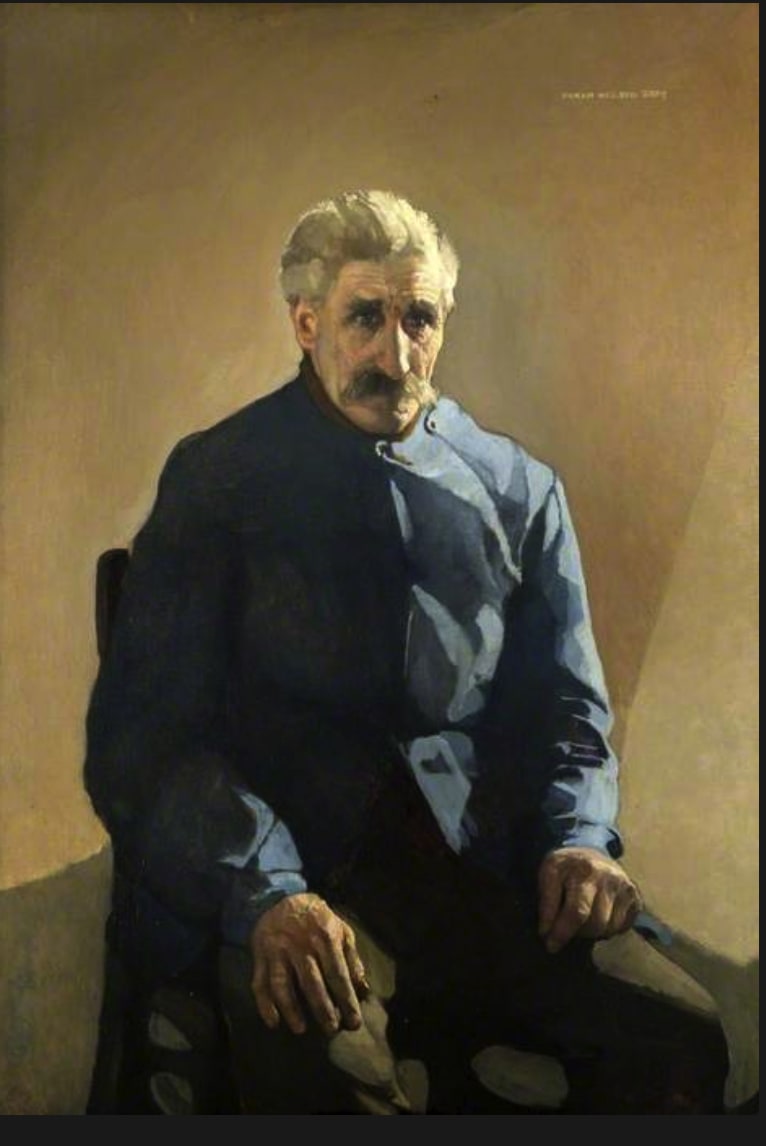
The years between 1905 and the war were ‘curiously mixed’. Norah taught drawing to make some money and took a studio in Bath Street in 1910 and embarked on what is now regarded as her best period; works included One of our Trawlers is Missing, The Country’s Charge, and The Belgian in Exile.
Their father’s health began to fail, and he was diagnosed as having pernicious anaemia, for which no effective treatment was then available. It was a fearful blow, and the family had to move to a flat on a lower level, in Kersland Street. The horse-drawn furniture van stuck on the long pull up Great George Street. To lighten the load the men left the books on the side of the street; when they returned to pick them up, many had gone. Her father’s condition deteriorated. Tina wrote:
He was mostly in bed. It was strange; I got to know father so well that winter. He was always frightfully kind and I never knew anyone more unselfish. He had always made a great fuss of Norah, she was so like mamma. He used to send such loving letters to us when we were wee and he was on business trips abroad. But that winter I really got to know him awfully well. I used to do his room every day and we used to have long talks. He knew all about the things I was doing, hockey and writing.
He died on a dark snowy day in January, 1909. He had, Tina thought, just lost the will to live. The funeral was conducted by Robert Kemp, William Strathenry’s eldest son who was now minister at Blairgowrie. When the carriages left the flat for the burial at Helensburgh Cemetery, Tina had a strange feeling of having been left behind, with no purpose in her life.
There was one bright spot ahead. Gerty was coming home with three babies, and her husband Alec was to follow in May. She was to stay in rooms in Byres Road not far from the family flat. She arrived with her children and a nurse. For a while all went well. Then there was a taste of disaster: the landlady’s daughter had been diagnosed as having diphtheria. Preventative injections had not yet been developed and somehow Gerty and her family were squeezed into Kersland Street. A few weeks later a telegram came, carrying the tragic news that Gerty’s husband Alec had died of heat-stroke in the Red Sea with a temperature of 112. Jim had the heart-breaking business of winding up Alec’s affairs and found that the Chinese with whom Alec had dealt, though meticulous in their transactions with him, tended to melt away after his death. Rooms were found for Gerty at Kippen. This melancholy year ended with the death of one of the Loch Long aunts, Aunt Jessie. ‘It left a horrible feeling of insecurity and the uncertainty of human life. It left one with a horrid dread that when anyone was ill it must end tragically’.
Women at war
By August 1914 the country was on the brink of war, which had been expected since the assassination of the Grand Duke at Sarajevo. Tina and her family were staying in rooms in Cove to be near the surviving Loch Long aunt. As the month passed, they noticed a gradual change. The young people who had helped them to pull up the boar had gone. After some delay Jim went off to the RNVR and be served in Scapa Flow in motor boats, later patrolling the Pentland Firth.
The first months of the war were curiously disjointed. With her home commitments, Tina at first was able to do no more than become a visitor for a society for soldiers’ and sailors’ families. Her district was Calton in the east end of Glasgow. She had not realised that such places existed. One house ‘was approached through an arch in a ghastly looking high tenement’. Across a cobbled courtyard in a tumbledown brick building lived a soldier’s wife.
The woman was awfully nice and the room wonderfully clean when she only had an iron sink with cold water. There were two small children and a young baby. She told me how her baby missed her Da’. He was a fruit hawker with a hand barrow. She explained how often there would be a ‘tomaty he couldna sell’; Maggie loved to suck them. I was horrified as at that time no one would have thought of giving such a thing to an infant. But perhaps they even helped to keep her alive. She died a few months later. It was terrible when I went to see them. There was just the one room and till the funeral the dead baby had just to be with them. Looking back on it, I feel I ought to have known how to help. But she was quite a business-like woman, she had her Pearl insurance, and seemed with the help of her neighbours able to cope. I had many other wives to visit but none of them made such an impact on me; she became a friend.
IN 1915 the hospitals were badly short of nurses and Norah and Tina volunteered. They had a mixed reception at the Royal and Western Infirmaries. Some of the sisters resented them. They were given undignified chores – cleaning radiators when the heat was on, washing the legs of the iron bedside lockers, cleaning the brass plates round the light switches with a filthy antique black paste, washing the leaves of the potted plants.
Their intentions were being tested. When their inquisitors were satisfied, the volunteers were allowed to blanket-bath patients, test urines, give injections, and help lay out the dead. A professor even paid tribute to the fact that ‘nothing was omitted since the chocolate ladies had come’, a reference to their unattractive uniforms in chocolate brown. But they were not satisfied. Tina wrote:
I had in an application for nursing in France but had not had my call-up. The casualty lists were terrible and it made one feel so horribly safe in Britain and that one ought to be able to share the danger. It all seemed to fall on the young men. It was brought home to me by the casualties in our hockey club. Of our first eleven, there were only five left. Norah was the first to realise it and said one of us must go. She wanted to leave her painting and volunteer. I felt that if anyone went it should be me. The war had brought an end to my journalism for the paper shortage was so great even the big newspapers were reduced to news, advertisements, and casualty lists.
There must have been a debate at least, an argument at most, about who was to go, but it was resolved in Tina’s favour. It is clear from her narrative that the experience that followed was the defining, most stimulating, and perhaps the happiest time of her life. It inspired her to become a doctor and her premature return to Glasgow for family reasons left her an ill humour.
Her call came through in January, 1917. She acquired a dashing navy blue coat with huge patch pockets and Red Cross buttons, stayed in London with her brother Adie, where he now lived, and then sailed in bitter weather for Boulogne. After a night in a hotel of unexpected luxury, where a squad of painters titivated the woodwork as if there were no war, they started for Rouen next morning. The railway ran near the coast, crossing acres of swelling sand dunes. The rows of crosses in the war cemeteries threw small blue shadows on to the dull grass and patches of snow. Sometimes they saw French cavalrymen standing in the shelter of the bare winter trees, their uniforms making odd patches of brilliant colour.
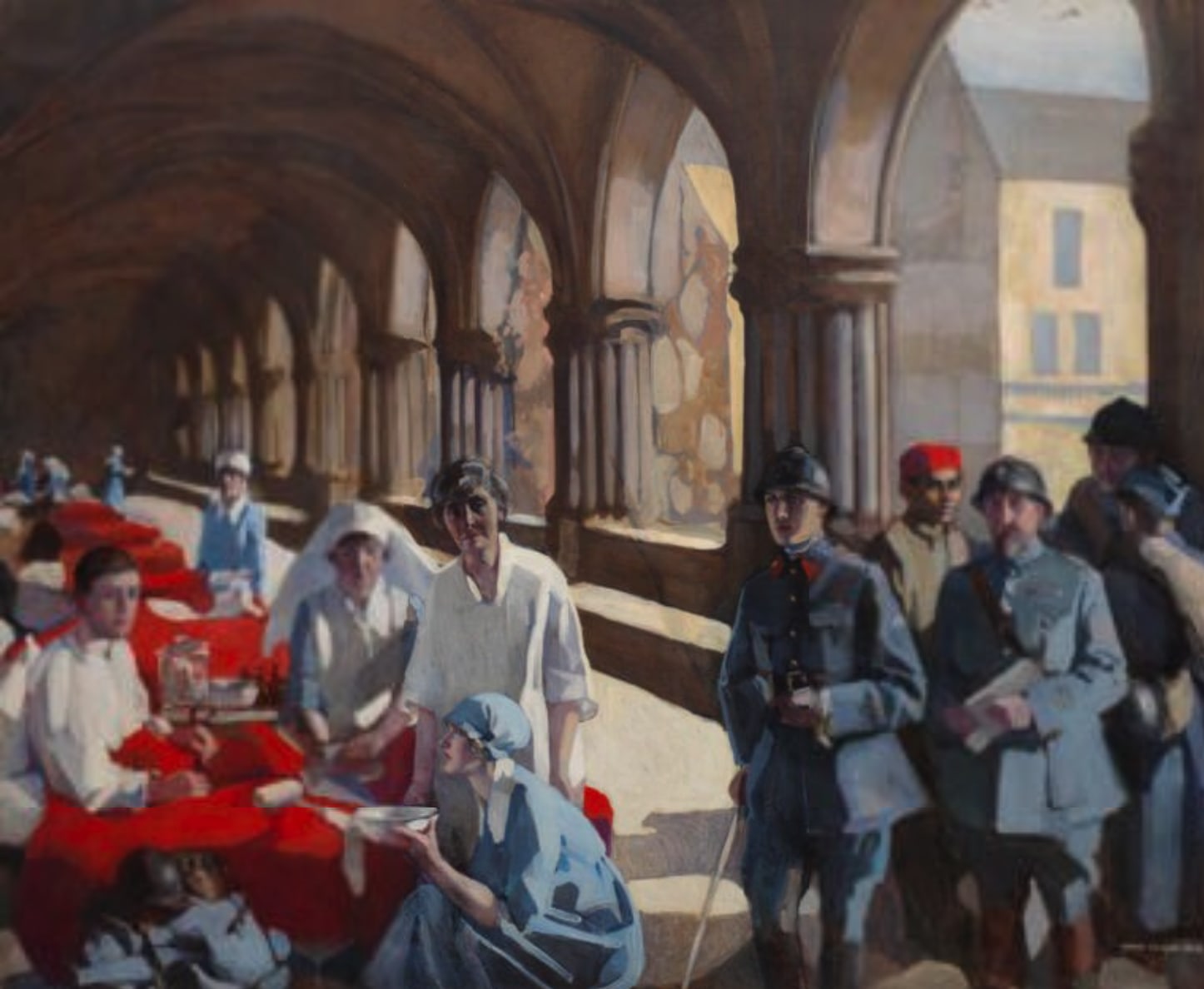
The journey seemed interminable, and they did not arrive in Rouen until 5 a.m. Here they were given identity discs of grubby green rubber, designed, she was told, to look unappealing to the rats, and felt a surge of Scottish nationalism when an officious English clerkess refused to allow her to register her religion as Church of Scotland, insisting on designating it ‘Presbyterian’, evidently ignorant that it was the established church north of the border. She also posted the only two Scots – her compatriot was a volunteer called Falconer – to the hospital for infectious diseases, sending the English girls to general hospitals. In the days before antibiotics and inoculations, this was no small act of discrimination.
Soon they were sliding towards their destination in an ambulance whose headlights whitened the frost-bound roads and the boles of trees. They did not arrive at the hospital, isolated in the Forest of Rouvray and mostly tented, until 3 a.m. the following day, exhausted and ravenously hungry. They were given a meal but nobody seemed much interested. They slept in icy beds in a hut meant for sick sisters. Next day Tina was posted to the scarlet fever compound, the only one which had running water because someone had, by a fortunate accident, left a tap running before the cold snap. Everything else froze: lotions unless kept near the stove, washing-up liquid, bread, lemons.
She and Falconer were assigned to a draughty big marquee with six camp beds. The nights were ordeals by cold but the days were brilliant; the sun glittered on the snow and hoar frost. It lip up the white gowns worn by the nurses over their uniforms, the red QA caps of the matron and sisters, the brilliant blue of the patients’ hospital suits and their red ties, all against the background of the white marquees. In March they were moved to huts. She went into Galeries Lafayette in Rouen and acquired a flame blue, a stove which, unlike the long-piped variety most people had, could be used as a cooker as well as a heater. Soon the iron ground thawed and they ploughed through the mud in gumboots. The orchards in which the camp stood became a sea of pink blossom. With manure from a mounted depot nearby, the commanding officer, who came from the Channel Islands and was mad about flowers, created a garden tended by convalescent patients.
Tina’s interest in medicine was aroused by Colonel C. J Martin, who was head of the pathological laboratory, and his colleagues. Sir Charles – he was knighted in 1927 – was an internationally known physiologist and physician. At the time, in civilian life, he was director of the Lister Institute of Preventive Medicine in London. He identified the cause of enteric fever and devised the vitamin ‘soup cube’. The volunteers were often sent to the laboratory with samples. Tina found that she was always pleasantly received; though she does not directly say so, I suspect that she fell under the spell of Sir Charles and formed friendships with him and his staff. She became engrossed with their work and often spent her afternoons off among the microscopes, samples, and slides.
Of the dangers of infection, Tina thought little until posted to the cerebral spinal meningitis compound. At the time mortality rate of this illness was more than 75 per cent. Three sisters had already died of it. ‘I was terrified’, wrote Tina, ‘until I was actually among the patients’. A remarkable nurse, a Sister Mitchell, inspired and reassured her by taking danger in her stride. This sister liked nursing CSM and had asked not to be moved from it. This was heroism, for apart from the constant danger of infection there were extremely distressing cases. One patient died in acute spasm after prolonged agony. Another young man, tall, fair, and handsome, never regained consciousness and died before his father, a London stockbroker, could arrive. Tina was finally overcome by a case where the semi-conscious patient was incontinent and had constantly to be changed. By now it was July and tropically hot. The foul smells and the heat were too much; Tina was gripped by nausea, vomited, and was unable to stand. The others were much alarmed, fearing the worse. But she lacked one of the symptoms of the illness, a headache, and with rest and pure lemon juice she slowly recovered. She was re-assigned to the para-typhoid compound. The work was easier here, for most of the patients were convalescent. Tina did her best to vary their diet, and the flame blue came into its own. She made parsley sauce and queen of puddings; with a borrowed covered pot she even contrived to make oven scones. News spread and she was instructed to make two large batches for the sisters’ mess. After a prolonged dispute with the quartermaster over the requisite supplies, she managed to do so. When Christmas came, she got up a show. Sir Charles and the laboratory helped her improvise the props – a giant syringe, a large pill – for the sketches and tableaux vivants. It was a great success.
What the soldiers enjoyed most was seeing the girls out of uniform and in pretty dresses. The big hit was a presentation of the fir forest that began just outside the hospital, the favourite walk of us all; I put sisters in their flowing capes walking or sitting with officers. I called it Somewhere in France. It fairly brought the house down.
As the work grew less onerous, Tina began to worry about her family at home. Their letters were depressed; Muriel and Norah were very busy. Because the staff at the university was depleted Muriel had to give the same lectures twice to split classes. ‘I didn’t want to go home’, wrote Tina, ‘for I loved the work and the having to make my own place, and the independence’. Reluctantly she decided not to renew her contract, and resigned. The staff of the laboratory came down to see her off when she left towards the end of February. Colonel Martin teased her about her unlaced brown brogues: ‘You’re not going home to Scotland in slippers surely?’ Tina wrote: ‘It relieved the tension, for I was nearly weeping’.
BEING HOME was an ‘awful change’. Everyone was busy. All her friends were nursing or working in canteens. To complete her disgruntlement, she found that Norah was making arrangements to leave her studio and her painting, to go to France to the Scottish Women’s Hospital at Royaumont.
It was the last straw. I was absolutely furious. I may say it was the only time I ever felt like this about Norah. We had always done things together. I could have wept for I would never have come back if I had not thought all was not well at home. I don’t look at myself with any admiration at that time. I had done what I thought was right, but not willingly, but with a very grudging spirit. I was self-centred and full of my own grievances. I know mother thought I had changed but I did not care. I never gave her full and enthusiastic replies to her questions about the hospital, questions which in after years I would have given anything for anyone to ask. I was sort of monosyllabic. I missed the work frightfully and the cheerful crowded life and the independence.
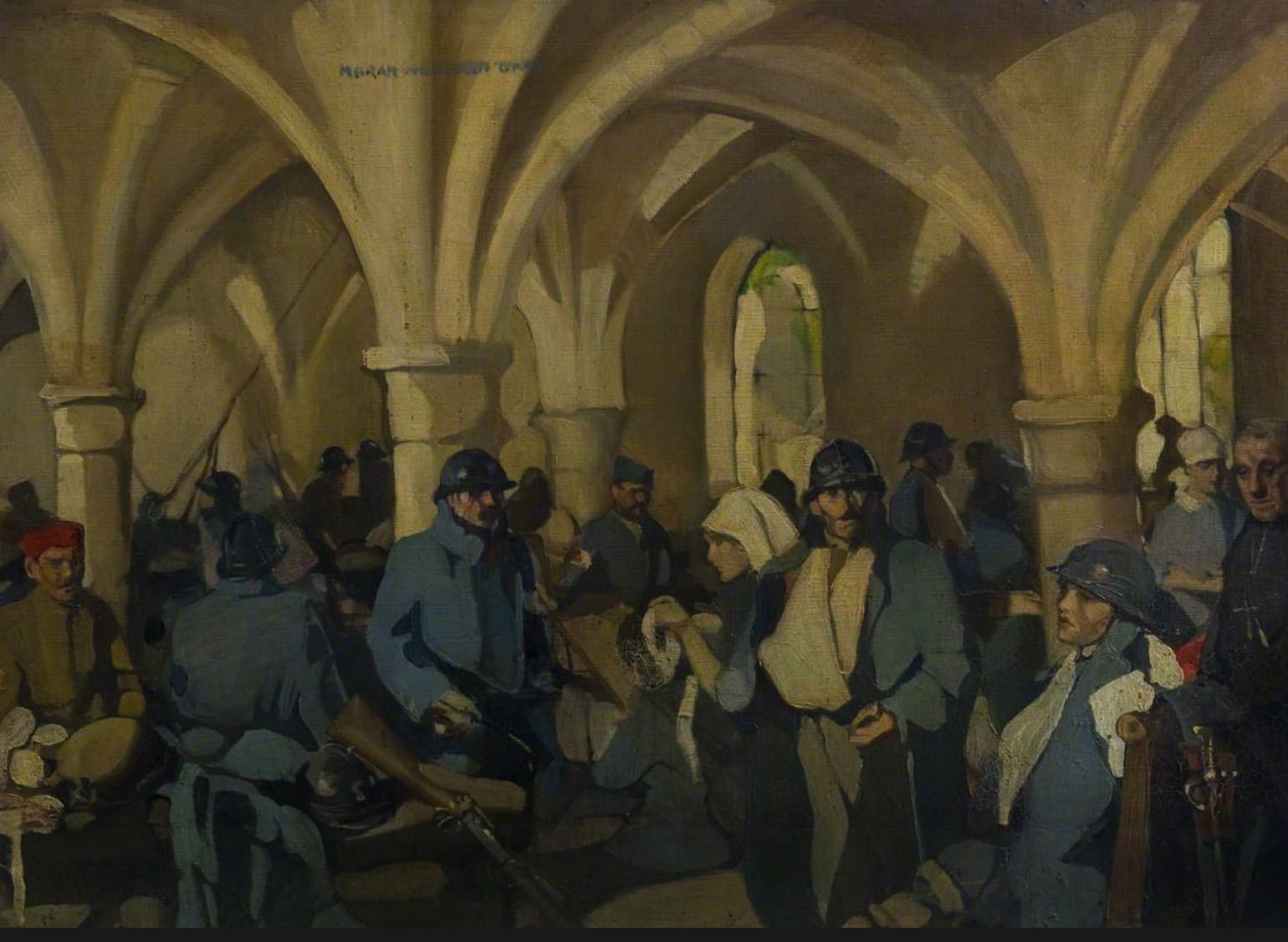
Life in Glasgow was grim. Food was scarce and what there was of poor quality and very expensive. The news from the Front was terribly depressing. Everywhere the British were being pushed back. At one point things were so bad that the Scottish Women’s Hospital forward station had to be evacuated to Royaumont; they got a telegram saying Norah was safe before they knew there was any danger. Tina’s restlessness was increased by letters from a VAD called Bell who had been her great friend in Rouen. In 1918 there was a call for VADs who had returned to come back to work in hospital. Tina volunteered and was posted not to France but to Stobhill in Glasgow.
It was a complete change. In France sisters were only too glad to leave VADs to do the dirty or uninteresting work and knew that they were quite capable of taking a certain amount of responsibility. At Stobhill, all the old inhibitions were there; ‘we could not even give a patient a clean shirt without first asking the sister’. The sister in Tina’s ward was a wonderful nurse but had a very difficult personality. ‘She was one of those people who, instead of telling you what was wrong, would direct sort of sneering remarks to the ward in general’. Somehow it was always Tina who had to work with her, especially in the afternoons when the other VAD played the piano (presumably to entertain the patients).
Tina grew fond of her patients, particularly a group of four men. One of them, a young man of 18, had lost most of both arms, and the others took turn to look after and brush his hair. The first, Clay, always brushed it very flat with a quiff; Barclay parted it at the side and brushed it very smoothly; Ewbank brushed it straight up. The hospital food was dreadful – boiled herring that gave out a rotten smell when pricked with a fork, soup like green sago pudding but smelling of cabbage. Only the porridge was good. With rueful nostalgia, Tina recalled the fried egg and tomato and lovely crisp toast served of a morning in France after night duty and the wonderful baked rice puddings with lemon at dinner.
The most terrible episode at Stobhill was the 1918 influenza epidemic. Tina was on night duty and in the morning heard sirens on the river. They were told not to go off duty; a troopship had come into the Clyde from America with hundreds of soldiers suffering from influenza. They opened new wards and soon the ambulances began to arrive. It was a tragic load. Most of the victims were very young and very dirty, and most were unconscious; they wore light weight uniforms and were very cold. Seventy died in the first week and many of the staff died with them. Most of the victims had virulent pneumonia and showed haemorrhagic discolouration of their chests, sometimes within hours. One staff nurse on day duty went off feeling ill and was dead in two days. Other soldiers in Glasgow managed to get to the hospital gates by tram, staggered to the lodge, and collapsed. They were brought up in ambulances.
One night as she went off duty came news of the Armistice. On all sides were smiling faces and happily raised voices. A young soldier who had lost both feet did a tap dance on his temporary artificial legs.
Death of an Artist
After another stint with the formidable ward sister, with whom she had now reached some sort of understanding. Tina returned to normal life. Norah had come back from France and home was happy and interesting again. Tina wrote account of her time in Rouen, and the book was published commercially though not lucratively. In 1920 she was awarded one of the scholarships set up for women with war service; C. J. Martin, now back at the Lister Institute, had agreed to be a referee.
She qualified, after some difficulty with physics. Thanks to the patronage of an old friend of her father, a surgeon called Mr Kay, she joined the Glasgow Royal Infirmary in the unpaid post of house surgeon. The Royal was responsible for treating casualties from the great industries that lay to its east – coal mines and the big engineering and locomotive works – and the surgeons had to deal with terrible injuries caused by machinery. Tina was eventually appointed to the staff but felt that her progress was impeded by a jealous senior female colleague who kept her work from the eye of the chief.
In 1922 her mother died of cancer. Cousin Robert from Blairgowrie took the funeral service. Norah now had many commissions and the sisters were comfortably off. They bought a Morris and went touring in the narrow Highland roads. But in 1927, Norah, now 45, fell seriously ill and underwent an operation for cancer of the colon. She made an excellent recovery but the knowledge of the damage to her vital powers depressed her. ‘Before this’, wrote Tina, ‘I had wondered how Norah would take old age. I was sure she would simply hate it’.
Soon afterwards, there was even worse news. Gerty, now living in Edinburgh, had died of a perforated ulcer. Not long after Gerty’s funeral, Norah developed secondaries and her condition deteriorated.
Nothing was actually said but we all knew that there could be only one result. It was a matter of time. She was perfectly wonderful and when she was actually painting she was obviously happy. She painted more than one portrait and one or two water colours. She never spoke of it until near Christmas, when she spoke to me with no bitterness, saying only that she knew she would never get better, and wanted to say, once, how happy a time we had had together, how we had had a wonderful run for our money, and that we should not have any regrets.
She died in May, 1931. For Tina it was a terrible blow, for the bond between them had been exceptionally strong.
I could not take it calmly, I was resentful and bitter. It seemed so tragic when her talent was wonderful and her power increasing.
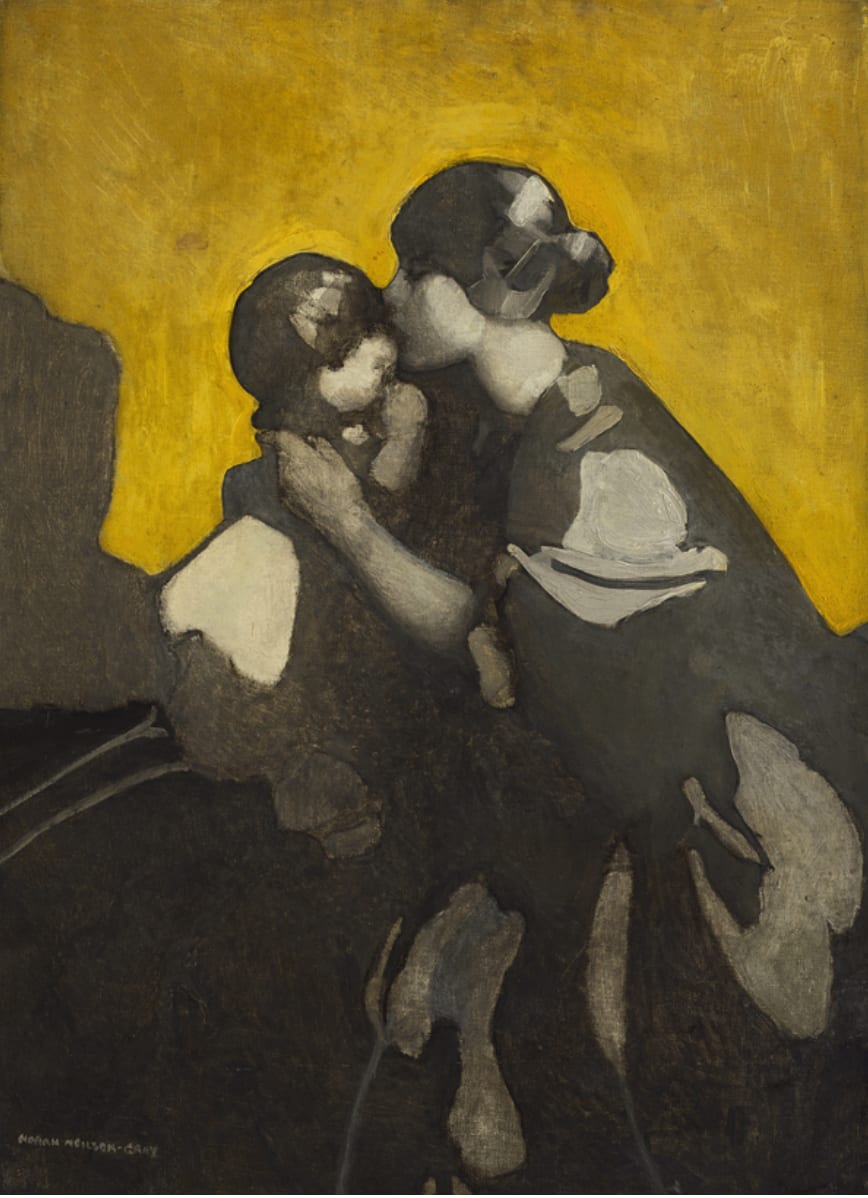
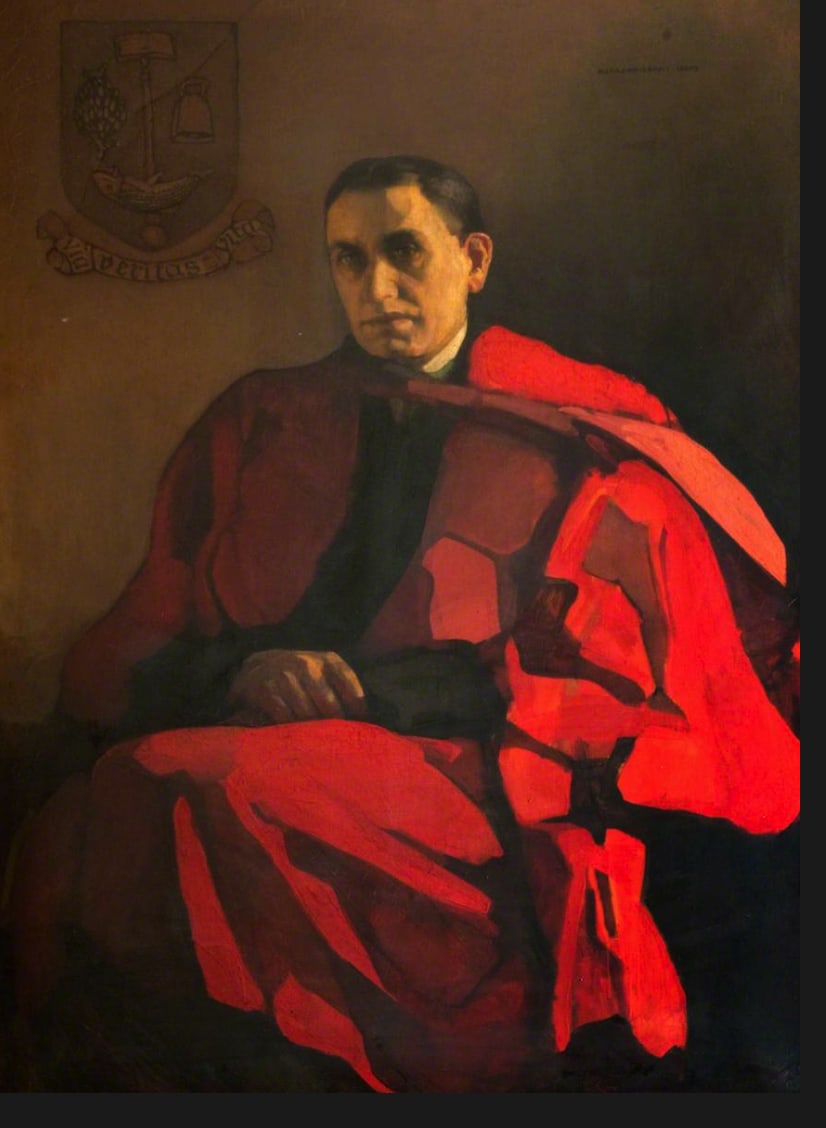
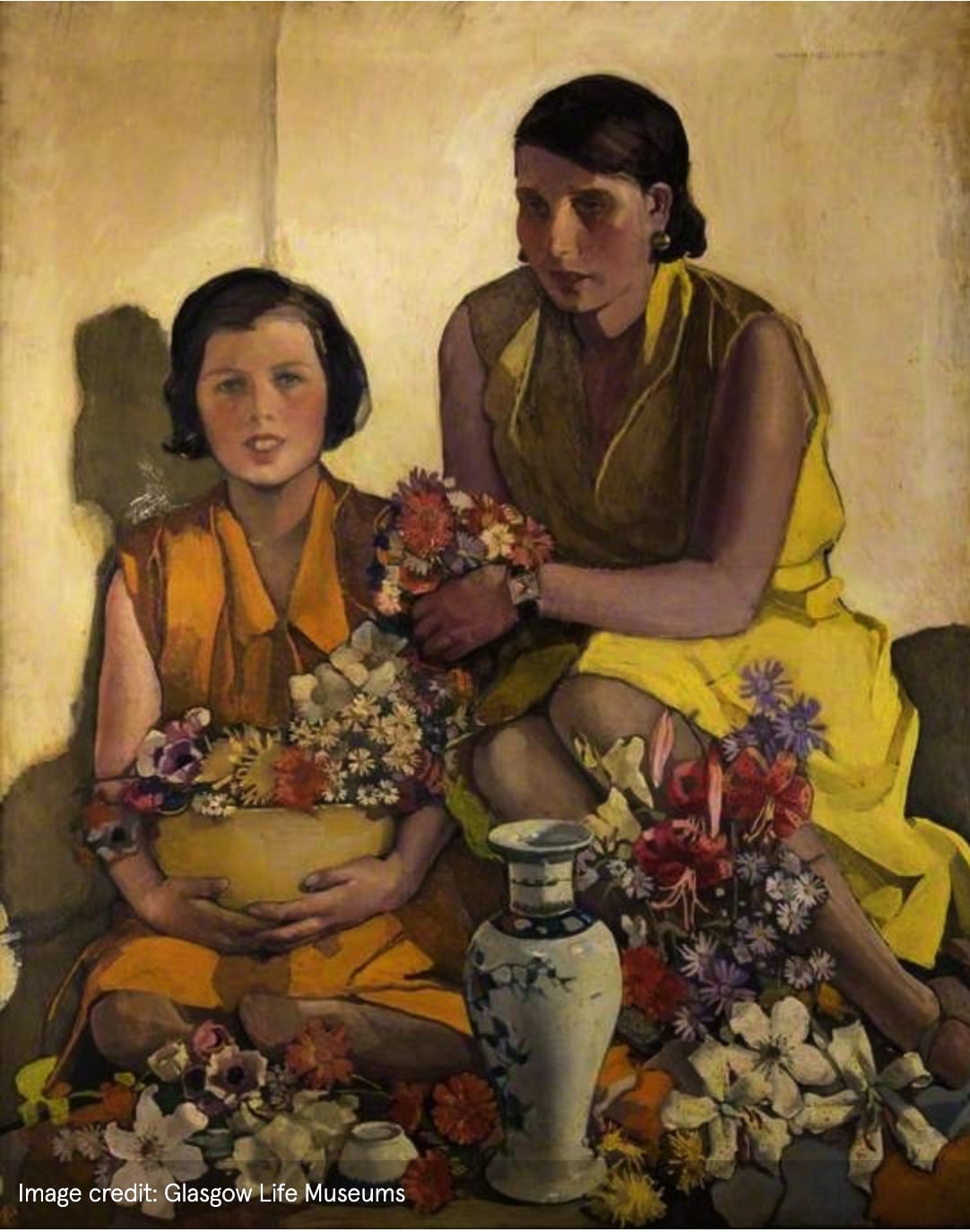
The reputation of Norah Neilson Gray was an artist still stands high among the relatively few people acquainted with her work. Her distinctive colour schemes, unconventional placement of images upon the canvas, and ‘purple patch’ shadow patterns were characteristic of her technique. During the last year of the war she had painted powerful studies inspired by her experiences in France and in 1920 was commissioned by the Imperial War Museum to record the Scottish Women’s Hospital. In 1923 she won the gold medal in Paris with La Jeune Fille but at home her portraits were criticised by critics for the prominence given to decorative elements. In 1921 she was the first woman elected to the hanging committee of the Royal Glasgow Institute. Her later work became modernist in feeling, with a tendency towards abstract expressionism. Her paintings are to be found, though not necessarily on the walls, in the art galleries of Glasgow, Brussels, Nice, and Toronto. She was well represented in an exhibition of the Glasgow Girls held in Kelvingrove in 1990 and the catalogue by Judy Burkhauser and Catriona Reynolds includes a hauntingly beautiful Self-portrait.
Her work does not have the commercial value it deserves. The Glasgow art dealer Barclay Lennie thinks this is simply because it is not more widely known, just another example of a classic Scottish problem: we are geographically and culturally peripheral. Her entry in Peter J. M McEwan’s Dictionary of Scottish Art and Architects is generous and assesses her highly:
In spite of her early death she is established as a significant figure in European art, to a greater extent than was ever the case in her native country.
TINA SUPPLEMENTED her work at the Royal, and her income, with an engagement at the outdoor clinic attached to the Loch Hospital, which had been set up in 1805 ‘for the care of unfortunate women’ (that is, to deal with venereal disease). It was not a particularly interesting job – it consisted mostly in giving injections and lectures – but the pay was necessary. She carried on at the Royal, doing her stints as receiving surgeon in emergency and having to deal, on one grisly occasion, with a cut throat, messy and intricate but not as terrifying as she had imagined; indeed, once she had put out of her head the misery that had led to the attempted suicide she found it strangely interesting getting the right ends of the muscles, vessels and nerves to meet.
War came again. She treated air raid casualties and, in 1942, she was appointed residential surgical officer at Stonehouse Emergency Hospital with permission to carry on at the Royal as well. The hospital was primitive, with painted brick walls and four large wards. She dealt there with a wide variety of emergencies – acute appendixes, strangulated hernias, soldiers wounded in gun-shot accidents. By now penicillin was transforming care and treatment. Later came wounded servicemen from France and then towards the end of the war two wards were filled with German prisoners, some very badly wounded. ‘They were as easy to handle as our own men. There was no sort of Heil Hitler in their attitude. I could speak no German except the phrase Have your bowels move?, which I now forget’. When they recovered and moved on, one made a little speech of thanks. ‘When there was an air raid they assured us they would see we were all right as we had looked after them. They were pathetically sure that their planes were really coming’. One night the nurses held a dance. The Germans gathered at their windows and watched the gaiety with wistful enjoyment.
By the end of the war, because of her various commitments, she was working seven days a week, and in 1946 decided to retire from the Royall to make way for the younger surgeons returning from the war. She did so with great regret and was given a rousing send-off and a gold watch. ‘I always thought’, she wrote, ‘that there was no place like the Royal’.
She continued her work at Stonehouse but by now was feeling very tired, having repeated attacks of gall-stone colic. An operation went awry after the anaesthetist give her curare which had just been introduced as a relaxant. She had a collapse of the lung and lost consciousness; she did not know until later that Muriel had been sent for in the night and had come to Stonehouse by taxi from the house they now shared in Bearsden. The nursing staff had been told on the grapevine that she was dead. She made what she called ‘a very rocky recovery’. Stonehouse hospital was about to come under the National Health Service but she decided not to stay on, though pressed to do so. Muriel was also retiring and together they went to live in an aunts’ house on Loch Long. There they passed an agreeable old age in the cultivation of their garden.
S§§§§§§§§