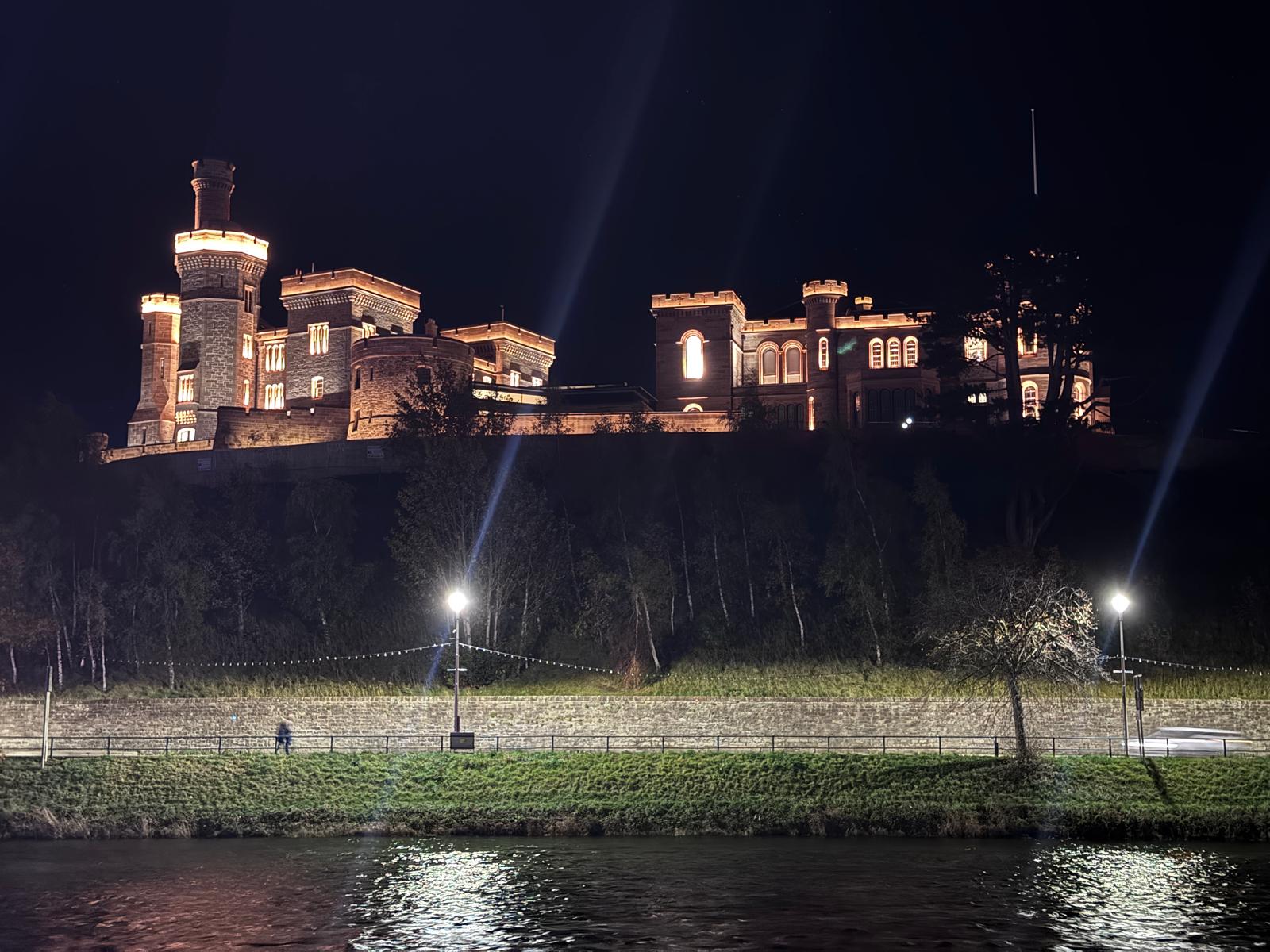
Scotland has a new castle to visit! Last month, the Inverness Castle Experience officially opened after a £47 million restoration.
The good news is that it looks terrific. Illuminated at night, it shimmers impressively above the River Ness. It will be a popular addition to the tourist trail – Inverness is the gateway to the Highlands and a hub of the heritage industry. We went to see the business-speak parody show “Wankernomics” at Eden Court and, when the audience was roped into writing a meaningless cliche-ridden communique, someone offered time-honoured, which earned a chuckle of recognition from the stalls.
In more good news, you don’t have to pay the £22 entrance fee to go into the cafe.
History-flavoured
But when you do buy a ticket, you discover that the word “experience” is a bit like the word “flavoured” on cheap confectionery. The place is not presented as a historical site. Instead, it is strangely content-free. There are projections, soundscapes and abstract reflections on the importance of stories in Highland culture. But they don’t actually say much – I think the Wankernomics team were maybe doing a stint for Highland Life when they came up here last autumn.
Dog with a lady
The red sandstone building is not actually a castle. In the early 18th century, the timber and stone castle was extended and turned into a Government garrison and barracks. That was taken over by Charles Edward Stuart’s army in 1745 and burned down as they headed for a battle they obviously thought they might lose. It remained a ruin for almost a century until the Victorians replaced it with a grandiose, fortress-style courthouse, jail and council offices.
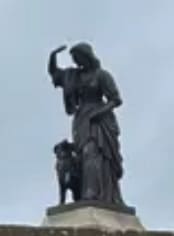
The monumental statue of Flora MacDonald and her collie, which stands in front of the castle was erected in 1890, in a Scotland where Walter Scott romanticised the bloody past, followed by Robert Louis Stevenson with Kidnapped. Jacobite songs and stories that would have once got you taken straight to Inverness “Castle” were sung and shared from drawing rooms to taverns.
The statue has also been restored. But Flora’s story does not figure. She doesn’t even get an entry on the audio-guide. Her dog, named by a school competition as Cuillin, does feature. But about Flora herself, the Experience is silent. That is a big miss (see what I did there?).
This is one of a handful of named women’s statues in the whole of Scotland – Edinburgh famously has more statues of dogs than women. Here we get both. But why not big up the lass as well as the dug?
The last battle
Many visitors will go to the site of Culloden, the last battle fought on mainland Britain, on April 16, 1746.
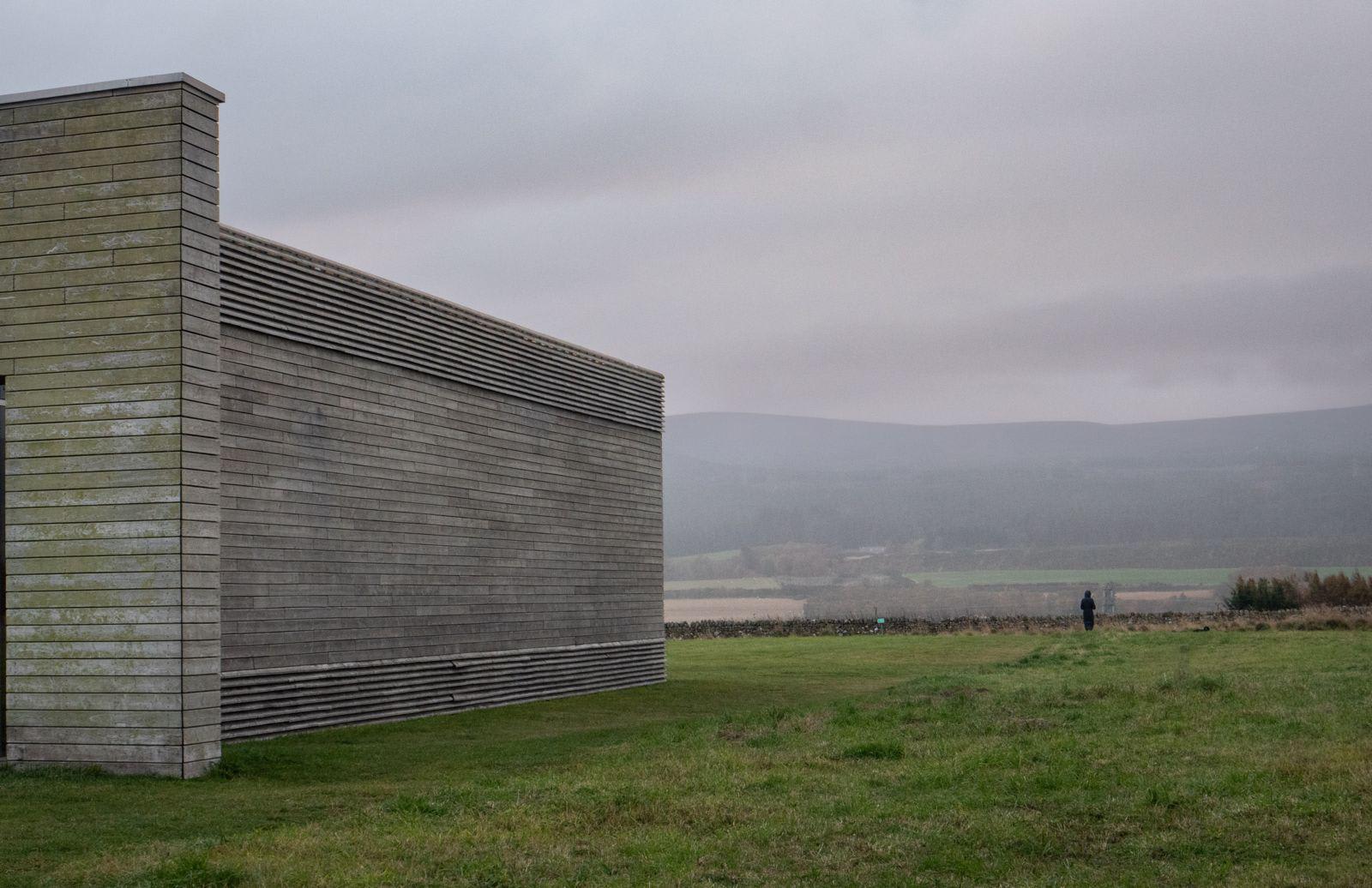
The Historic Environment Scotland guides always point out in their scripted tours that Charles Stuart and the Duke of Cumberland were distantly related and referred to each other as “cousin.” But royal family row is not the only interpretation of the Jacobite risings.
From the Highland perspective, they can be viewed as resistance to an ongoing attack by the British state on their rights and traditions: a struggle to preserve their means of living, their language, culture and communities.
The aftermath of the defeat at Culloden was brutal. Many of the wounded were slaughtered as they lay on the battlefield. Camp followers were prevented from caring for others. Some of the wounded dragged themselves to the little burn that runs through the field to try to drink. After the battle, the stream was found clogged with corpses and was christened the Well of the Dead. Subsequently, troops pursued the Jacobites into the hills and forest Many died and, after that, symbols of Highland identity were banned on pain of death.
It’s a grim tale to remember, in an atmospheric place on a misty morning.
No reward
But the upside – which could be told at the castle – is of survival, most notably by Charles Edward Stuart, who evaded the Redcoats for five months despite the enormous reward. At a time when Highlanders were among the poorest people in Europe, they spurned the £30,000 offered for his capture – about £10 million today.
Charles arrived in Uist towards the end of April, hoping to be collected by a French ship. But a month later, no ship had arrived and there were rumours that the redcoats were planning a sweep of the area. Charles had to move.
This is where Flora MacDonald enters the story. She wasn’t a rebel fighter. In fact, her stepfather commanded the local government militia, which made her the perfect cover. She arrived on Uist, ostensibly to visit her brother but also carrying a message from Charles’ ally, Lady Margaret MacDonald of Mogstadt on Skye.
A great spinner
With the help of Captain O’Neill and others, a daring plan was formed: the prince would travel disguised as Flora’s maid, “Betty Burke.” Passports were required to cross the Minch and Flora was able to obtain one for herself and an Irishwoman she described in an offhand way as a “great spinner”. Her stepfather didn’t meet Betty in person but he mentioned her in a letter to his wife, saying she might make use of the immigrant’s skills.
The party crossed the Minch from Uist to Skye overnight on June 28. As they approached Waternish at dawn, they saw soldiers on the headland who fired at them. Had they been caught and questioned, Flora would certainly have been tried for treason and probably executed. Out in the Minch, they saw several large, heavily armed warships, but managed to slip into a creek. They slowly and carefully made their way along the coast and landed safely on Allt a Chuain burn, a short walk from Mogstadt House.
Here, representing the great romantic tradition of writing about Flora, is the pioneering English travel writer HV Morton in In Search of Scotland.
Skye, for me, has always been shrouded in the splendour of a lost cause. The sound of it is like a sword going home to its scabbard. Many’s the time I have followed a little boat over a cold sea at dawn to Skye, and have seen Flora MacDonald step out on the craggy shore with an ungainly six-foot “maid” with golden hair and a clumsy way with a skirt; and many’s the time I have known that cave where a ragged young man addressed as ‘your highness’ sat down with a show of ceremony to cold mutton and cheese.
I sit in candle-light in the inn at Portree waiting for a ghost. It is a wild, gusty night. The rain beats up in sudden fury against the window. It is just such a night as that, many years ago, on which Prince Charlie said good-bye to Flora Macdonald in this room… It was nearly midnight. The wind shook at the window, and the rain fell, as rain can fall only in Skye.
Into the candle-light of this room came the Prince, flying from Kingsburgh House, and no longer disguised as Flora MacDonald’s Irish maid. On his way here he had gladly entered a wood to step from the flowered linen gown and the quilted petticoat which he wore so clumsily. He put on Highland dress – a tartan coat, waistcoat, filabeg, hose, a plaid, a wig, and a bonnet. He was drenched to the skin. He called for a dram of spirits, and then changed into a dry shirt. The innkeeper had no idea of his rank, or, if so, kept his mouth shut, as every one did in the Highlands. He set before the visitor fish, bread, and cheese. In those awful days after Culloden, Prince Charlie seemed to have a song or a laugh always on his lips. He joked with the good man, and trying to change a guinea could get only thirteen shillings for it!
Half a mile away a rowing-boat beached in the dark pointed to the island of Raasay. Men came secretly to the little room and implored the Prince to go. There was £30,000 in English gold on his head, and though the poorest man in the Highlands would not have touched a penny of it, who knew what dangerous Hanoverian might seek shelter in the Portree inn on such a fiendish night?
The Prince listened to the rain and the wind. Perhaps he walked to the window, as I have just done, and saw the dark bay below, sheeted in blown mist, and the trees bent back from the land. Could he not stay the night and set out in the dawn? Impossible! They would not hear of it! All night, he would come, but – first he must smoke a pipe of tobacco! Can you imagine how they fumed and fretted as the young man calmly lit his pipe, and how every creak on the stairs must have seemed like the step of some enemy creeping in the dark; and how often did they tiptoe to the door to listen, with their thoughts on the window and the drop beneath?
He knocked out his pipe and rose. He was ready. He turned to the brave woman who had saved his life and said good-bye. He gave her his miniature and repaid a small sum of money which he had borrowed from her. Then this wet, hunted prince smiled and said, magnificently, that in spite of all that had happened he hoped some day to welcome her to St. James’s.
Is there a more operatic farewell in history? Think of him standing there in the candle-light — hunted, beaten, bedraggled, in borrowed clothes, £30,000 on his head and all England after him – holding a parcel containing four clean shirts, a cold fowl tied in a handkerchief, a bottle of brandy on one side of his belt, a bottle of whisky on the other – going out in the rain with an invitation to Court on his lips!
So Flora MacDonald watched him leave the candle-light for the dark of the stairhead, heard the cautious steps and the shutting of the inn door and the tramp of feet beneath the window. I wait for the ghost. I wait for the door to be flung open — but all I see is a vision of my own making: Flora MacDonald standing there, holding the miniature, still warm from his hands…
Flora MacDonald is one of the best-known figures in Scottish history. She inspired the passionate heroine of Walter Scott’s Waverley, Flora MacIvor. (With all the adaptations of the streaming age, it would be great to see one of Waverley, the tale of a young English soldier who falls in love with Flora and changes sides. )
That daring night journey also inspired one of the best-known ballads in the English langauge The Skye Boat Song.
Flora MacDonald appears in the Outlander series – arriving in America in 1773. After an impoverished life as ex-Jacobites, she and her husband Allan MacDonald went to the US, where they became involved in the Revolutionary War. Perhaps not wanting to be on the losing side again, they supported the Brits. Their property was confiscated after the US became independent and Allan was briefly imprisoned. Flora returned to Scotland in 1779 and died in 1790.
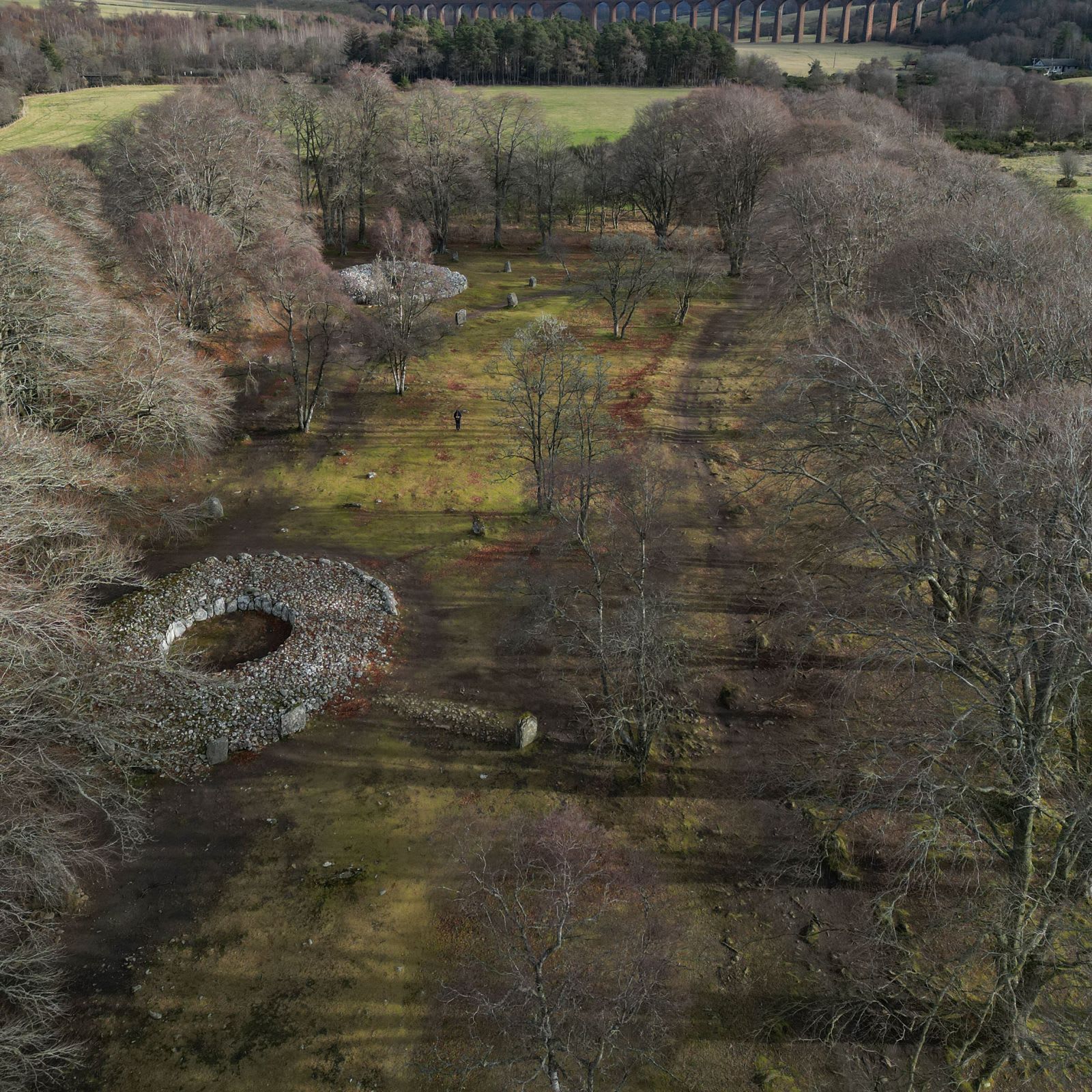
There are many other sites in Scotland associated with Outlander – one is Clava Cairns, the prehistoric site thought to have inspired Diana Gabaldon’s Craigh na Dun where the heroine travels through time. The show often sparks a real interest in Scottish history – especially the Jacobites – in its fans.
Flora’s is not the only story that the Inverness Castle Experience could tell. The Battle of the Braes court cases were heard here and several crofters were jailed. This gets a mention in a timeline on the cafe wall, but that is all.
Mary Queen of Scots was initially refused entry to the castle in her Highland tour during a dispute with the Gordon family that ended in the Battle of Corrichie, featuring a weird prophecy that I wrote about here.
I think whoever planned this has underestimated the genuine interest that visitors have in history. Individual stories are what brings that alive and makes it engaging.
On the morning I went last week, I arrived just before the doors opened at 10 am. But I had to wait until 10.30 in the cafe because the first slot was full. A party of guides, some in kilts, were being taken round the place for the first time by Visit Scotland. They will have plenty of scope to add value to the Experience.