
Scotland’s mood as the Holyrood election approaches seems calm rather than excited. John Swinney is expected to be returned as First Minister. He is a moderate type that middle Scotland knows well and is fairly comfortable with; there is unlikely to be a stampede to the polls to get rid of him.
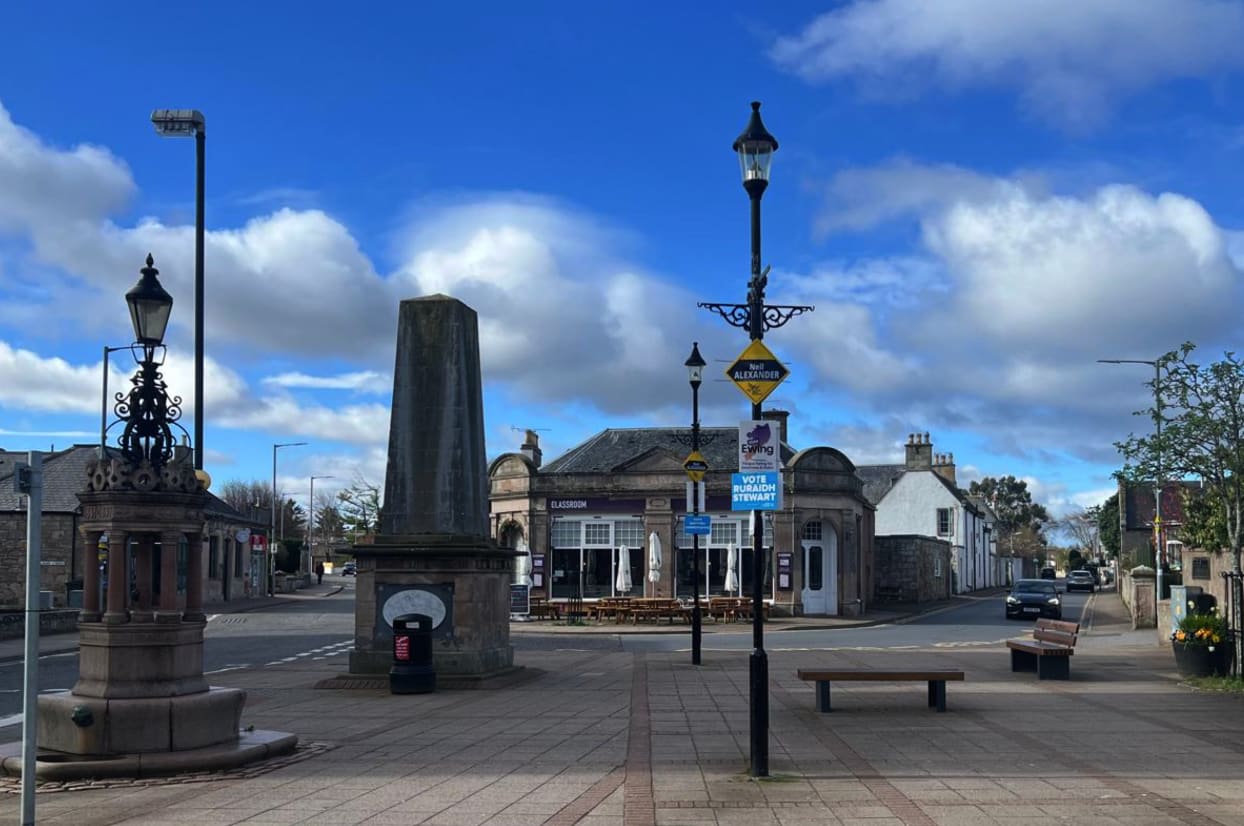
There are individual seats that it is hard to call though. I stopped in the pretty, beachfront town of Nairn briefly yesterday. An unscheduled visit, it was prompted by the fact that I missed my stop on the train to Inverness airport, where I was collecting our car.
I made the most of my window of opportunity to take Nairn’s temperature. This is where Fergus Ewing, a long-time SNP stalwart who has now left the party, is standing. He could potentially split the pro-indy vote. The Conservatives came second there last time. But on the other hand, Ewing is politically conservative and he has also said he wants to put independence on the back burner for ten years – so it is possible he could take votes from Unionists.
As I sprinted for the number 10 bus which Google informed me – wrongly – would take me to the airport, I saw plenty of evidence of electoral activity, with many lamp posts sprouting cards. There were certainly quite a few banners for the Conservative candidate, Councillor Ruraidh Stewart, as well as many for Ewing and for the SNP.
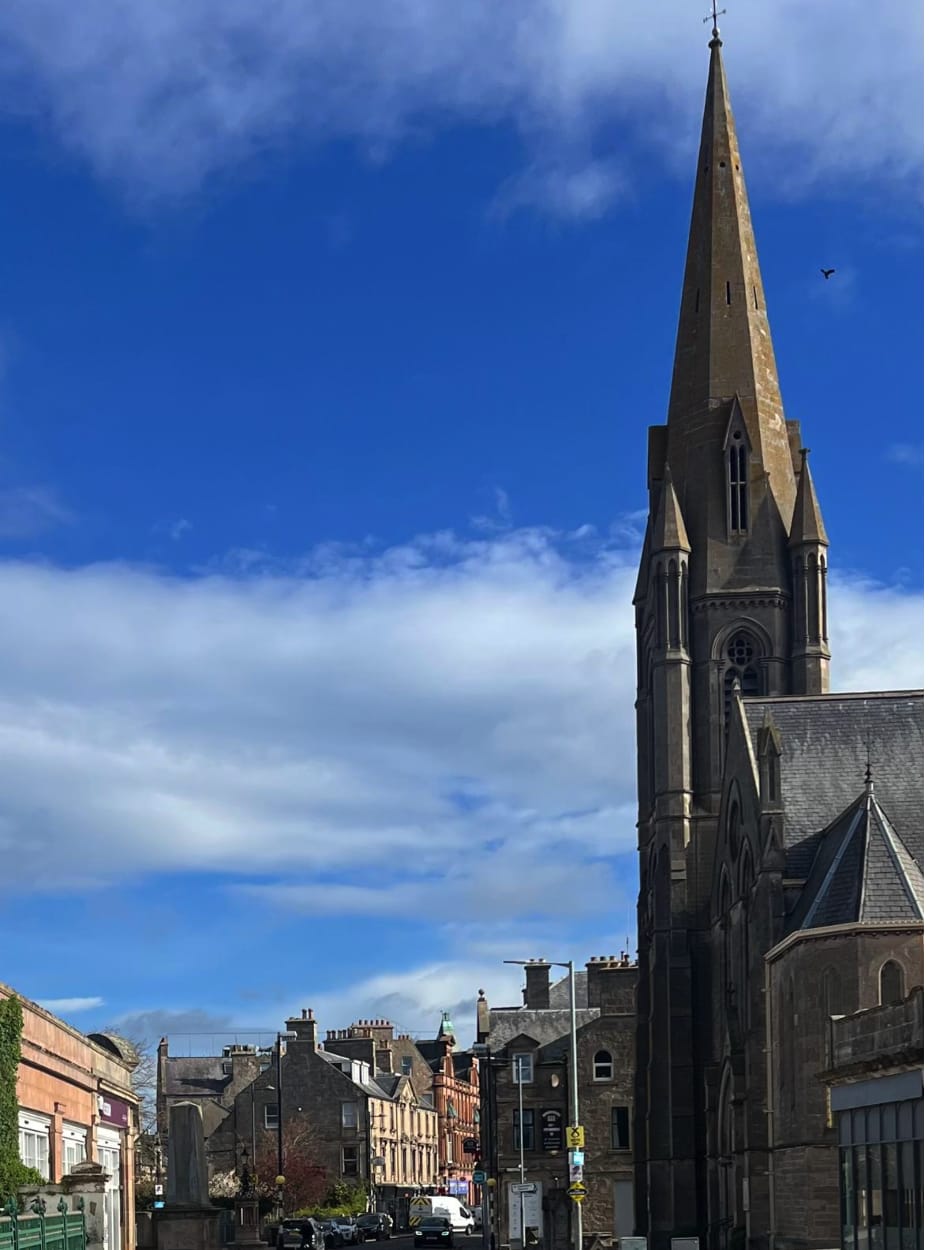
Returning to the station – Hey Google, it is the 10A – I chatted to a few folk. Two middle-aged men said they were generally scunnered with politics but would be likely to vote for Ewing, who has been the MSP since Holyrood opened 27 years ago.
Ewing has his fans – but one woman said acerbically that local knowledge cuts both ways. She thinks it might be time for a younger candidate. She had heard good things about Emma Roddick, for the SNP. My interlocutor knew that Roddick was once homeless and felt she is more sympathetic to the problems facing the upcoming generation. Roddick, who is roughly the same age as the time Ewing has been an MP, lost both her parents at a young age. She often talks frankly about the stigma of homelessness and about her mental health struggles, arguing that these inspire her to fix systems that failed her.
Next stop after collecting the car was the port of Ardersier, which sits at the mouth of the Cromarty Firth, within one of the UK’s new freeports. This industrial site was a hub of the oil and gas industry in the 80s and 90s, where thousands of skilled workers built oil rigs.
Its reincarnation as an Energy Transition Zone is the Highlands’ single biggest regeneration project. It has been funded by £50 million from the Scottish Government’s newish Scottish Investment Bank. The UK equivalent, the UK Infrastructure Bank, has also put in £50 million.
The yard was cleared in anticipation of the arrival of the Ming Yang wind turbine factory, which was to involve an investment of £1.5 billion and thousands of jobs. But last month, the UK government rejected the proposal on security grounds. This has become an election issue. Swinney said the Scottish government was not consulted or informed about it, despite the fact their investment is on the line.
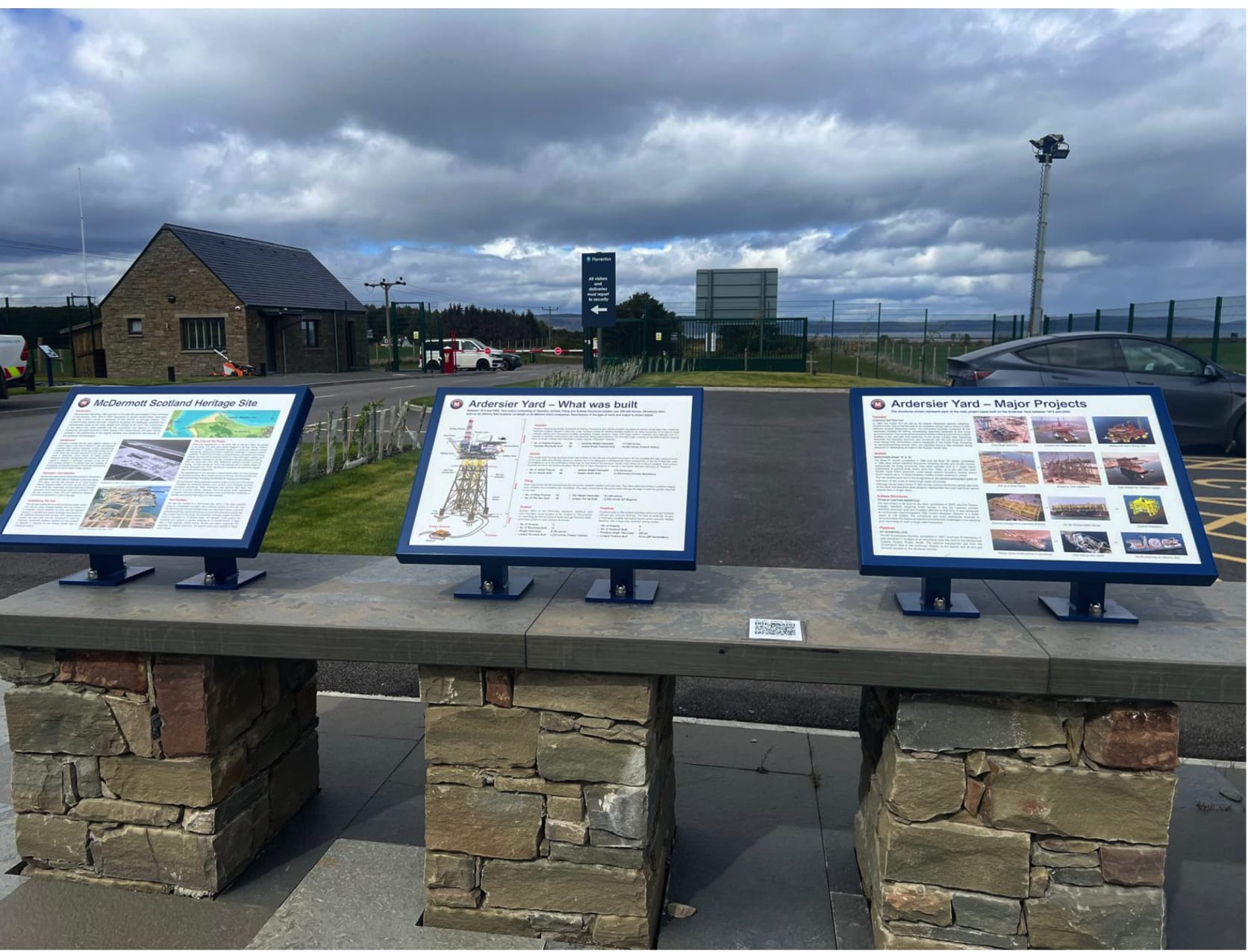
I drove to the gates of the port, now owned by a company called Haventus. The guards who came out of the gatehouse said I couldn’t enter without an appointment, even to take a photograph.
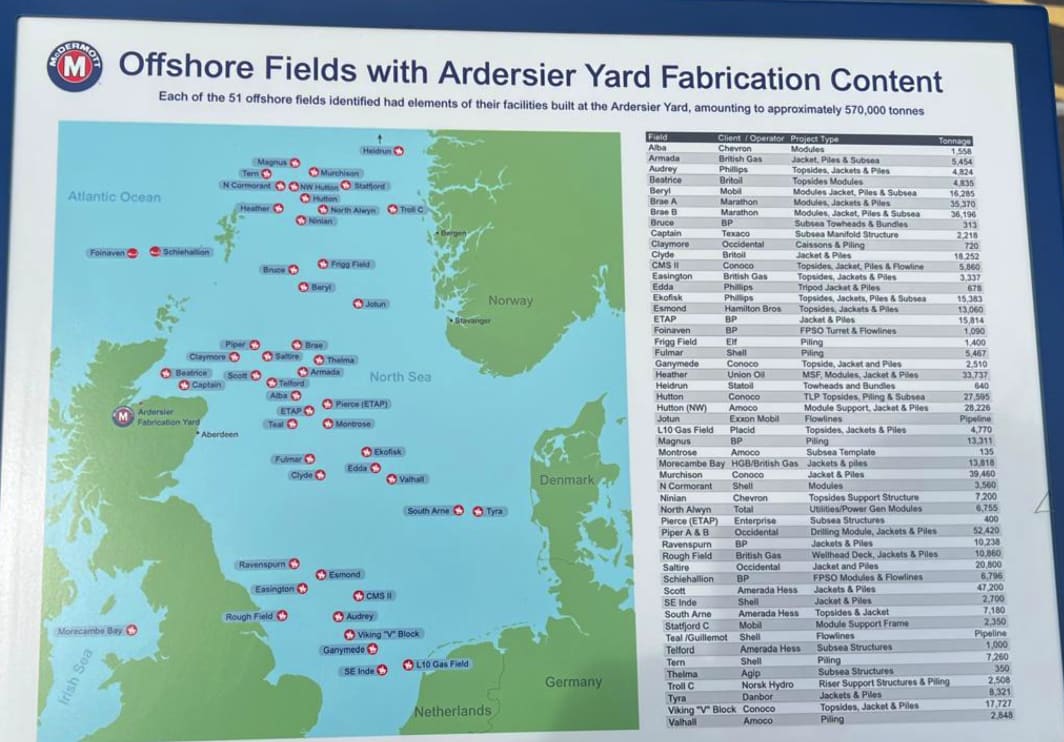
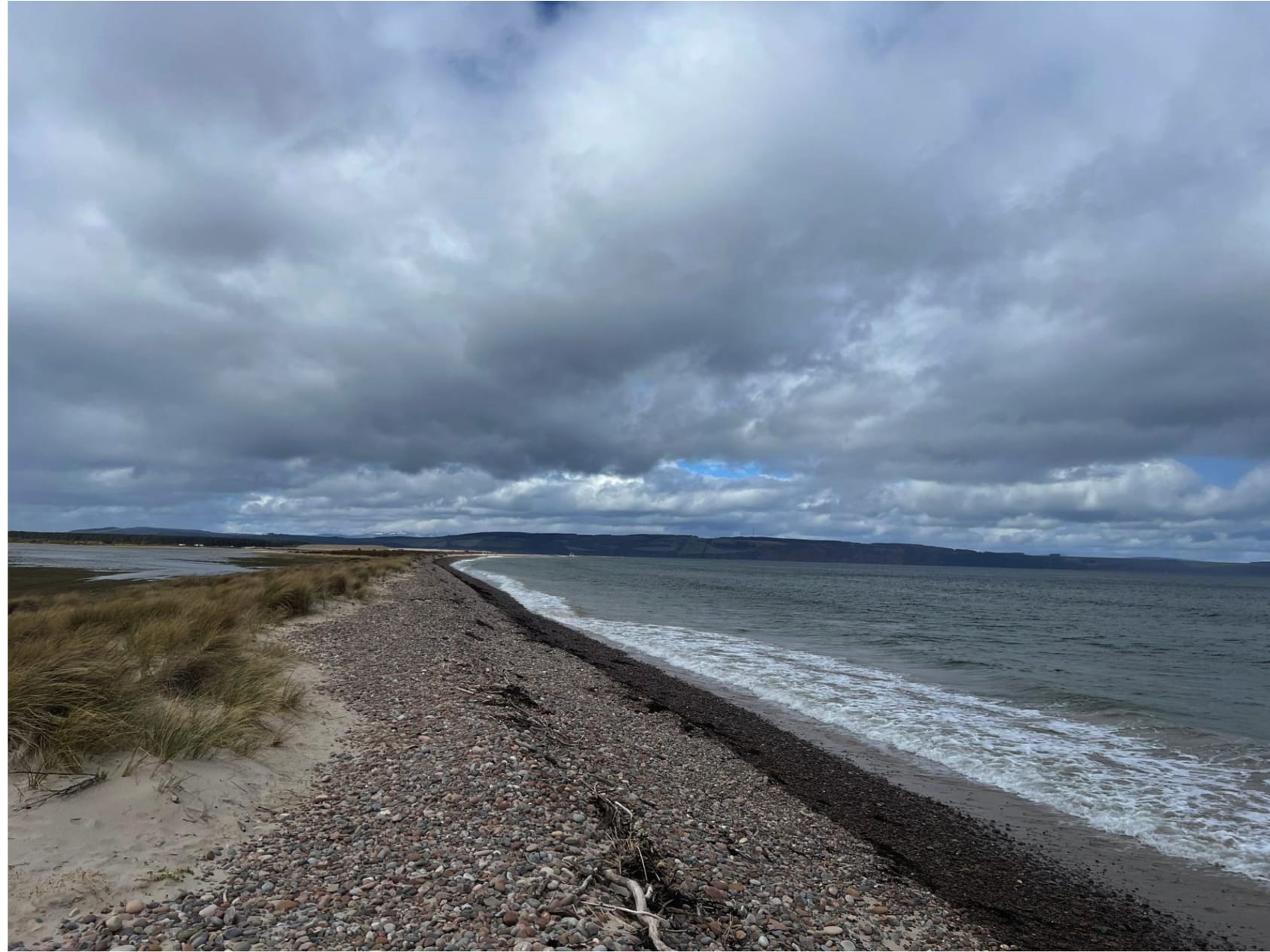
There wasn’t much to see at the gates apart from some plaques explaining the yard’s history. Someone suggested that I go down to the Secret Beach to get photos. I drove along there – not a particularly well-kept secret, judging by the half dozen cars parked. The path to the sea was lined with deep rows of gorse bushes, all in full flower, and the air was heavy with the coconut scent they give out at this time of year. The linties were singing their heads off. The tide was in, so there was only a narrow stretch of stones and sand on the other side of the links land. The yard remained stubbornly out of sight, so eventually I turned back.
As I resumed my journey south, instead of heading for the A9, I took the B road from Nairn to Carrbridge, through the foothills of the Cairngorm mountains with the white-topped peaks shining in the distance.
En route, I listened to the Holyrood Sources podcast. The cross-party presenting team – broadcaster Calum Macdonald, former Alex Salmond Chief of Staff Geoff Aberdein, and former Scottish Conservative communications director Andy Maciver argued that the party that will eventually defeat the SNP does not yet exist. It will have to be a Scotland-only party, given the electorate’s long-standing reluctance to back the Scottish branches of UK-wide parties at Holyrood.
The idea struck a chord – I find myself annoyed by the Unionists’ party leaders’ supercilious response to questions about the mechanism for another independence referendum. They tend to look down at the questioner with an air of patronising superiority and say that nobody on the doorsteps wants to talk about such an abstruse topic. Lib Dem leader Alex Cole-Hamilton even said airily at the BBC leaders’ debate that he had never given it a moment’s thought.
If I was the leader of the Lib Dems, I would say that there probably will be another indy ref in the future and that if and when that happens, I would hope there would be a third question on the ballot paper offering devo max. I would say that yes, Scotland needs more say over how its energy resources are managed, industrial policy, trade. The Scottish government should have the right to be consulted over decisions that affect Scotland. It could have migration powers similar to what Australian states have. Scotland could have a similar relationship to the EU as Northern Ireland. All these things could be available within the Union. That is what I would say.
As for Labour, if I were in charge, I would do more than blow the dust off what I was saying in 2014 and just trot it out again – it sounds a awful lot like Scotland is just not up to managing its own affairs.
After this election, if the polls are right, Scotland’s Unionist parties will have some time on the opposition benches to reflect.
For sure, issues like the cost of living, energy costs, the ageing demographic, the shortage of essential workers, and housing are causing real concern. The election is a time to examine how best to improve those complex problems. But there is a lot to be grateful for too.
As I drove through the fertile farmland of Scotland’s east coast sprouting green shoots, and then up into the heart-lifting peace of the high places, with the news on the radio telling of all the trouble in other parts of the globe, I reflected that there are a lot worse places to be than the Highlands on an April morning.