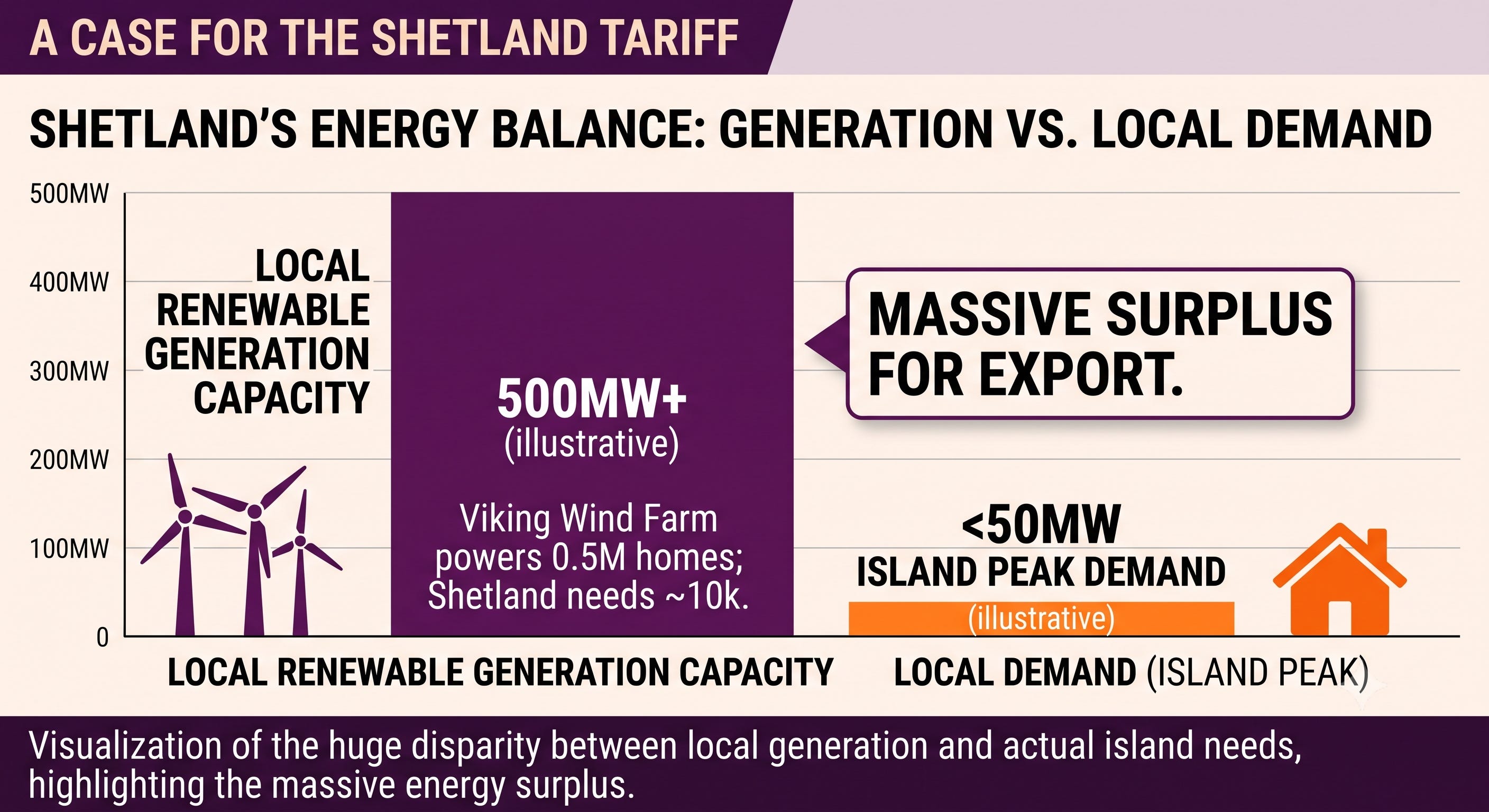
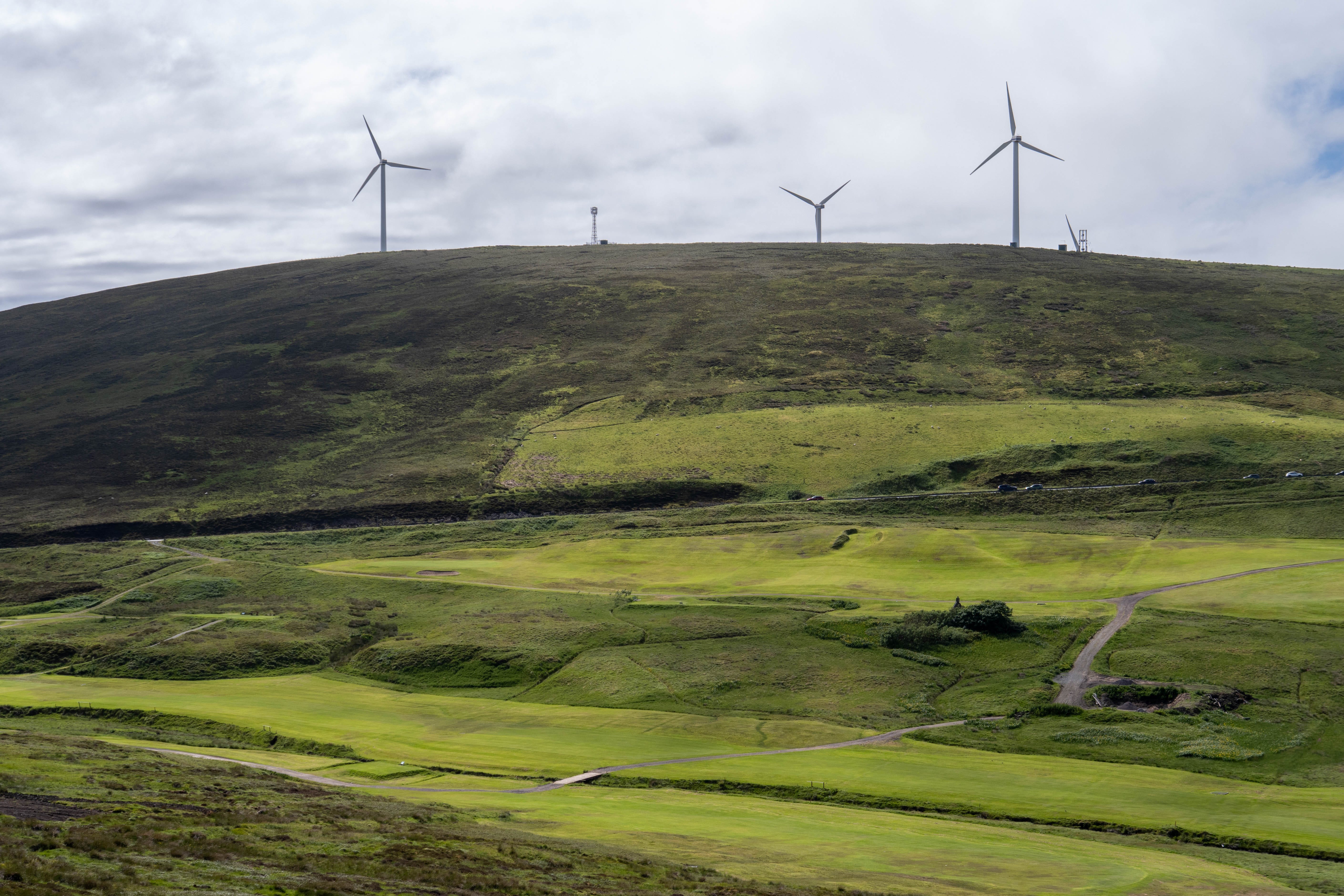
When I visited Shetland recently on holiday, I read and enjoyed Marianne Brown’s book about how plans for the huge Viking onshore wind farm divided the community, The Shetland Way. Opened two years ago, it is the UK’s most productive onshore wind farm, making enough power for 500,000 homes.
Brown makes the point that to defeat climate change, we are going to need more big initiatives like Viking. But these will have to benefit the communities that host them more than they currently do.
Shetlanders have been rightly disappointed by how the project has unfolded. The benefit they get from Viking is minuscule and does nothing to outweigh the unfairness of how they are treated in the UK’s privatised energy system.
A lot of what Prime Minister Andy Burnham is promising in terms of devolution doesn’t apply to Scotland. But the UK government is fully in control of managing Scotland’s energy. Burnham could prove that he can make a real difference right now – by mandating that Ofgem introduce a Shetland electricity tariff, or an Isles Tariff (because it is a similar story in Orkney and the Western Isles).
Shetland’s pain
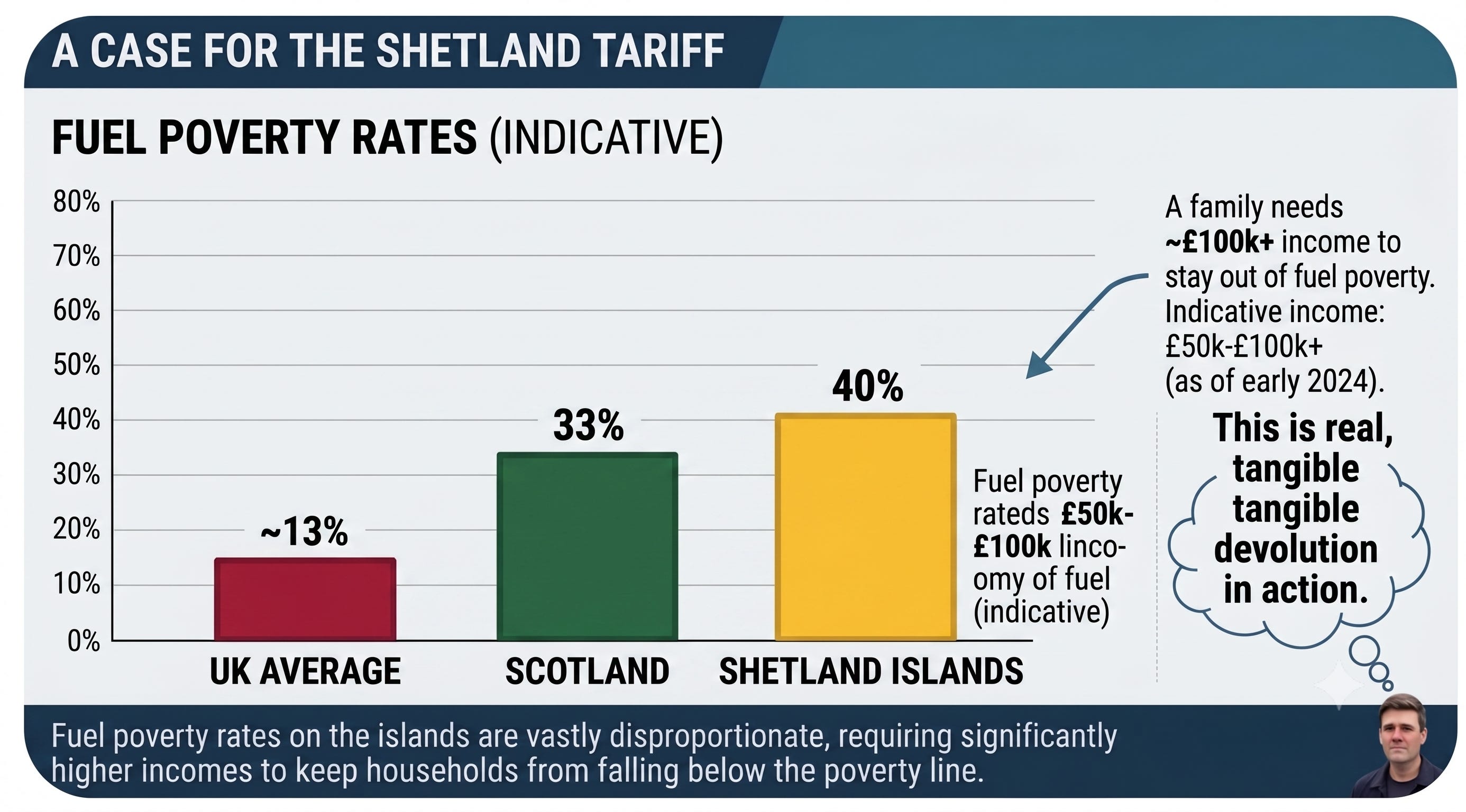
When you hear that UK “average” energy bills are going up by £220 a year, spare a thought for Shetlanders. They will go up by more than £300 there because average bills are more than £1000 a year higher than the UK average. A household income of between £50,000 and £100,000 is required to stay out of fuel poverty.
-
In the UK, gas is priced per unit much lower than electricity (about a quarter of the price), so most of us heat our homes with gas. But Shetlanders don’t have access to the gas network.
-
It is much colder in Shetland for much more of the year, so they use more energy.
-
When it comes to standing charges, Shetlanders are charged more per day, however much they cut back on their energy use.
-
For technological reasons, it is much harder for Shetlanders to get a smart meter, so they can’t benefit from cheap overnight rates either.
-
The Shetland Isles are making a very disproportionate contribution to the UK’s transition away from fossil fuels but they are not benefiting.
The UK gov should bring costs for the islands more into line with UK average
Shetland MP Alistair Carmichael has lobbied in Westminster for “a geographic tariff” or “an isles tariff”. This would be for everyone who lives in the islands rather than the other proposition of a social tariff, which would only be available to low-income households.
Ofgem replied that they don’t have the power to do this – they can’t single out an area for different treatment (of couse Shetlanders are already sunject to different treatment because of the reaons I outlined above). Ofgem are an arm’s-length quango controlled by Westminster and only Westminster could make this happen.
But Shetland has little electoral clout within the UK. Their plight goes unnoticed. Nobody has made the case that a policy instrument is needed to bring what people pay to heat their homes in Shetland and the other islands more into line with what people pay in the rest of the UK.
The UK gov prefers to waste energy than let Shetlanders use it cheaply
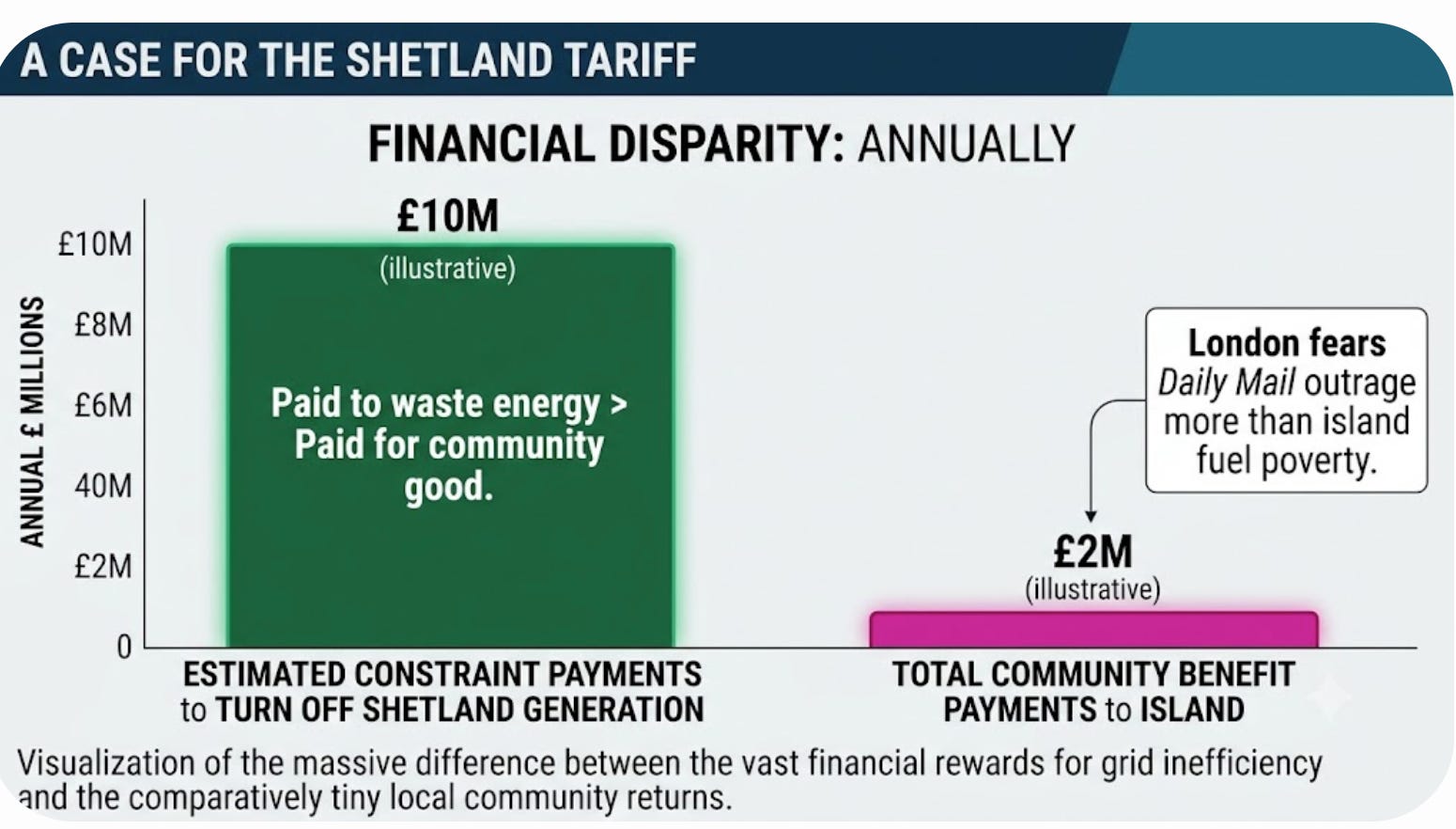
Often, when it is windy, the slender white turbines that dot the ridge of hills near the main road are still. They are turned off because the grid connectors to the mainland are full. Then SSE, the company that owns Viking, gets paid a premium rate to turn off the turbines.
If every home and business had a subsidised battery and there was a cheap Isles tariff, people and businesses could mop up some of that abundance instead of wasting it.
There is no need for pensioners to shiver under blankets or children to do their homework in bed in Shetland when the place is so energy rich. This is a policy choice and one that Andy Burnham could change.
That cheaper energy could be used in ways that build the local economy. In Sweden, cheap electricity in the north is used to attract energy-intensive green businesses – green steel, green hydrogen, green fertiliser. (We hear a lot about the fertiliser stuck in the Straits of Hormuz, but there is nitrogen in the air that renewable energy can release.)
The grid lock
One of the sticking points about a geographic tariff is the effect it would have on SSE’s profits. Private companies can only do work that is profitable – they don’t exist to provide affordable power. It is not of interest to their board. It does not create “shareholder value”.
SSE argue that because of the way the numbers stack up on Viking, they can only afford to pay a mingy amount in community benefit payments – about a fifth of what they get paid to waste energy per year.
That is because of what they have to pay towards the cost of building and maintaining the grid infrastructure to move power south.
Many Scots are aware that the notion of it being fair to keep charges the same across the UK is only used when it works to England’s advantage. Energy companies in Scotland are charged much more than those in England to use the national grid. Who is that fair for?
In the UK, the grid is privately owned. In most countries it is national infrastructure funded from taxation and energy companies are charged the same to access it wherever they are based – a “postage stamp’ style system, like the way we all pay the same to post a letter wherever it is going across the country.
Even in the state of Texas – energy is managed at state level in the US – the state built grid infrastructure to encourage the use of wind. On this podcast, Republican Pat Wood, head of Texas’ Public Utility Commission, justifies the investment in theological terms: “It’s the breath of God; it comes straight from his shining face”.
Shetland is favoured with a lot of heavenly puff. The islands are contributing hugely to the UK’s transition away from burning fossil fuels. Their inhabitants should be treated more fairly when it comes to what they have to pay to use some of that energy.