
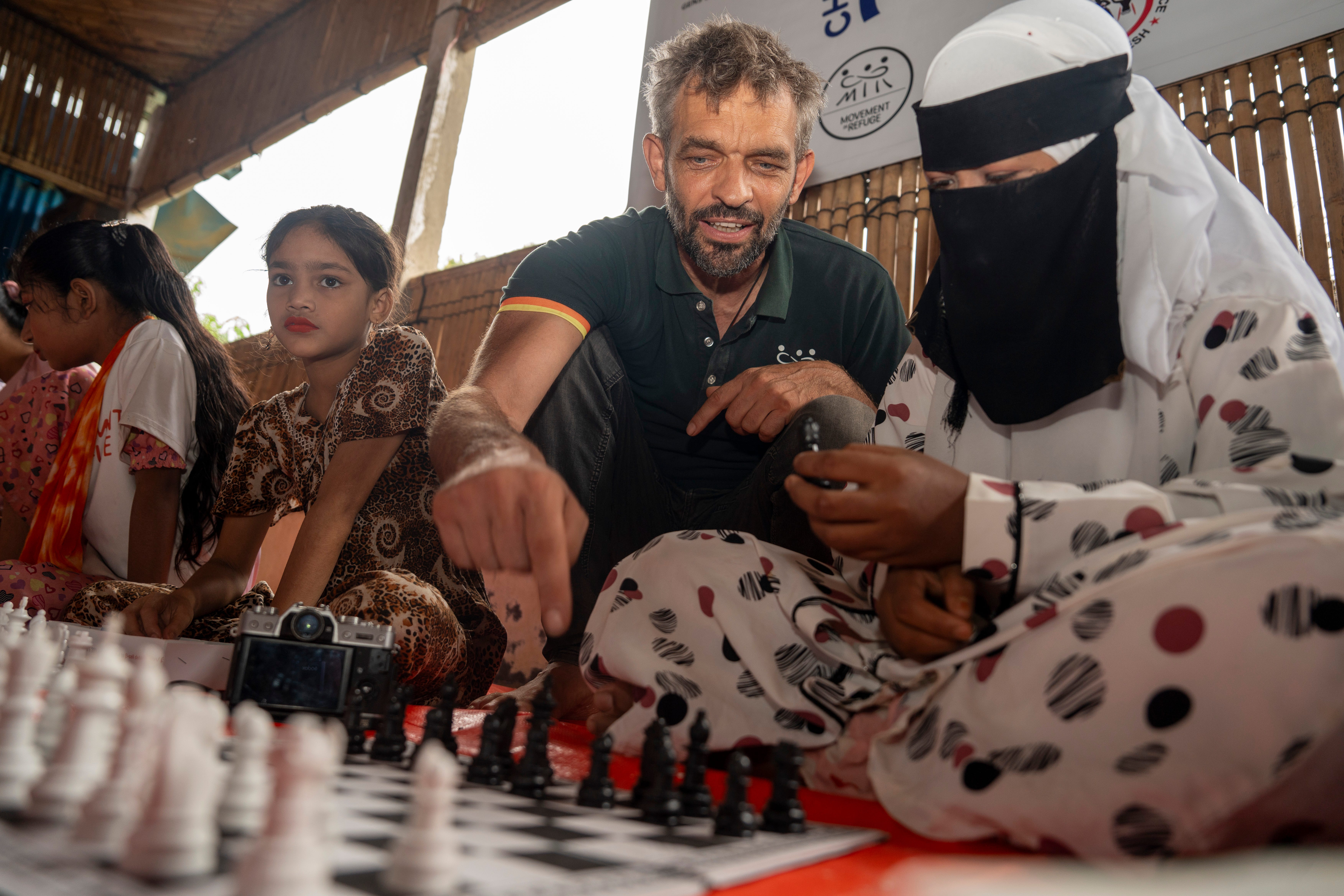
Here is a guest post from an old friend, Magnus Wolfe Murray. I have known Magnus from youth. In his early twenties, Magnus went pretty much overnight from exuberant skateboarder to humanitarian aid worker.
This was around 1989, the year the Berlin Wall came down. The shock wave of that brought down the corrupt regime in Romania a few weeks later and exposed the horrific Romanian orphanage scandal. A desperate population had been compelled to leave children they couldn’t care for in state-run institutions where they were criminally neglected.
Magnus and his brother Rupert joined the volunteer response to that catastrophe. With the support of their mother Stephanie, they founded Scottish European Aid, which took over an orphanage and transformed the care of the children. They discovered then that the hardest thing to deal with was the psychological damage.
Magnus, who has been an international aid worker ever since, is drawing on that experience with his new charity Movement in Refuge, which was incorporated as a Scottish charity last month. They are appealing for volunteers, interns and donors – see below.
How “Movement in Refuge” is helping young people displaced by conflict build hope
Magnus Wolfe Murray
For many of the world’s refugees today, the crisis doesn’t end after a few weeks or months. It becomes a long-term reality. Displaced people need food, water and medical supplies – but beyond that they need hope.
Over the past five years, I have been working on the Rohingya refugee response in Cox’s Bazar, Bangladesh – right on the Myanmar border – now home to over 1.2 million people forced to flee persecution that has now been recognised as a genocide by many countries.
What is Cox’s Bazar Refugee Camp?
Around 750,000 people were forced out of their homes and villages in Myanmar in 2017. The Bangladeshi Government offered them a safe place, a refuge, just over the border. Government donors including the UK provided the funding to set up an enormous camp, now known as the largest refugee camp in the world, on hilly forest land just in from the coast.
The UN and many charities set up basic services, shelters, water supply, sanitation and health systems in a remarkably short time. What they have achieved is a wonder to behold. Imagine all of Edinburgh is suddenly displaced, and half of Glasgow, and we had to organise an entire temporary city in the Pentland Hills within 6 months. I wonder how we’d cope.
It started as an emergency response but nearly a decade down the line, the situation shows no sign of being resolved. And so the people live here; their shelters are incredibly small – around 6x4m for a family of six, built from bamboo and tarpaulin roofs. Their camps are surrounded by a three-metre barbed wire fence, and entry is controlled by local police.
Food, water and shelter remain essential. But people need more than survival. They need hope, meaningful activity, purpose.
No hope, no future
As the years go by, children become teenagers and teenagers become adults. Many have spent almost their entire childhood in the camps. These young people are growing up without the opportunities many of us take for granted, like going to secondary school, learning skills, attending universities.
Even paid work is not possible: the Bangladesh Government has placed restrictions on refugees in the workforce to avoid accusations of undermining their local labour market, especially when youth unemployment is pretty high in Bangladesh.
When legitimate pathways disappear, people inevitably look for alternatives. Without those things, people become vulnerable to criminal gangs or drug trafficking networks that operate around the camps, or people smugglers offering them a route out (many die at sea on perilous journeys to Malaysia or beyond).
Boys are vulnerable to gangs
Boys and young men are able to play outdoors, in the few open spaces available, but there are precious few coaches or equipment. (Less than 0.1% of young people there have sports coaches, training, or equipment- a statistic that would be unacceptable to families anywhere in the world.)
It’s tragic to see teenagers or young men sitting around, frustrated, full of beans and energy and potential, with literally nothing to do. Online gambling has recently taken off, and with smart marketing like giving a few bucks freebie start-up, young men have become addicted and then resort to crime to find funds to pay their debts.
Girls are isolated and depressed
Girls face even more difficult challenges. Families are concerned about their safety, partly for cultural reasons, but partly because of their situation. Gender-based violence increases in almost every conflict and displacement setting globally. Risks of harassment, violence against women and girls and kidnapping exist, so families tend to restrict their movement to within their shelters or the immediate area around them. As girls grow older, many become increasingly isolated and depressed.
The effects on confidence and physical and mental wellbeing can be profound. Sports, yoga or play are just not available for these girls and young women. Or young mothers, older women too. Imagine a community twice the size of Edinburgh with no sports or physical wellbeing training at all. None. What would happen in our communities if that happened?
Movement in Refuge was born after a personal tragedy
It was these realities that led me to establish Movement in Refuge. My late fiancée Kasha Rigby was also passionate about this work; she died tragically in early 2024 before we could get it started. After that, I realised I had to focus on this full time.
I realised that we needed to train women from within the refugee communities to become coaches for girls and women, and the same for men to support boys. This just seems way better than bringing in trainers from outside, or internationally, to run occasional activities. These coaches know the families and are trusted. We have invested a lot in systems of safeguarding and prevention of sexual abuse and exploitation to make sure that students and their families are safe and feel confident to train with their coaches. We make sure to maintain a system of women coaches for girls, men for boys.
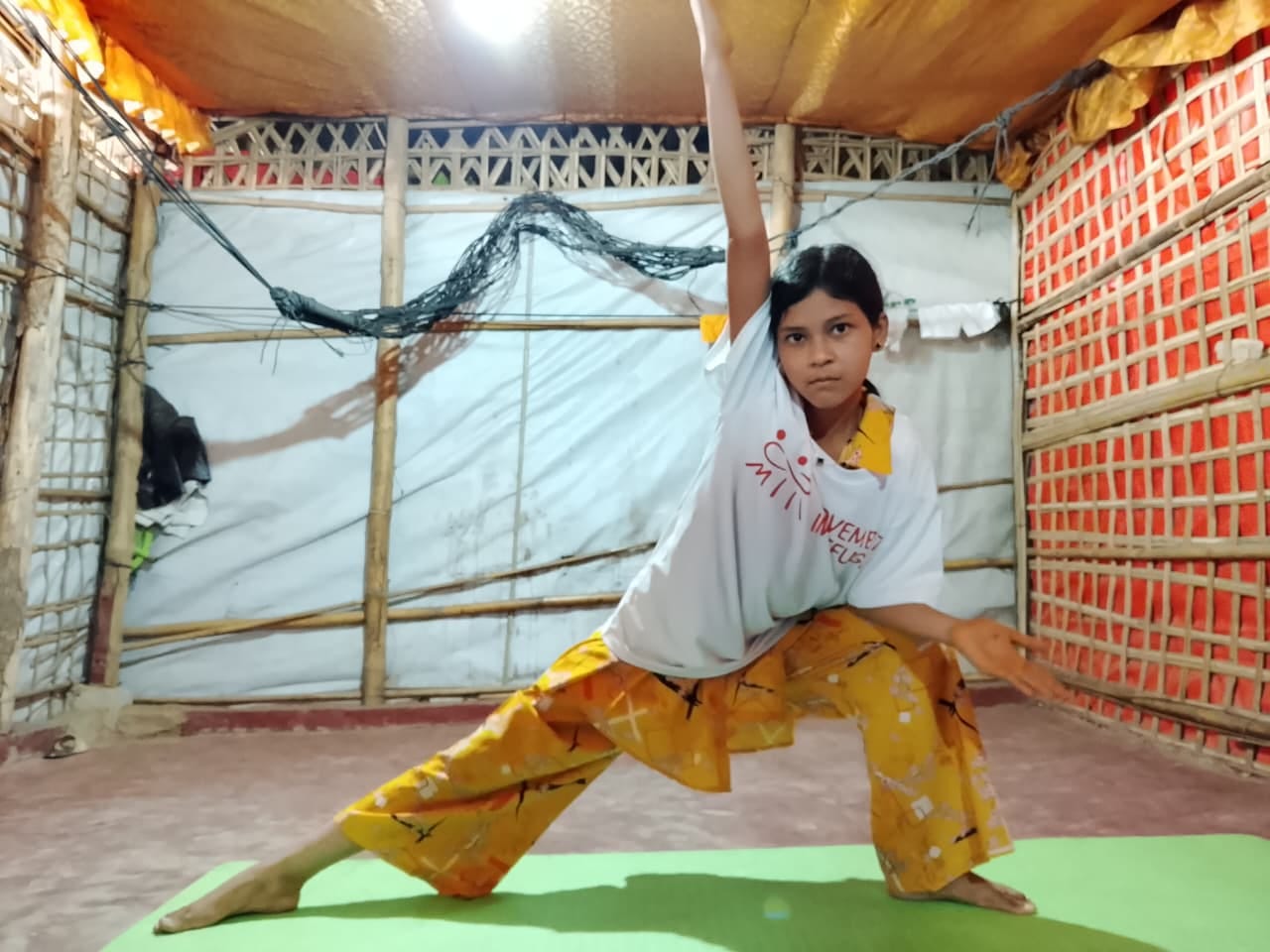
Whether it is a yoga session in a community space, a game of roundnet (often known as Spikeball), or a chess lesson that can continue inside a family’s shelter, the aim is to give young people opportunities to connect and imagine a future beyond the boundaries of the camp.
An amazing change
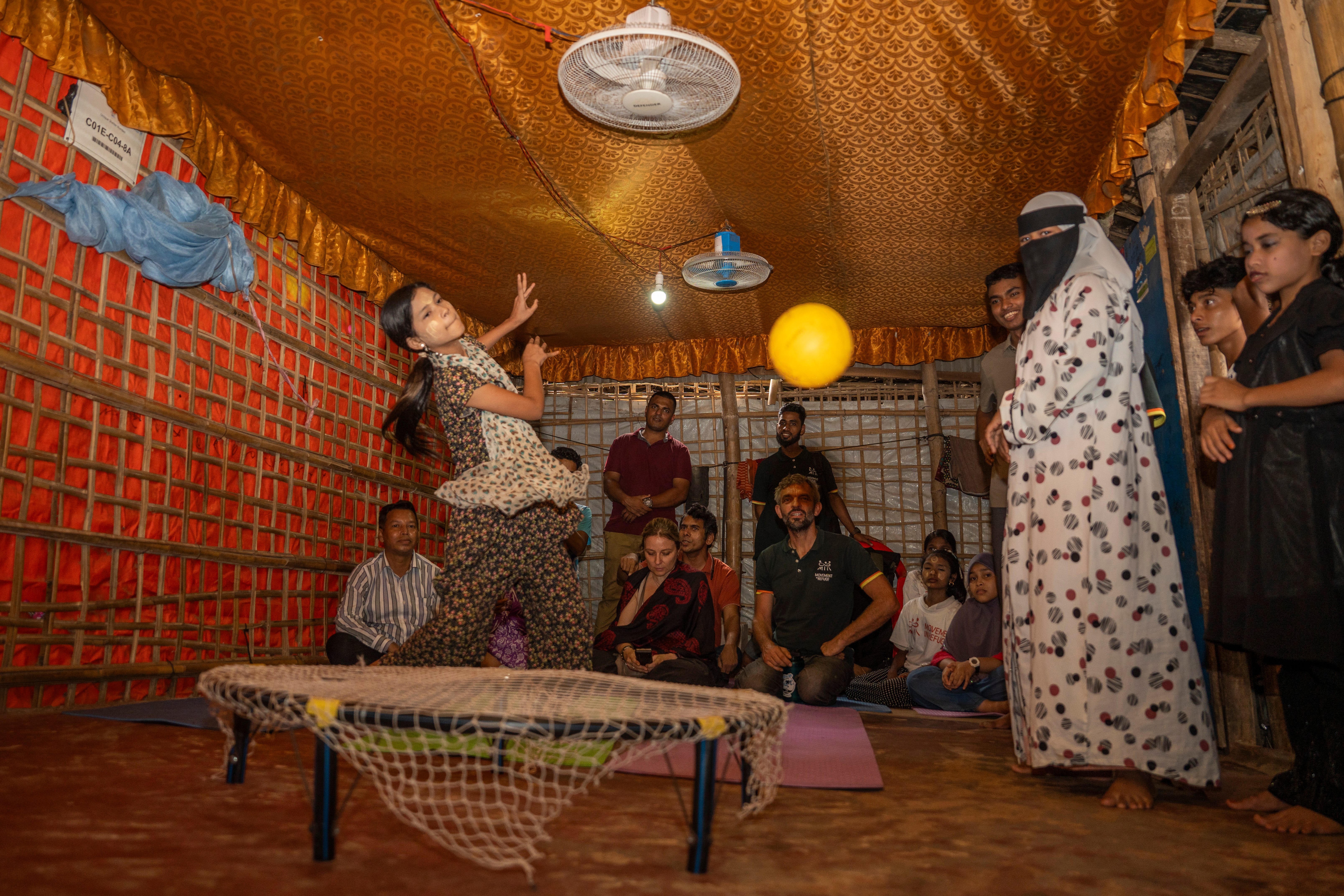
It has been just amazing to see the change in the last 15 months or so. I introduced roundent because it’s a super fun and dynamic sport that can be played in a small space, like a refugee shelter, so girls and women could play. As they hadn’t had any sport for, well, ever, their hand-eye coordination was pretty much non-existent. Their sense of space, how their body moves, their left and right movements, their reflexes. All these had to start from scratch, and we gave them time.
We weren’t in a rush. We shared simple yoga and strength training techniques with the community-based coaches we’d recruited, so they became more flexible and slightly stronger. From these, they spoke of how much more energy they had, how much better they were sleeping, how they felt less stress and tension.
Sunshine Girls
Then they started to improve in the roundnet, really starting to get the rules and doing rallies. In January this year, we put on the first roundnet tournament – 88 teams in all, almost half of them girls. It turns out it was the first ever such tournament in a refugee setting.
We printed t-shirts in two colours, they gave themselves team names like Queen of Stars and Sunshine Girls. We shared some of the photos with roundnet players in clubs around the world.
People responded: these refugees were seen, recognised, celebrated from the games they were playing, the competition they were in. Not because of their refugee status. This is huge. The families loved it. The German Roundnet Federation organised a massive equipment donation appeal. The Danes got on Zoom calls and started teaching advanced techniques. We’ve been invited to the World Roundnet Championships in Paris this September to present on where we’d like to take this next. It’s moving. And it’s only one of our sports.
Chess moves
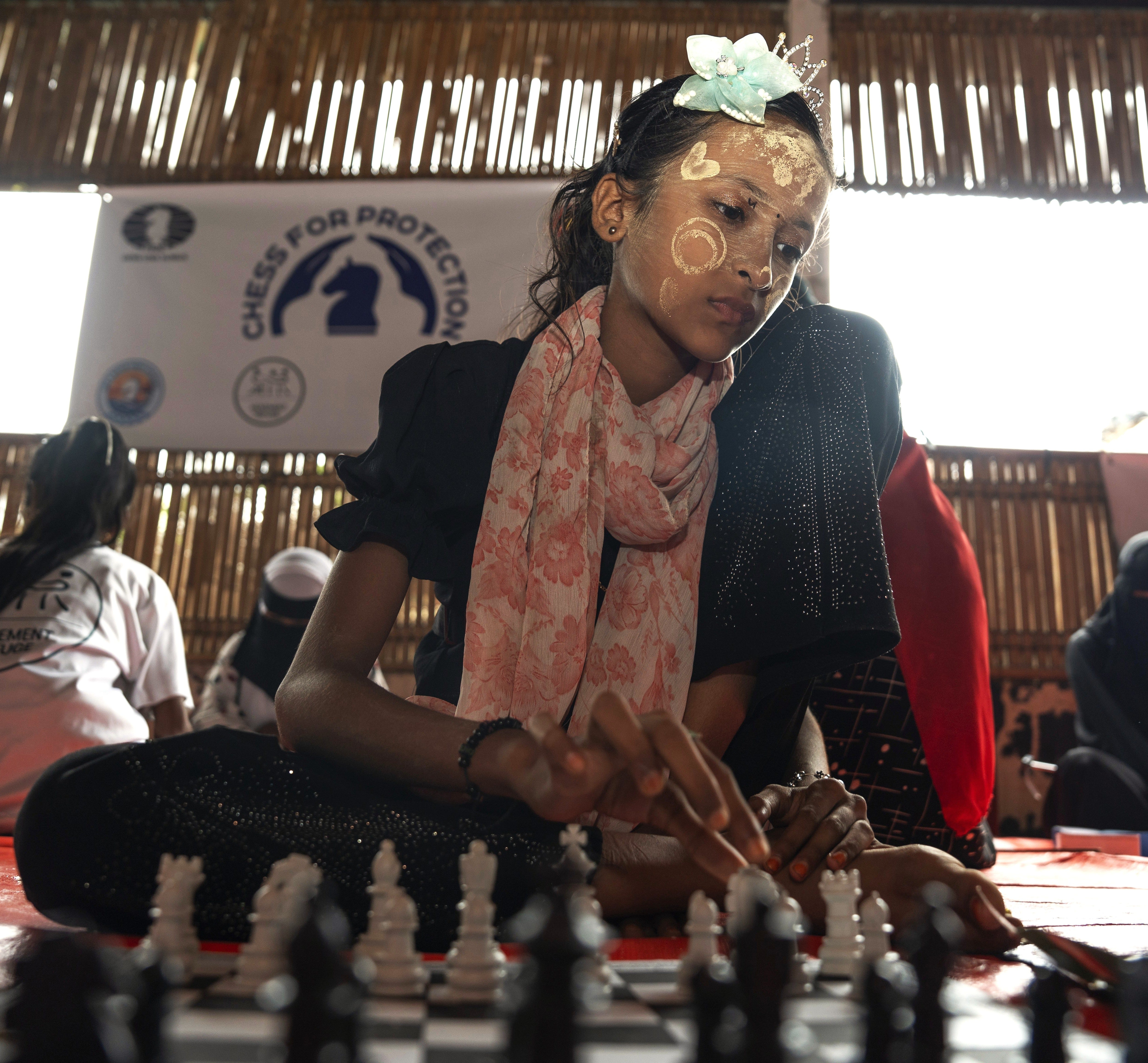
One of my proudest moments came earlier this year when we welcomed representatives from the International Chess Federation (FIDE) to the camps as part of their Chess for Protection initiative. They brought with them Monalisha Khamboo, the women’s chess champion of Nepal, whose own life was transformed through the game. Chess opened doors to education, travel and opportunities that she never imagined possible as a young girl.
Watching Monalisha stand in front of around sixty Rohingya girls was inspiring. She soon had them laughing, joking that the king was like a lazy landlord while the queen did all the work. The girls loved the humour and immediately threw themselves into learning the game. By the end, they were challenging each other and solving problems together, discovering that they could master something difficult.
Chess can be played inside a family’s shelter, in the narrow lanes between homes or in small community spaces. It creates friendships, encourages strategic thinking and gives girls opportunities to connect with one another in ways that fit within the realities of camp life. Through FIDE’s programme, they can even begin to imagine competing alongside other young refugees around the world, and maybe against kids in Scotland too, online. For children who have no nationality and no passport, feeling part of something bigger is incredibly powerful.
Children need more than food and water
After more than thirty years working in humanitarian crises, I understand that it’s totally critical – it saves lives and I am very aware of the ongoing issues around food and shelter. But at the same time we also need to invest in the things that help children and young people to build skills, relationships and just have fun together. This can help protect them from exploitation and despair later. If we want healthy adults to emerge from these camps, we must create opportunities for them to grow in healthy ways.
Movement in Refuge was established to do exactly that. Last month the organisation was formally incorporated as a Scottish charity. Until then, we were registered as a “non-profit” in the USA. I work without pay. Everyone involved gives their time voluntarily and funds their own involvement. All the money we raise goes straight to the field. We ensure that the refugee coaches who deliver these programmes are paid for their work and recognised for the role they play within their communities.
We are essentially a people-powered movement. Sure, we are firing off proposals to donors and institutions regularly, but what keeps us going are donations for ordinary folks who appreciate what we’re trying to do. My nephew donates £3.33 a month, and if a hundred people did that, we could hire 4 more refugee coaches!
We are also looking for interns, people of all ages and stages of their career who might be able to help out with a wide range of things, from finance and HR to social media, storytelling, engaging with schools across Scotland and elsewhere, reaching out to sports clubs and companies.
Get in touch directly if you’re interested in knowing more at team@movementinrefuge.org
Our website is at
https://www.movementinrefuge.org/
Our donate page is here: https://www.movementinrefuge.org/get-involved#donate
Please follow us on Instagram, Facebook, and LinkedIn for more updates too 🙂
Read a longer interview with Magnus on Letter from Scotland from last year here