

First, let me say that I do like a dram. In the pub, it is my drink of choice – a measure of Black Bottle, my favourite blend, is one unit of alcohol, 50 calories and about £3.50. I fill the glass to the brim with good Scottish tap water. My husband says I drink homoeopathic whisky; I call it lady whisky – and three single whiskies in an evening is better for my health and my head than three glasses of wine.
But when I read in the FT at the weekend that the industry is struggling with a whisky loch oversupply, I thought that maybe now is the time for Scotland to get out from what has become an exploitative global industry which delivers far too little back to Scotland,
In 2023, 1.35 billion bottles of Scotch were exported, with an average value of £4 – yes including all those rare malts. Say they sell eventually for about £30 each on average. That totals more than £40 billion and those sold in the UK add another couple of billion on top.
Hmm. According to GERS, the annual statement of Scotland’s finances, Scotland captured a bit more than £2 billion of that(*). So about 70 pence per bottle. £2 billion is actually a pretty pathetic return for an industry that takes up about a third of our premium farmland.
People protest about solar panels and data centres, but if we just covered that land in solar panels connected to data centres the value would probably be in the same £40 billion ballpark – but Scotland would capture much more of it. (Another thing we could do – and I will go into this more next week – is use the land to improve our disappointing levels of food security and food self-sufficiency.)
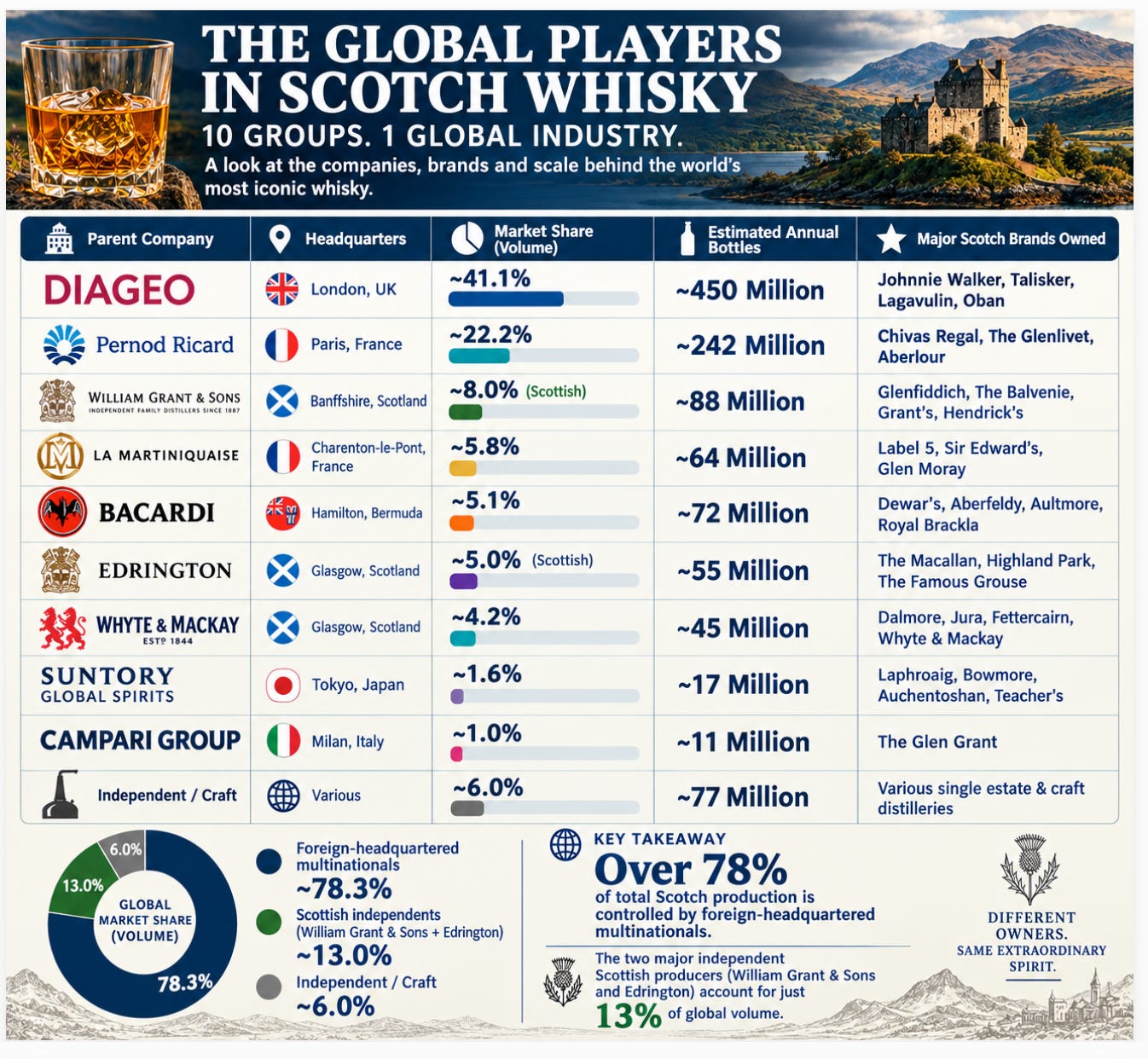
Where does the value of all that Scotch go? The ownership of the vast majority of the labels long ago passed out of Scottish hands – most famously in the Distillers Case where dirty deals done in London clubs ended up in court. Johnnie Walker was one of the brands – it is now owned by Diageo, the biggest owner of Scotch in the world, controlling one third of the supply.
Diageo is based in London and that is where the C-suite, the high-salaried employees live and that is where the corporation tax is paid. Multinationals like them can easily export their whisky from Scotland to other parts of the organisation and thus avoid creating value here – (Diageo got fined by HMRC for moving value out of the UK).
In 2012, Diageo opened the biggest distillery complex in Europe at Cameronbridge in Fife. It is a hungry monster that runs 24/7, gobbling the cereal crop of much of Scotland’s fertile eastern lowlands and turning it into basic spirit: the gin that goes to be flavoured with botanicals, the spirit base for Smirnoff vodka and Peach schnapps.
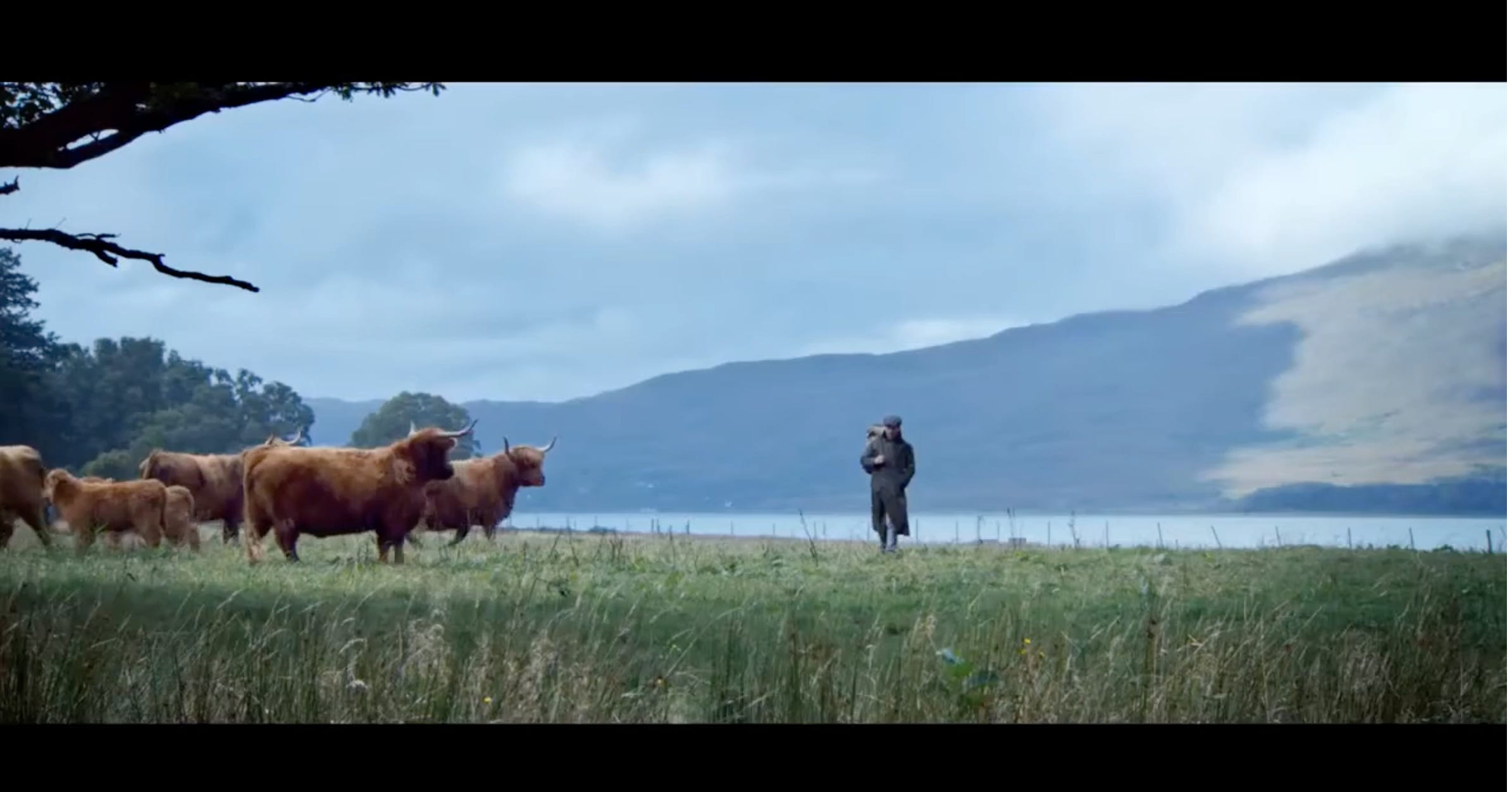
It also produces whisky – the flagship brand is the David Beckham-fronted Haig whisky. It is packaged as single grain, meaning here that it comes from a single distillery – Cameronbridge. Everything about this drink is cheap and nasty – except the commercial, which must have cost a fortune and was directed by Guy Ritchie. It paints a romantic picture of good-looking middle-aged men roaming about the Highlands in float planes, Land Rovers and motorbikes, taking photos, stopping only to play the bagpipes to their Highland coos.
The multinationals have been ramping up production – according to the FT there is enough whisky in warehouses in Scotland to supply global demand for three years without making another drop. Diageo alone has $8.5 billion worth of whisky in warehouses in Scotland. But demand has not kept pace – partly the cost of living, partly because people don’t drink as much for health reasons: there is a belief that “alcohol is the new tobacco in terms of structural decline,” writes Simeon Kerr in the FT.
Of course, this situation offers an opportunity for big players to crush smaller independent ones that don’t have the resources to survive the downturn. When market demand declines, the company can temporarily pause operations as Diageo is now doing at facilities like Teaninich. But Diageo’s free cash flow rose by $463 million last year to $3.2 billion – it can make money across its diverse portfolio while independent craft distilleries face the wall.
The Scotch industry is also putting the squeeze on Scotland’s farmers. They were initially paid a premium to start growing malting barley varieties but they are not getting that now. Perthshire grower Martin McEwen was on BBC Farming Today recently saying he will struggle to break even on his barley crop even though the crop is decent.
Distillers are paying farmers about £185 a tonne for malting barley. That is enough to make 1,000 bottles of whisky that will sell for about £30,000. Is it fair that the farmer gets about half a per cent of the value of what the land produces? I don’t think so. There are better things we can do with our fertile land than this.
Industry expert Donald Blair wrote in an opinion piece in the National (a couple of years ago but it stuck with me): “[Economics] Professor Sir John Kay estimates that only around 2% of the global retail sales value of Scotch whisky remains in Scotland – mainly as wages for relatively lowly-paid jobs in production facilities and local purchases of goods and services…Quite simply, the vast majority of revenues from our liquid gold haemorrhages out of Scotland to non-Scottish enterprises. As the late Sheikh Yamani, Saudi oil minister in the 1970s, said when oil was $4 a barrel, “Everybody is getting rich from our oil except us!”
So, thinking about this, when I ask for a whisky next time I will be peering behind the bar for one from a small independent producer, like Kilchoman on Islay or the oldest independent distillery in Scotland, Springbank of Campbeltown,
*Assuming whisky makes up 80 per cent of Scottish alcohol production