
At Edinburgh Freelance NUJ meeting this week, we heard from Duncan Campbell, branch member and veteran reporter on the British security services. The meeting was originally billed as an update from Duncan on a book he is working on called The Decoy Game.
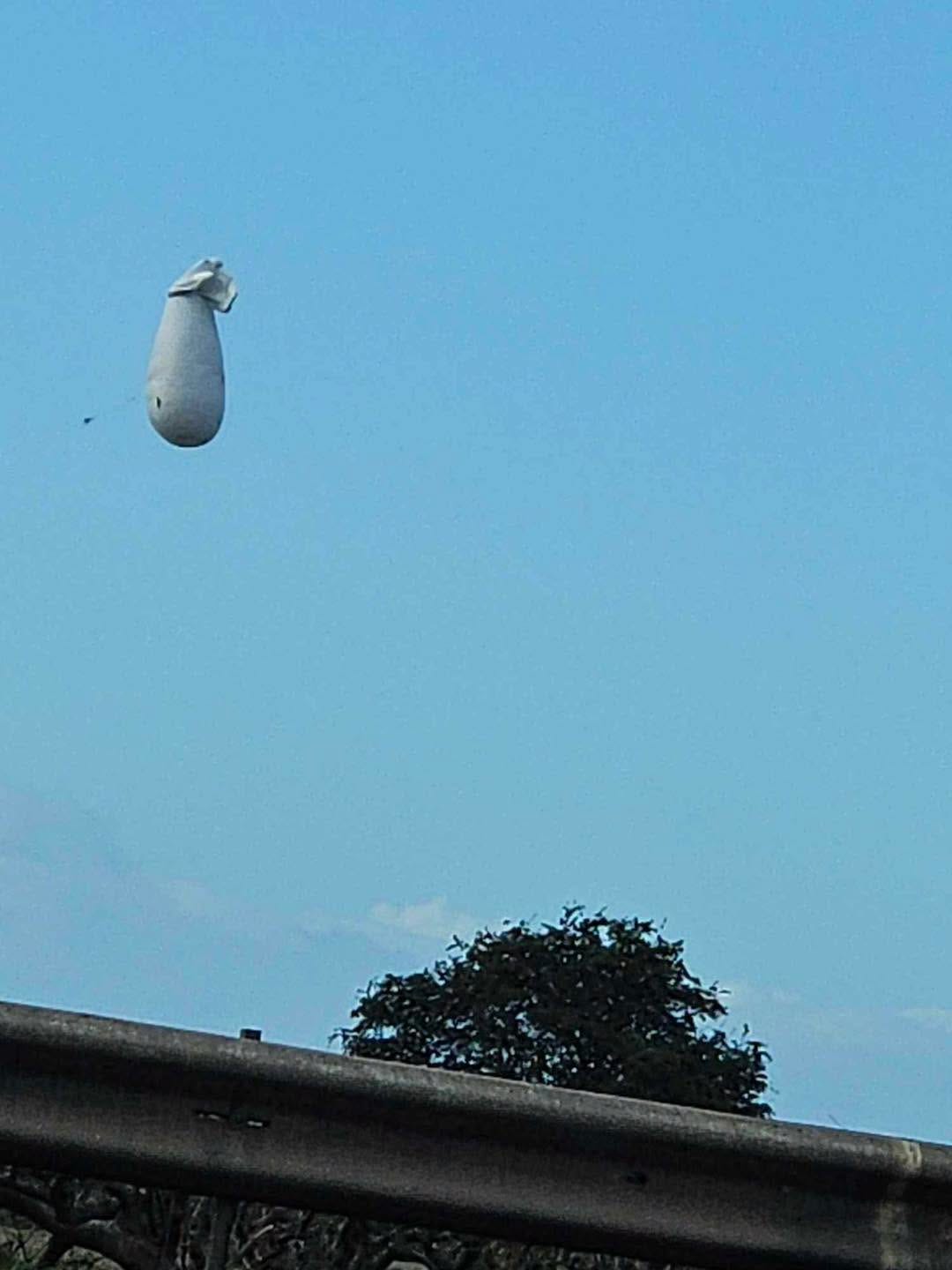
It was fortuitous timing. Duncan explained that in the couple weeks since we scheduled the meeting, a story had quite literally broken. Trident’s backup communications balloon went bust during its annual test over Yorkshire.
The MOD has said nothing about this. We don’t know why it happened, but we know that it did – many people filmed it on their phones.
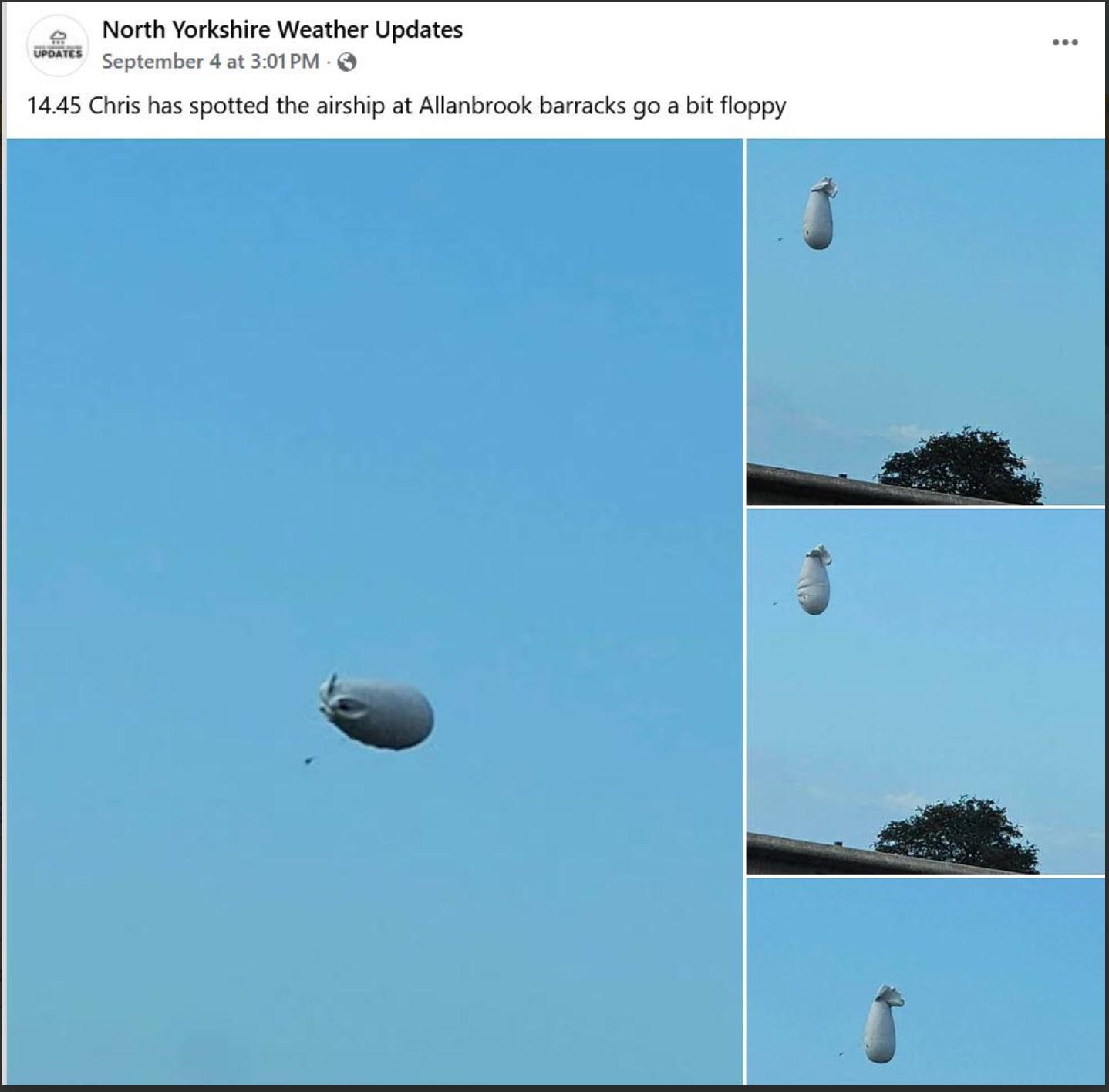
Initially, Duncan thought it may have been due to windy conditions. But after examining the images, he has concluded it was shot down, probably by the Russians.
He can’t prove this – but clearly the last line of communication with the UK’s nuclear deterrent should be able to cope with a bit of wind anyway – and the people who put it in the air knew the forecast.
One of the most extraordinary things to me about this story was that it has had so little exposure in the UK media. Duncan has published an account in Byline Times but it has not been picked up by any major broadcaster or newspaper.
Duncan said part of the explanation for this was that, while he has never got around to retiring, many of the editors who knew and trusted him have.
Duncan has a long history as a thorn in the side of the British state – he was the journalist who revealed the existence of GCHQ. Back in 1987, Duncan was making a series called Secret Society and in it he revealed the existence of a spy satellite that had been concealed from the public. I can just about remember the furore when police searched BBC Scotland HQ at Queen Margaret Drive in Glasgow and the New Statesman offices in London in an attempt to close down the story.
So this is not your grandad’s conspiracy theory – it has the weight of a lot of expertise behind it.
I think it tells us something about the state of the UK media today that no MSM outlet has shown any interest – the big titles and broadcasters are still there but they are hollowed out. There are good journalists working for them but they are stretched thin, their success measured in clicks and conversions rather than in the importance of what they uncover.
So what happened? It is quite difficult to communicate with submarines. Seawater blocks most signals. The Combined Task Force (CTF) that runs Trident communicate with the subs when they are at sea by using Very Low Frequency radio from a special radio station with a high mast. There used to be several of these but about 20 years ago the number was reduced to two and they are both in Cumbria.
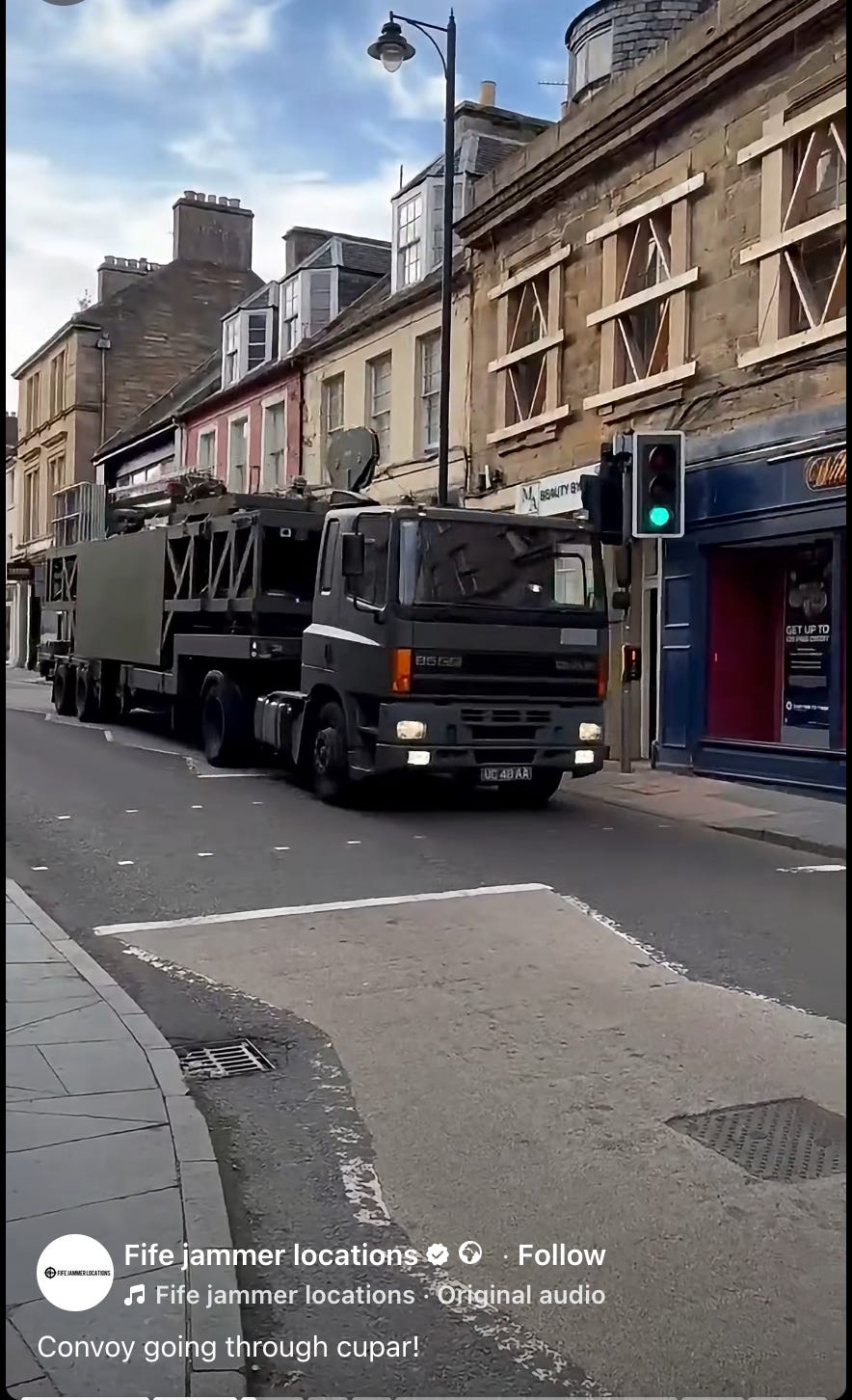
In the event that both of these stations are disabled, the backup is a tethered air balloon which has a mast attached to it. This lives in Scotland, in Dundee. Every year it is taken to Yorkshire for testing (in this case via Leuchars). Duncan shows us footage of the convoy taking it through the quiet streets of Cupar in Fife.
This time it suddenly dived to the ground. Let’s consider the possibility that it was shot down – if Edinburgh NUJ freelance branch knows this thing is tested in Yorkshire every September, we can assume the Russians do too. The context is that Russia is being blamed for a range of covert attacks across Europe in recent weeks.
The incident has highlighted that making Trident unusable involves taking out two radio masts in Cumbria and a blimp-style tethered air balloon.
Supporters will argue that if all communications are lost, the captain of the nuclear sub can get out the famous ‘letters of last resort’ authorising them to attack Moscow. But they can hardly do that in response to a non-nuclear attack which hasn’t injured anyone, can they?
Nuclear supporters argue that it has a deterrent effect. For example, they say that if Ukraine and Belarus had held on to their nuclear arms, they would have been able to withstand Russian aggression. But when I went to a talk by Andrei Sannikov, he said it wouldn’t have made much difference – Belarus’ nuclear weapons were old, poorly maintained and could not have been used to credibly threaten Moscow. Can the same be said about Britain’s?
If Trident can potentially be made unusable using a toy shop drone – what is the point of it? Has it become a hostage to fortune that can be used to embarrass the UK and Europe? Nuclear defence consumes about a fifth of the MOD budget – so repurposing that money would allow a massive boost to spending on conventional arms. Is it time to get rid of Trident? Has warfare moved into a different era where we need a more flexible approach? Answers in the comments, please.