Do you worry about the environmental impact of AI? One of my young associates was playing a board game with his pals recently when a dispute about the rules arose (he hates to lose). He picked up his phone to ask AI and was met with a chorus of disapproval for wasting fresh water and fossil fuels for such a frivolous cause.
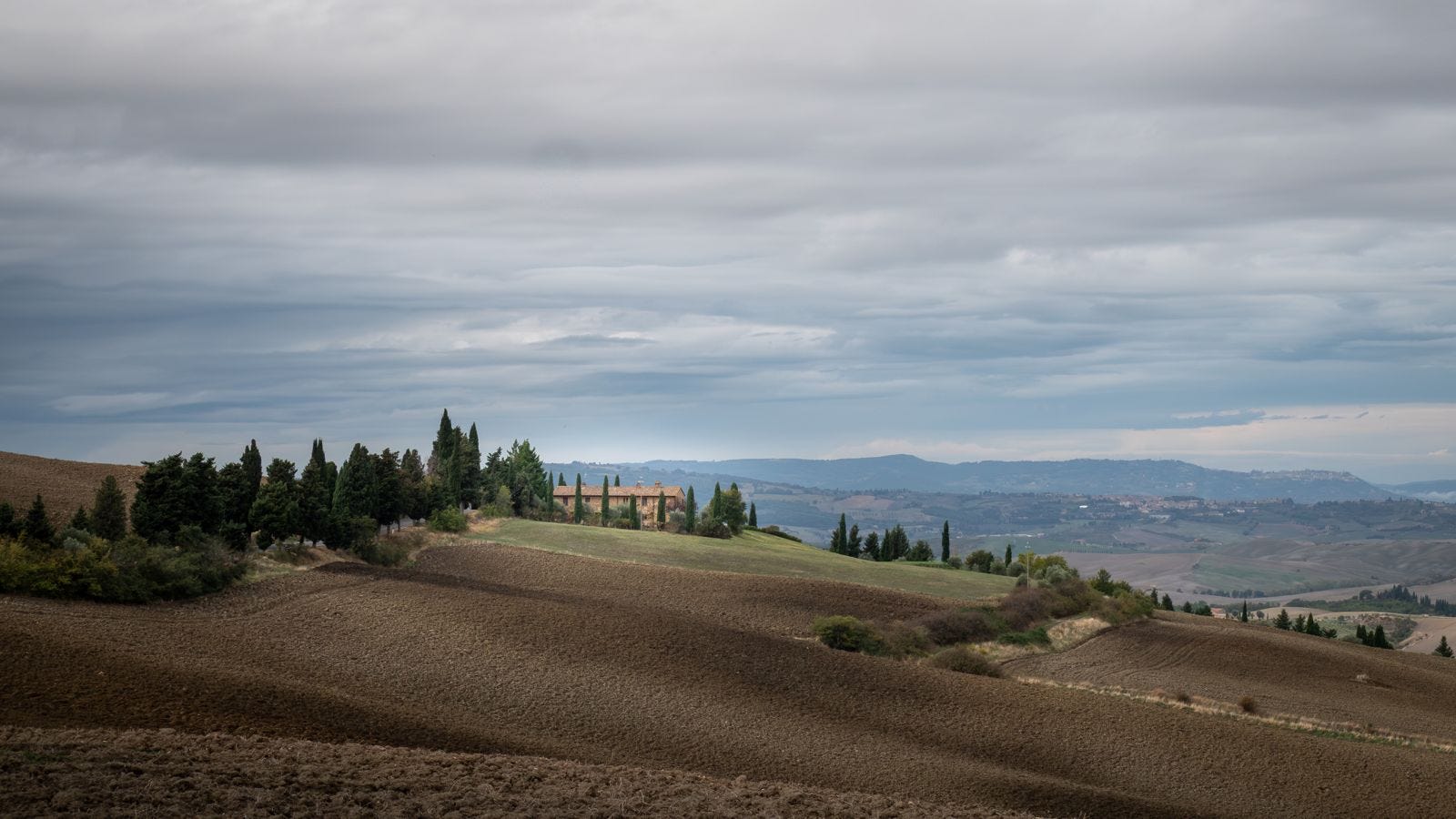
Woke? They’re positively insomniac. But do they have a point? I am in Tuscany this week moonlighting as the support driver for a friends’ bike trip and I have been using AI a lot, not just to find my way around but also for pleasurable pastimes like sitting over a coffee translating the impressive regional newspaper La Nazione.
Sometimes I wonder if I am using it too much. I was born in the 60s (just) and still retain a bit of boomerish enthusiasm about the future. And I remember the days before Sat Nav – I could barely find my way to the bus stop.
The younger generation seems more techno-sceptical. As parents, we bought them the gadgets that ads had trained them to pester us for. It didn’t make them happier. Instead, they lost out on golden hours of childhood, when they should have been playing outside, to the blue light of screens. (Our young friend singer-songwriter Oscar Gormley wrote this great song about that which, somewhat ironically, got picked up to be the soundtrack of a video game.) They have reason to look behind the hype.
Their environmental concerns are well-founded. LLMs – large language models – use huge amounts of power. If you did a Google search a year ago for something like ‘How can I use up that tired brie in my fridge?’ you would have got links to web pages based on a keyword search – recipes for fondue, ersatz mac and cheese or whatever.
It used a lot less power than a conversation with ChatGPT, Claude or Gemini. They light up literally billions and billions of virtual synapses to work out what you want. If you ask a complex follow-up – ‘How can I incorporate this into a meal for six guests, one of whom is lactose intolerant?’ it goes into what is called reasoning mode and starts to boil the ocean.
Because Google controls so much of the search market, they have dictated that general search also now uses American AI, which takes about ten times as much energy as a keyword search – unless you add ‘minus AI’ after your query, or find another search engine.
These queries are run on the massive compute power stored in thousands of data centres in US states, particularly Virginia and Texas. They are driving a surge in the use of fossil fuels, new gas power stations are being built, the retirement of coal power is being postponed, the Texas water table is being reduced.
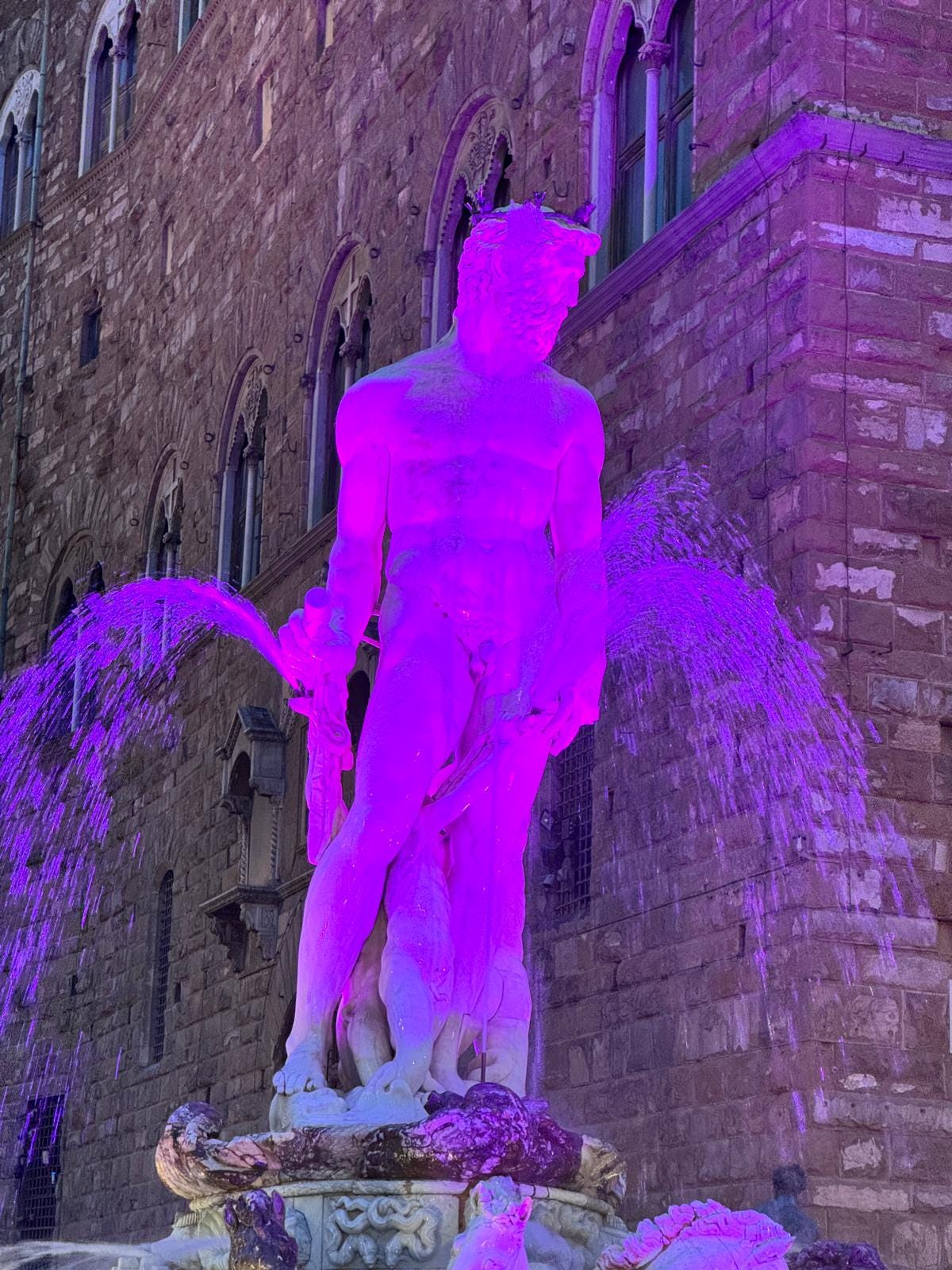
Each data centre uses more fresh drinking water in an hour than all the fountains of Lorenzo the Magnificent used in a decade. (I am not going to check that assertion for obvious reasons).
Over chickpea koftas at a vegetarian restaurant in Edinburgh’s Old Town last week, we chatted to a young man who knows an immense amount about AI. He had some surprising takes on this historic moment we are living through.
Instead of talking about the possibility of AI killing off humanity that we have heard so much about, our friend suggested that what is more likely is that it will break our dependence on the internet and perhaps America’s tech hegemony as well. There are ways of modifying our energy use which will change how we live and work.
The cheaper, lower-energy Chinese LLM, DeepSeek, uses much less energy than the US models, because it just doesn’t fire up as much of its ‘brain’ to deal with every question.
But an even better alternative to the US-style LLM, large language model, is the SLM, small language model. These are open source and can be run on a phone. They operate without being connected to the internet. It takes energy to create them but once they are good to go, they use a fraction of the energy of starting a conversation with a chatbot.
The SLM doesn’t have access to live information but it knows enough to answer most queries. It could translate a newspaper. It could tell me the way from Pisa to Florence – but I would have to sacrifice real-time traffic updates.
I asked Gemini – yes I know – to tell me roughly how much fresh water would be required for me to translate one day’s edition of La Nazione, using these three forms of AI. It answered
-
Using an American LLM – two full kettles
-
Using a Chinese LLM – one full kettle
-
Using an SLM on my phone – one sip.
Will the US retain its tech hegemony through these thirsty machines or will people start to turn away from them?
One of our young friend’s other predictions is that in the near future, nothing that is shared via the internet will be secure, because AI will be so good at hacking. I can see that. Creeps already use AI glasses to identify strange women in the street; ICE uses it to track down migrants; scammers are in clover.
Another reason to rethink our use of AI is that it is so error-prone. The other night we were staying in a hostel on the edge of Florence and dinner was booked in the centre. I asked Google Gemini how to get a cab. It told me that in Florence the standard approach is to ask at reception and the wait time would be three to five minutes. Great! No rush, I thought. I did a bit more work on my computer before changing into my evening sandals and going downstairs.
There were no cabs, so I had to walk the 40 minutes to the restaurant, navigating baffling medieval streets. It started to rain and it turned out my sandals were made of cardboard. I kept the hungry but polite cyclists waiting for their food and had to spend the evening with wet feet. Nevertheless, I managed to enjoy the dinner. (I had the malanzanne in case you are interested).
I mentioned this to Gemini the next day, and it replied: “How frustrating! Peak time cabs in Florence are notoriously unreliable.” Knowing that if I responded further, precious water would be sucked from a Texan aquifer, I said no more.
This evening in Siena, it is my turn to book the restaurant for dinner – instead of going online, I decided to just wander round and choose a place to eat based on the vibes and the menu outside.
Jackie,
Siena, Sunday October 11
PS. that worked out well, great service, delicious food, fantastic ambience on the main square – they don’t even have a website.