Is the Curriculum for Excellence Dumbing Down Scottish Education?

What do we mean by a good education? It’s not the same as being intelligent of course. An educated young person has skills they can take with them into the world. But should these include reasonable fluency in a modern language, an understanding of the sciences, maths, some knowledge of literature and history? Or, in this age of easy fact-finding on the internet does an educated person mean: a successful learner, a confident individual, a responsible citizen and an effective contributor, as Scotland’s Curriculum for Excellence has it? The Scottish government is wrestling with the implementation of this curriculum, which was intended to build on the concept of the “democratic intellect”, a generalist approach favouring interdisciplinary study. But how is it working in practice?

Leithers Scunnered By Hand-Wringing Over Pitch Invasion

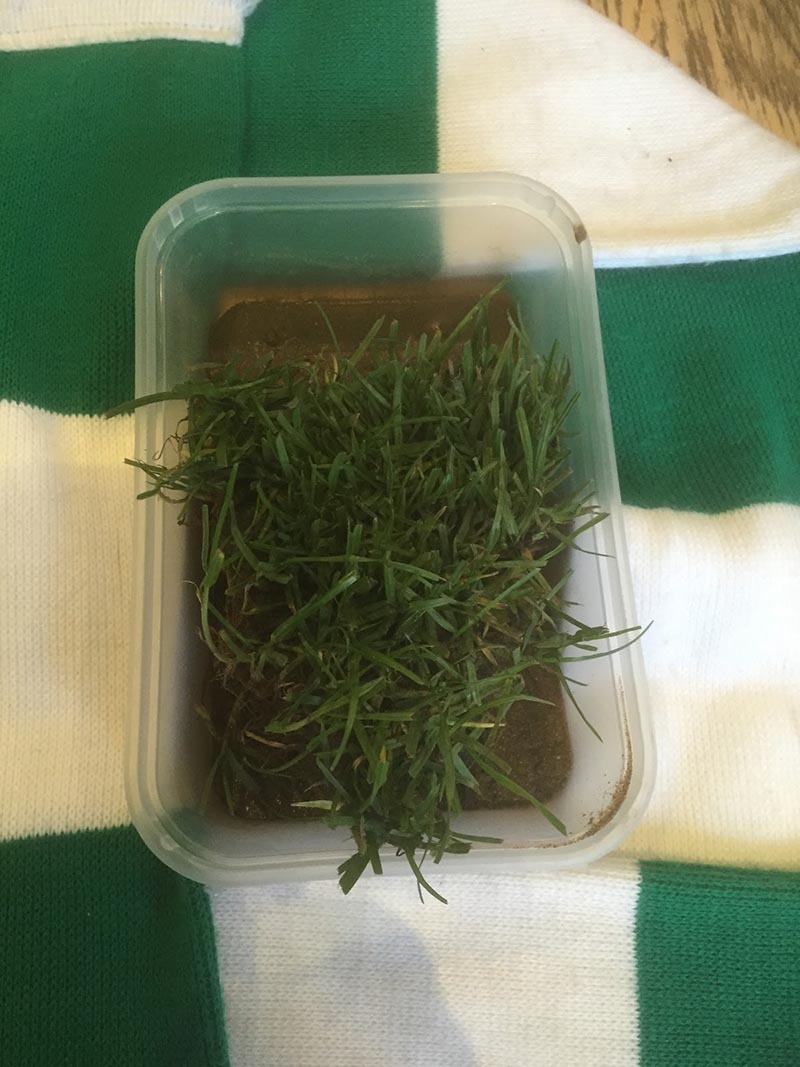
A Wee Piece of Hampden Here in Leith

To paraphrase the famously dull but accurate Times headline, “Small Earthquake in Chile; Not Many Dead”, the reports of the Scottish Cup Final last weekend could have read: “Small Riot at Hampden, Not Many Hurt.”

In fact they didn’t. The Sunday morning newsstands were devoted to 20 point outrage, with the Sunday Mail alone in having a positive headline “Glory, Glory”: although Monday’s Evening News aced it with “They Claimed It.” The TV and radio took the same approach with sports coverage jettisoned in favour of bad news reporting.

At the Holyrood Election Thursday: First Vote Labour, Second Vote Tory?

Whether Labour or the Conservatives takes second place on Thursday (May 5) is the talking point of the Scottish election. Betting company Paddy Power thinks Labour; Professor John Curtice says it could go either way. Professor Curtice is probably right. He knows when to poll them, and he knows when not to call them – as “The Pollster”, a satirical version of the the Kenny Rogers song “The Gambler” dedicated to the Prof by Vic Rodrick and Annie Gunner Logan has it. (For reasons of copyright etcetera, the pair’s sharp-witted parodies are only ever heard live and if they announce dates for this year’s Fringe, grab a ticket.) Whichever way the cookie crumbles, the opposition vote is likely to be split between Labour and the Tories. So is there scope for them to pool their resources in a new politics? Is it possible for Kezia Dugdale and Ruth Davidson to work together on at least some issues to form a coherent opposition?

A Sleepless Night

I composed this poem one night when I couldn’t sleep. It was also partly inspired by hearing about an ancient method of hunting where two or three hunters with only…

Oops. Are the SNP’s Roots Showing?

A couple of things have come up for me this week as the Scottish election campaign builds towards another seemingly inevitable SNP triumph. Firstly, a friend, a committed ‘Yes’ voter and an SNP member said he was going to have to stay home on polling day. He could not bring himself to vote SNP this time, he said, because he is so appalled by the SNP’s inaction over MSP Sandra White’s behaviour. The SNP MSP apologised for re-tweeting a grossly offensive anti-semitic cartoon posted by a Neo-Nazi she follows online and whose tweets she has reposted before. She said she posted the image “in error” and no disciplinary action has been taken against her. The implication for my friend was that a degree of anti-semitism is tolerable within the Scottish National Party.

Drinking, Feasting, Fighting, Wearing Bling – the Celts Come to Town

Drinking, Feasting, Fighting, Wearing Bling – the Celts Come to Town

Detail from the Gundestrup Cauldron, circa 100BC, Denmark.

Images courtesy of the British Museum and the NMS

Celts could be weird and scary. They were mad for the drink and when they had it, you had to watch out for them: they saw things and became aggressive. They were radge fighters, absolutely mental, they dressed up to go into battle and they played great big war horns that made a sound that would scare the living daylights out of you. And they liked bling, loved it actually: gold, bronze, iron, glass, precious stones. They wore chunky jewellery decorated with abstract patterns and symbols. They were skilled at metalwork, leatherwork, pottery and weaving and if something precious was broken, they would mend it – a bronze flagon with a broken handle would get a different handle, or a hole would be fixed with a decorated patch, and made as good as new – better in fact. Oh and they loved parties and feasting; the women were great hosts and they were buried with their special pots and flagons, probably so they could use them for a big after-party on the other side.

Creativity and Courage: An Exhibition of Women’s Art

Creativity and Courage: An Exhibition of Women’s Art

Catterline in Winter. Joan Eardley. Images Courtesy of the National Galleries of Scotland

 There are many powerful pieces in the current exhibition of Modern Scottish Women’s Art from the late Victorian era to the early 60s and the show casts light on the challenges that women artist faced.

They had to contend with barriers such as the bar on married women’s employment and the misogyny which meant they were not admitted to bodies like the RSA. There was prejudice from families which made it harder to train and caring responsibilities which absorbed their time and emotional energy.

But these were strong women all of whom earned at least a partial living from their endeavours as artists and this exhibition is a rare opportunity to see their often unfairly neglected work.

A Year of Blogging and my Most Read of 2015

A Year of Blogging and my Most Read of 2015

“The path of truth is a lonely road” Cairngorms: A cyclist emerging from a cloud inversion. Photo Rob Bruce 2015. 2015 has been the year I really started blogging. It was a big step for someone who has worked as a professional journalist and freelance to start putting their work out there onto the web without it being commissioned and paid for. Why would you write something when you are not getting a fee? Once this kind of writing was known as ‘vanity publishing’. David Torrance quoted the great and much-missed Ian Bell in his Herald column this week “There is no such thing as free in journalism. Free is just another word for hobby.” Maybe so. I believe in the value of newspapers and professional journalism.

Why is the SNP riding so high in the polls?

Why is the SNP riding so high in the polls?

The Scottish Parliament at night. Photo Rob Bruce Dec 18. Revised with input from the team at Sceptical Scot. The next Holyrood election is in May and on current form, the SNP will take almost all (if not all) the directly elected seats, leaving the Scottish Parliament with only a token (list-based) opposition. But why is this? There are many issues that “normally” might affect their poll rating.

What really happened at “1707: What Really Happened?”

History Festival

The faultlines of Scottish politics go back a long way: historians are still arguing about the Union of Parliaments back in 1707 when the Scottish Parliament voted itself out of existence. For some it was a pragmatic decision; for others it was a grave error. These controversies were argued over afresh at “1707: What Really Happened?” at Scotland’s History Festival last month.

Playwrights Tim Barrow and Jen McGregor read from Tim Barrow’s play “Union’ set in 1707. The scene dramatised the clash over the Treaty of Union between Lord Queensberry who was a main proponent of the measure and steered it through Parliament and Lord Hamilton, who led the opposition to it.  Here is an excerpt from the scene, set in the “magnificent chamber of the Scottish Parliament”.

Spending Review Sets the Scene for Scottish Tories to Beat Labour into Second Place in Holyrood Election

Was George Osborne’s spending review drawn up with an eye on the forthcoming Holyrood election?

With his U-turn on tax credits, he has certainly redrawn the political landscape; shooting Scottish Labour’s fox and perhaps creating the conditions in which the Scottish Conservative Party could become the second party in Scotland. That would be an earthquake in Scottish political terms.

Perhaps ‘Earthquake’ will be the title of Iain McWhirter’s next book as ‘Tsunami: Scotland’s Democratic Revolution’ about the SNP landslide at the General Election is piled high in Scotland’s bookshops in time for the Xmas market, illustrated with a Japanese-style drawing of a huge wave.

Excerpt from the play ‘Union’ by Tim Barrow set in 1707

This is an excerpt from a scene which was read at an event at the “Previously…” Scotland’s History Festival, on November 19 2015

Set in the magnficent chamber of the Scottish Parliament, the scene features Lord Queensberry, the main proponent of the Treaty of Union and Lord Hamilton, who led the opposition.

Edinburgh: A City in Decline?

Platinum Point from Asda Newhaven. Pic Rob Bruce.

Update: Fri November 20. The Evening News on the tram situation.

Below posted Sunday November 15

IF EDINBURGH is entering a period of decline which may last the rest of the 21st century, the SNP will have to shoulder a great deal of blame.

At a time when the city has never been more in need of strong leadership, vision and imagination for its future it is being sabotaged by a party which is prepared to sacrifice the economic prosperity of the capital to a populist agenda it believes will further its nationalist project.

Poppy Fascism? Give me Strength

    Over the last few weeks, I have noticed that some of my twitter-loving friends have been posting blogs and articles about something called “poppy fascism”. What on earth they mean by this frankly ridiculous term I’m not sure. It appears to refer to the ostentatious wearing of the poppy by politicians and public figures who are keen to link themselves to the memory of Britain’s war veterans. In some circles apparently, though not any that I am in, it is regarded as obligatory to wear a poppy and people who choose not to do so feel criticised in some way. Although as we mark the 70th anniversary of the conclusion of the Second World War, we may just pause to remind ourselves that social death is not as bad as actual death.

Scunnered by Scot-free passport design

THE ONLY WORD to describe how I feel about the new UK passport design is scunnered. Not one Scot is among the seven faces that are to be plastered across it. It is to have an embossed face of Shakespeare on every page as a security feature. But what about the other globally recognised poet these Isles have produced, our beloved Rabbie Burns?

I struggle to understand the motives behind the redesign. At the time of the referendum on Scottish independence last year, I wrote that a big part of my decision to vote ‘No’ was that I was not ready to give up my right to a British passport for what I thought was the potential mess of pottage offered by the Nats.  Commentator Allan Massie quoted me in his Scotsman column on the eve of the poll.

JK Rowling, the Tartan Tebbit Test, Scotland’s Rugby World Cup Exit

Photo: Rob Bruce. Click ‘read more’ to see the whole article.

LIKE JK ROWLING, it seems, I am an “80 minute patriot”. This is what she was called on Twitter for being a No’ voter who supported the Scottish rugby team in the World Cup.

Personally, I feel that when it comes to full-throated, flag-waving ostentatious declarations of love for one’s country, 80 minutes is probably enough. Again, for me, I don’t know about JKR, I am quite happy to stick the Jimmy hat and saltire in a bag when I leave the ground.