
This week the deputy leader of the Scottish government Kate Forbes announced on her daughter’s third birthday that she won’t be a candidate at next year’s Holyrood election. Unionist commentators speculate that “the real reason” she is stepping down is that she fears being defeated at the Holyrood election next year – but Forbes herself has pushed back on that, saying that she is not a quitter.
Over the last couple of years, at the start of every week Parliament is in session, Forbes has thrown her baby daughter under her arm and picked up a suitcase to head for Edinburgh to do this very demanding job, while patchworking childcare. But that is not going to work when the wee one has to start school, which will be midway through the next Parliament.
On a much smaller level, causing very little interest to anyone else, I made a similar choice.
The background
It took me a few years to work my way from a lower second in Politics at Sussex University via a failed attempt to become a tree surgeon (yes, I was as rubbish as you think) into newspapers, but eventually I succeeded. After three years at London news service, I started working at Scotland on Sunday. It was a relatively new paper, fresh, innovative and with a fantastic young team of journalists.
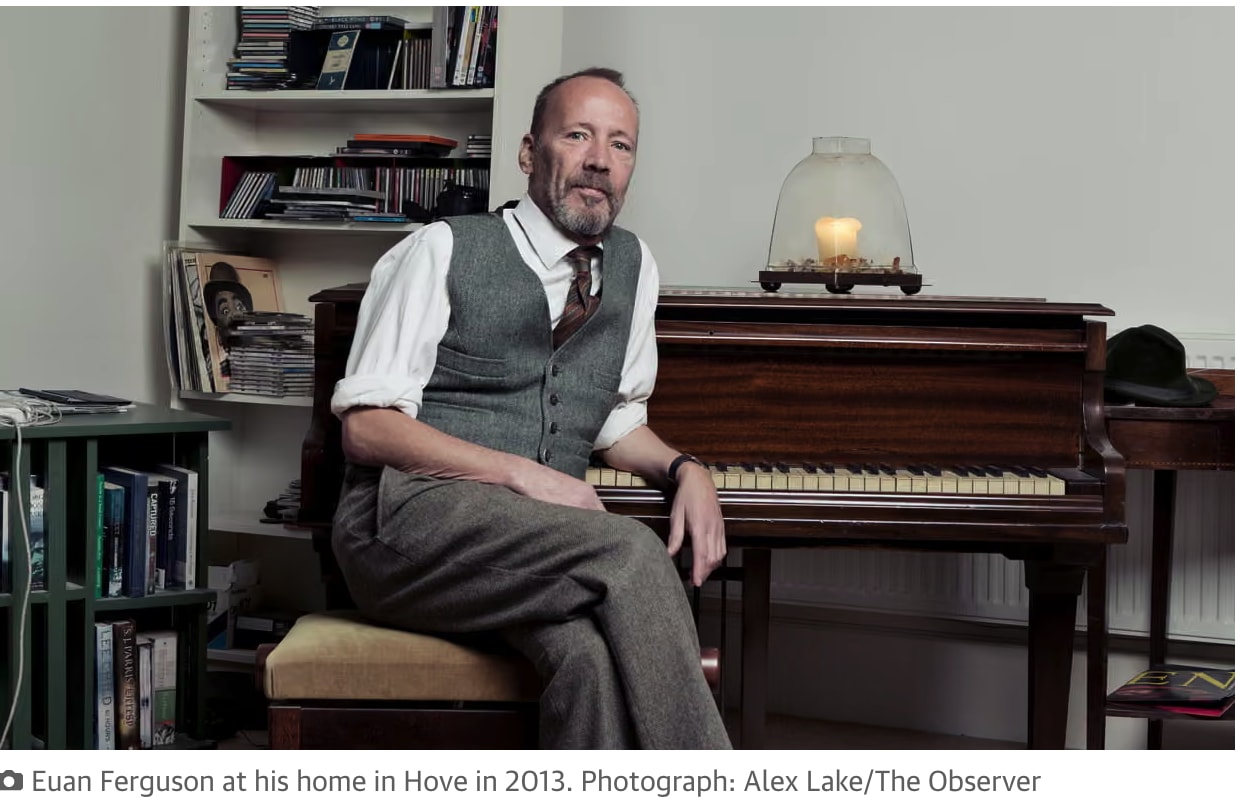
Our star writer, the louche, brilliant, impossible Euan Ferguson died in 2022 aged 60. After his time at SOS, Euan became the TV critic of the Observer. Maybe the cheesiest line he ever wrote was that, given the amount of cheddar Mary Berry put in her scones, she was obviously determined to “make Britain grate again”.
Later, when I was a freelance, Euan popped in to visit me in the run-down workspace where I was renting a desk. The narky receptionist was one for taping peremptory signs all over the shared areas. Euan read them carefully and then suggested we throw a Roman banquet. If Maureen were to come in while we were lolling on the plastic sofas dangling grapes, she would have no basis to complaint.
The job offer
You don’t get to work with colleagues like that very often. I loved working at Scotland on Sunday. I was on contract for a couple of years in the mid-1990s before I got pregnant with our first child and Rob and I moved to London. When in London, like Forbes, I did try to do some work, baby in tow. I remember interviewing the journalist Jeffrey Barnard – made famous by Keith Waterhouse’s play “Jeffrey Barnard is Unwell” – at his flat in Soho. The baby was hungry and I asked Barnard if he minded if I fed her. He said he did – he was actually ill and probably just wanted rid of me – so I went trailing round Soho with a crying bairn, surrounded by pictures of tits, unable to find somewhere I could sit quietly and breastfeed.
We wanted to move back to Edinburgh to be closer to our families. But the trigger to do that was that I got a role as health correspondent at SOS to cover my colleague’s maternity leave. When that ended, something amazing happened: I was offered a permanent job. I was thrilled. I went home and told my husband, Rob, “They offered me a staff writer position!”
He smiled. “That’s great,” he said. “Well done. But… I don’t think you should take it.”
The conversation
We talked. Rob at that time was a WILLIE – works in London lives in Edinburgh – as he remained for many years. That meant he couldn’t ever do nursery pick up if I was stuck at work, or step in when a child was ill. We both had intense jobs – not just 9-to-5s. Two full-on careers, two little children, and both parents not present most of the time. Something was going to give.
I didn’t take long for me to realise he was right. Our situation was different from many of my friends. And I had enough self-knowledge to realise that my organisational skills are not the best. People sometimes say that such and such a person couldn’t walk and chew gum. I have never tried it but I would almost certainly trip, choke and knock my head on something as I hit the floor. Some of my friends can spin a lot of plates with seeming sang froid. I can’t. So I turned the job down.
A bit more space
A lot of this next period was great. We stayed in Edinburgh with our by now three kids. I was very lucky. I had support – our families, some delightful au pairs of whom I am still very fond.
Despite it being a busy time, I had some headspace. This poem from a collection I had as a child has always stayed with me. It is actually by W H Davies, and I can still picture the illustration of a boy swinging on a gate.
WHAT is this life if, full of care,
We have no time to stand and stare?—No time to stand beneath the boughs,
And stare as long as sheep and cows:No time to see, when woods we pass,
Where squirrels hide their nuts in grass:No time to see, in broad daylight,
Streams full of stars, like skies at night:No time to turn at Beauty’s glance,
And watch her feet, how they can dance:No time to wait till her mouth can
Enrich that smile her eyes began?A poor life this if, full of care,
We have no time to stand and stare.
A traitor to the sisterhood?
But that choice set off a period of questioning. Who was I, without the career I loved? Someone who just likes swinging on gates and staring at cows?
What did it mean for all the ideas I’d held about feminism, about equality, ambition, about my own worth? Should I have “leaned in” – the famous book by Sheryl Sandberg exhorting women to be more ambitious?
The dinner party conversation
One thing I noticed was the loss of status. You know, when you go to a dinner party and someone asks what you do, and you say, “I’m mostly looking after the kids”? And then the man next to you just turns away and doesn’t speak to you for the rest of the night? That happened to a friend of mine – the man was quite a well-known journalist – but it is just a more extreme example of the kind of thing I and many other women experience.
After social events, I’d say to Rob, “No one wants to talk to me. I don’t feel like I matter. He’d say: “Who cares if some old fart doesn’t want to talk to you? You’re doing the most important job – raising our children.”
The Beach Call
One day I was at the beach with some playground chums. My phone rang. It was a woman with a cool job, from the neighbourhood. We would chat a bit at the school gate, but I didn’t know her that well
“Jackie, are you at the beach?” she asked. “Can you see my kids? I’m worried they don’t have sun cream on.”
I looked up. Sure enough, I could see her children walking along the harbour wall with mine. They were quite safe, but I didn’t want to say, “Yes, I see them,” in case she asked me what they were doing and it sounded bad. So I just said, “I’ll go check,” and passed the message on to the mum who was watching them.
Balanced against the dinner party conversation, it made me realise I wanted to be where I was and not where she was.
Trad wives aren’t completely wrong
Trad wives aren’t completely wrong – doing it all can be exhausting. And sometimes you make choices not as an individual but as part of a family where people can take different roles.
But I think where they are wrong is implying that their way is the best or only way to live. Choice is the key word. Not everyone wants children. And of those who do, not everyone wants to step onto what Americans disparagingly call “the mommy track” in their career. If you can do that, you are fortunate of course – but you don’t have to take that path. Not everyone has to want the same thing.
A feminist stance
But if you want to raise a family, you have to be assertive about that in today’s world. You have to be assertive about your fertility, your time, your values. That can be a feminist stance for sure.
And somewhere along the way, I realised that I don’t need other people to give me respect, I can give it to myself. You have to be able to look in the mirror and say to the woman you see there – I respect your choices.
Forbes’ choice may mean that she won’t reach the heights of political success that she may otherwise have achieved. But on the other hand, she probably has plenty of time. She is 45 years younger than Donald Trump.
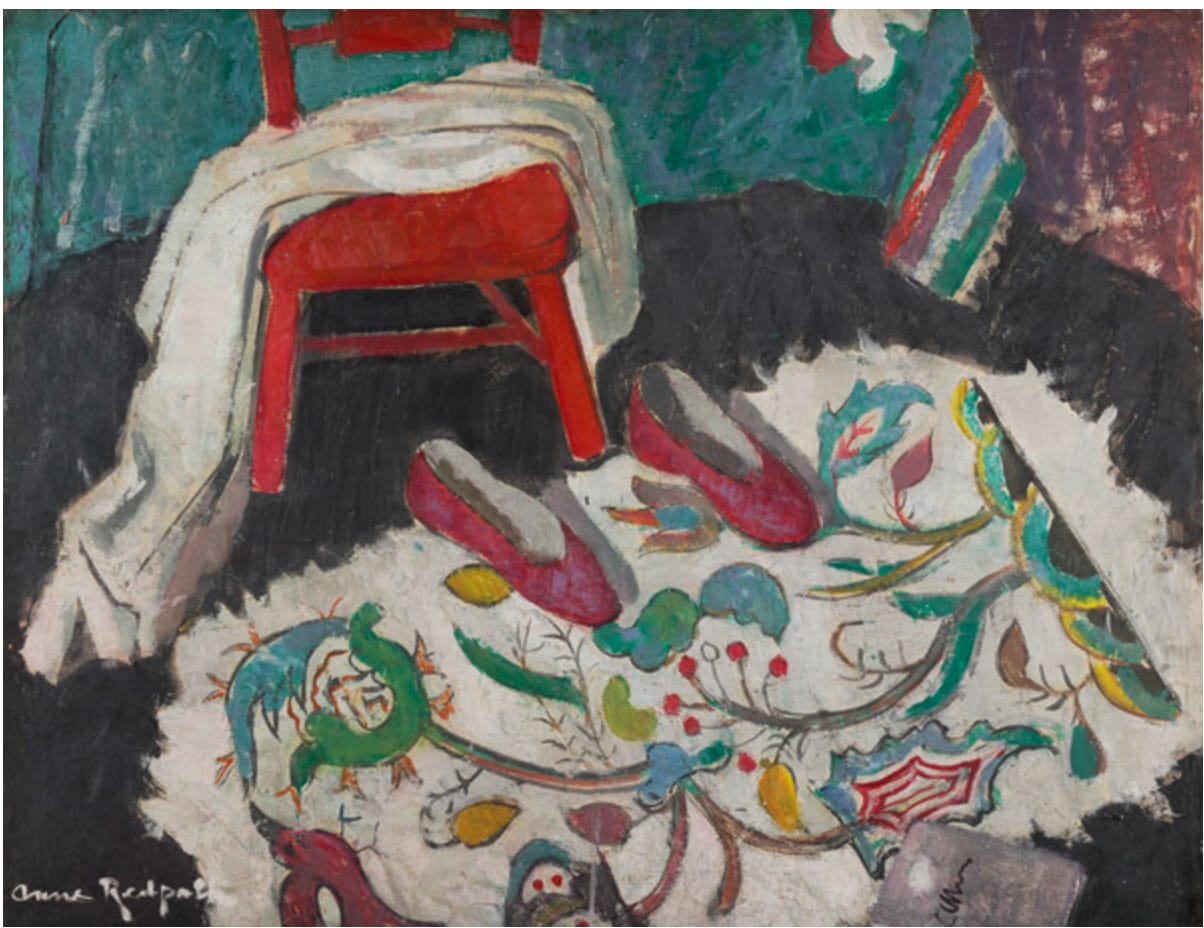
And maybe if you don’t burn out in those early years, you can come back and do other stuff later. I was inspired by a quote that I saw at an exhibition in the Scottish Gallery of Modern Art 2 from an artist I love, Ann Redpath.
She said: ‘Young women often come up to me and say ‘I’m going to be like you and give up everything for painting’ – but that’s not how I see it at all. I could never have sacrificed my family to my painting and I don’t think anyone else should either. We lived in France for fifteen years and I put everything I had into house and furniture and dresses and good food and people. All that’s the same as painting really, and the experience went back into art when I began painting again.”
