
The shots that killed Renee Good last week in Minneapolis were heard around the world. Government agents meted out death on the streets of the USA with the support of the President and his deputy. This and other attacks by the Federal force are a blatant abuse of their power. Will the people let this stand?
I am going to go out on a limb and say no, not for much longer. Because America’s foundation story is about resisting tyranny and that means something to them.
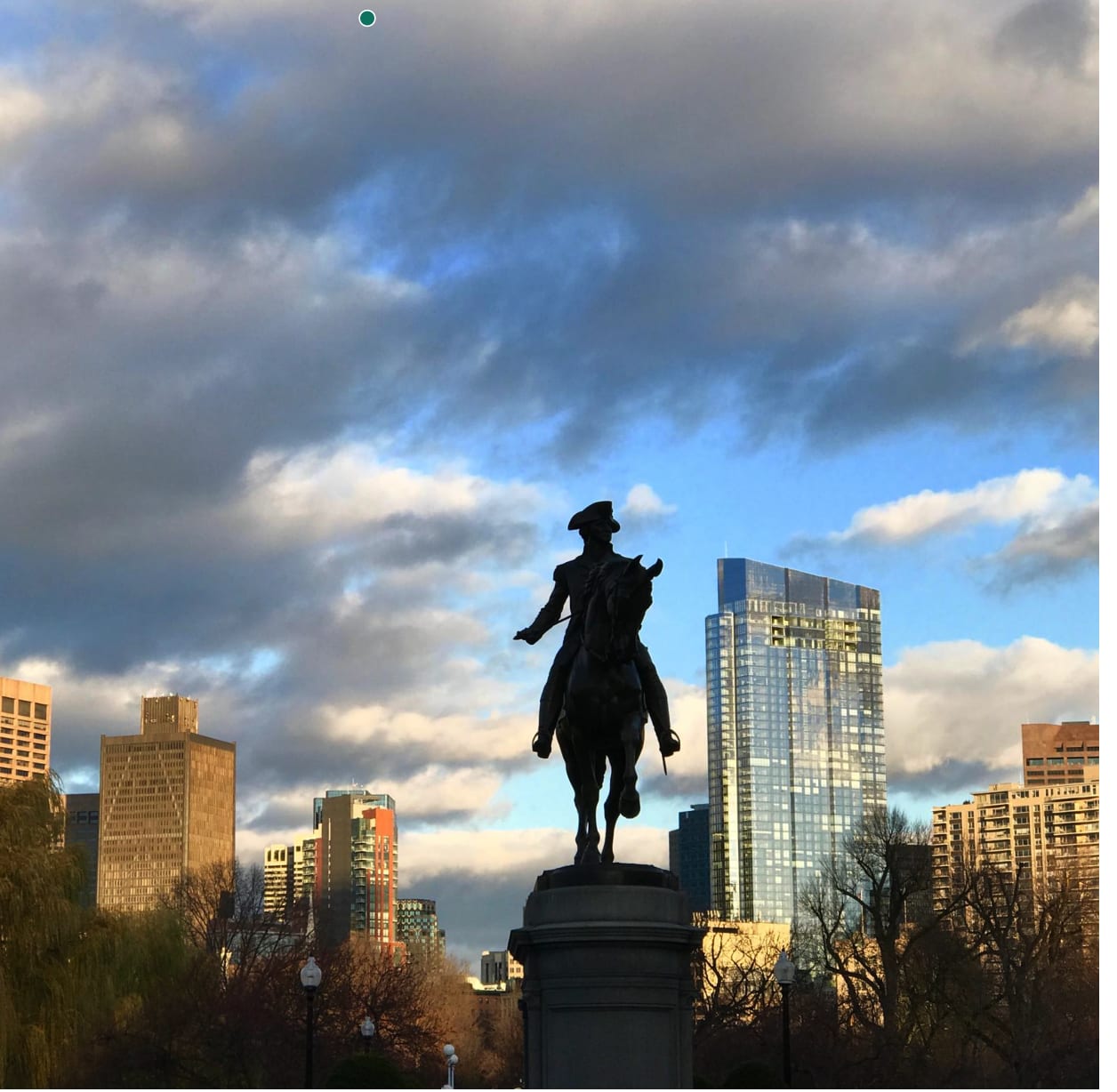
We lived in the centre of Boston for a few years, right on the revolutionary history trail, so we know all about the original shot that was heard around the world. Emerson coined the phrase, but Longfellow told the story in his great, recitable epic Paul Revere’s Ride. It was the one that started the American Revolution, when the American people stood together against the might of the British Empire.
LISTEN, my children, and you shall hear
Of the midnight ride of Paul Revere,
I used to do the trail often, either alone or with visitors. It starts at the Old North Church where the watchman climbed to let those waiting on the other side of the Charles River know which way the Brits were leaving the city to confiscate a cache of arms in Lexington: “One if by land, two if by sea”
“By land or sea from the town to-night,
Hang a lantern aloft in the belfry arch
Of the North Church tower as a signal light, —
One, if by land, and two, if by sea;
And I on the opposite shore will be,
Ready to ride and spread the alarm
Through every Middlesex village and farm,
For the country folk to be up and to arm.”
Paul Revere was not the only guy who rode out that night to warn local militias of the Redcoats’ approach, but his name scanned better. Plus, Revere is everywhere in Boston history – patriot, silversmith, dentist and even a foundational member of the bellringing group at the North Church.
A hurry of hoofs in a village street,
A shape in the moonlight, a bulk in the dark,
And beneath, from the pebbles, in passing, a spark
Struck out by a steed flying fearless and fleet:
That was all! And yet, through the gloom and the light,
The fate of a nation was riding that night;
And the spark struck out by that steed, in his flight,
Kindled the land into flame with its heat.
In the small towns the riders passed through, not dissimilar to those in the agricultural state of Minnesota, farmers rose from their beds and grabbed their muskets to go and resist the oppressor.
It was two by the village clock,
When he came to the bridge in Concord town.
He heard the bleating of the flock,
And the twitter of birds among the trees,
And felt the breath of the morning breeze
Blowing over the meadows brown.
And one was safe and asleep in his bed
Who at the bridge would be first to fall,
A year later, 250 years ago this July, the US leaders made the original Declaration of Independence. It goes like this:
We hold these truths to be self-evident:
That all men are created equal,
That they are endowed by their Creator with certain unalienable Rights,
That among these are Life, Liberty and the pursuit of Happiness,
That to secure these rights, Governments are instituted among Men, deriving their just powers from the consent of the governed,
That whenever any Form of Government becomes destructive of these ends, it is the Right of the People to alter or to abolish it, and to institute new Government, laying its foundation on such principles and organizing its powers in such form, as to them shall seem most likely to effect their Safety and Happiness.
I remember standing in Copps’ Burial Ground which looks out over Boston Harbour with my uncle David, which has the graves of African Americans who fought slavery, and just recognising what a long struggle it was before those rights became universal throughout the USA. It took another century.
But I don’t think that failure or all the many others to put these ideas into practice means that the whole thing has always been just fancy words on a piece of paper.
The Second Amendment to the Constitution, which was ratified in 1791, came out of the revolutionary experience. It reads:
A well regulated Militia, being necessary to the security of a free State, the right of the people to keep and bear Arms, shall not be infringed.
It is there because the founders of the US recognised that a despot might one day take power. (I am not calling for armed insurrection; I am merely noting its historical context.)
Five years ago, Trump’s former VP Mike Pence – at the risk of his own safety – refused to help Trump overthrow the election. When he was asked later for the name of the person who had instructed him to do that, he said “James Madison”, the father of the Constitution.
When Pence stood for the Presidential nomination against Trump in 2023, he won little support – Republicans were too busy lionising the lying chancer who wanted to stop the count.
Are they ready now to admit their error? Some are. Even two of Trump’s Supreme Court appointees ruled against him in Illinois v Trump, the case about whether he has the right to send the National Guard into Chicago.
Of course, the Democrats also played their part in Trump’s return to power. They were too busy cancelling each other for not being woke enough and covering up for Biden’s decline to focus on the things that really matter.
But the situation is surely getting beyond petty party politics now.
The people can clip Trump and Vance’s wings at the ballot box in the midterms – unless Trump attempts to push things further by claiming emergency powers under the Insurrection Act. But that might well be a step too far.
Most Americans I have met, whether Democrat or Republican, do believe that their country would not allow a tyrant to take and hold power.
So through the night rode Paul Revere;
And so through the night went his cry of alarm
To every Middlesex village and farm, —
A cry of defiance and not of fear,
A voice in the darkness, a knock at the door,
And a word that shall echo forevermore!
For, borne on the night-wind of the Past,
Through all our history, to the last,
In the hour of darkness and peril and need,
The people will waken and listen to hear
The hurrying hoof-beats of that steed,
And the midnight message of Paul Revere.