(First, a correction – I wrote in this blogpost about the forthcoming Scottish election that the two men in ‘Everyone to Kenmure Street’ got deported eventually. I have now seen the movie and it says at the end that at least one of them was granted residency. The other one is probably still in the UK too. Apologies, I should have checked that more thoroughly. My AI research assistant has now been fired).
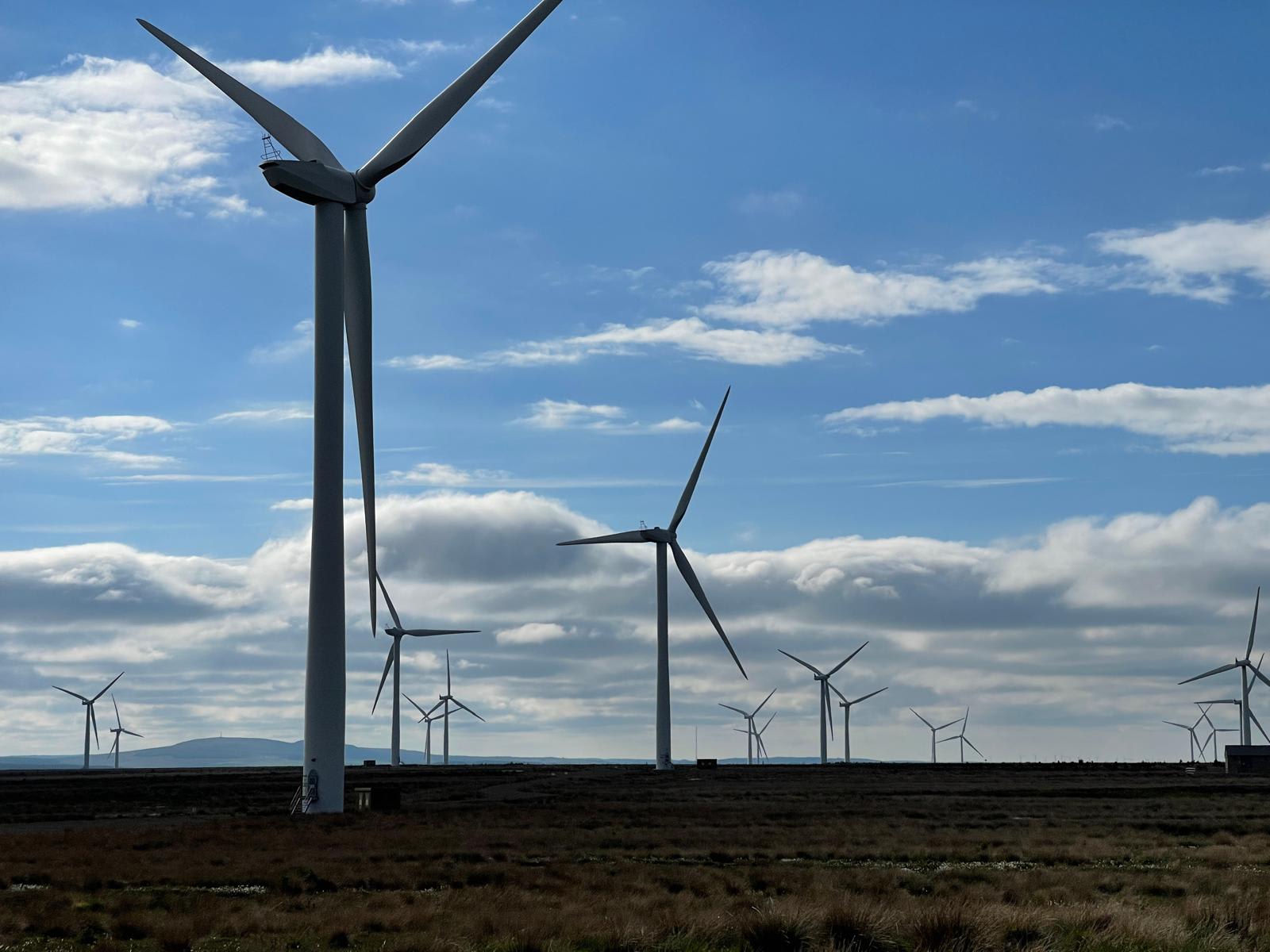
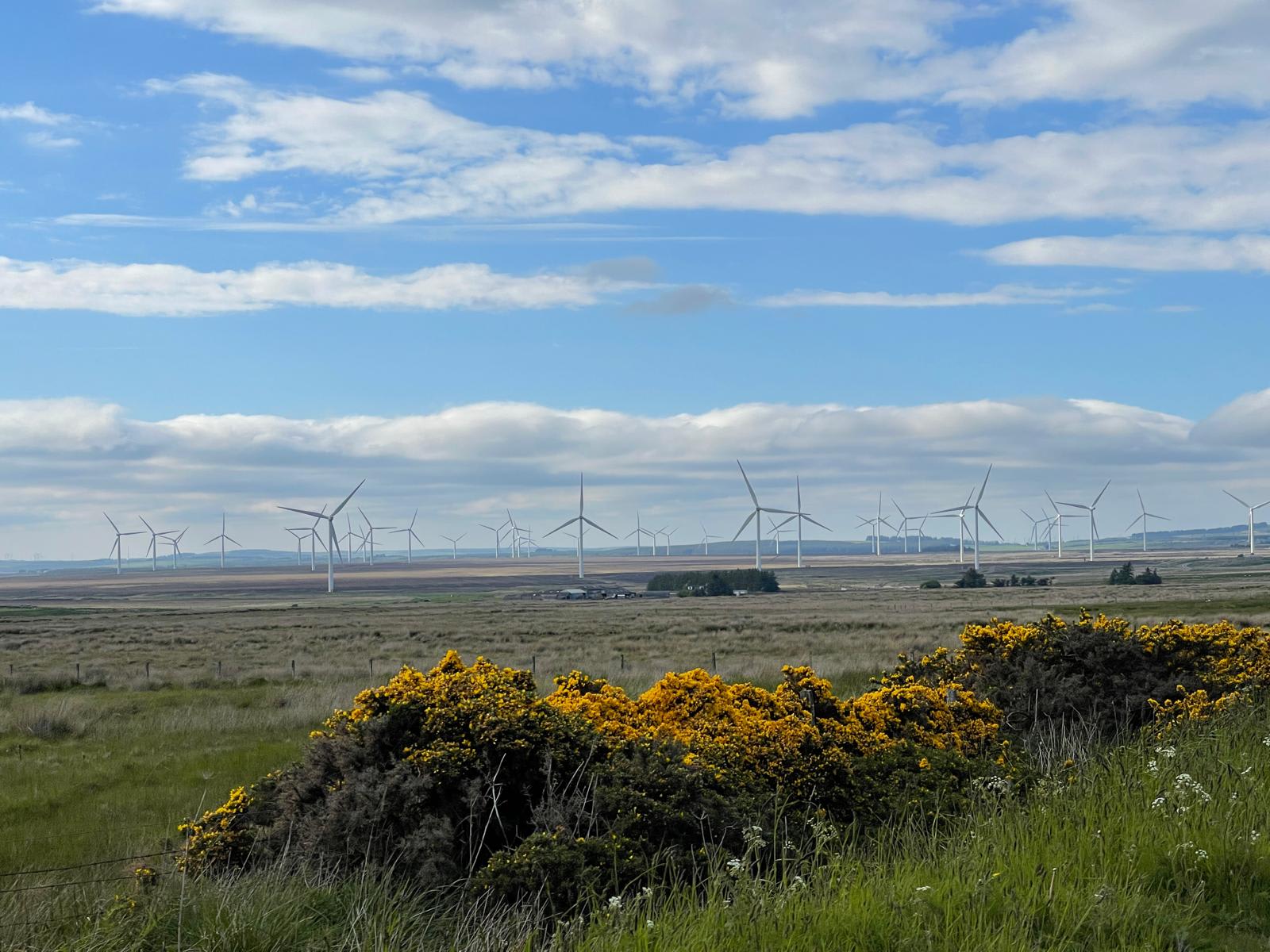
Listening to a podcast in an effort to get my head around the UK’s energy grid reforms, I was struck by the news that so much Scottish onshore wind has been kicked off the queue.
The podcast was “Is UK Grid Reform Really Working?” and the interviewee was energy policy expert Ed Birkett.
The queue for grid connection has been reshuffled into two piles, one for priority applicants and one for the rest, who have been told to try again after 2035. When asked to name the winners and the losers from this process, Birkett said:
“There has been 13.4 gigawatts of onshore wind secured that has been kicked out. And we estimate that between six and eight gigawatts of that has already submitted planning applications, and 100% of that is in Scotland that’s been kicked out….Why are we doing that? It is a bit hard to understand, to be honest.”
This onshore wind that has been kicked off the queue is about the cheapest and most quickly implementable energy that we have.
At the same time, many offshore wind projects planned for Scottish waters are also being mothballed due to the high prices developers are being charged for grid connection. A 2GW West of Orkney wind farm has already been paused. The developers say the charges mean they cannot compete with projects in England.
Calum MacPherson, chief executive of the Inverness and Cromarty Firth Green Freeport, told the Press and Journal that the UK’s energy sytem reform is penalising projects in Scotland. It also privileges projects in the South of England which are paid to connect to the grid.
At the same time, the UK government is investing heavily in nuclear power sited in England and Wales – an expensive and slow method of generating power. This is a political choice. The money that is going into nuclear could transform energy transmission across the UK.
Many Scots are also angry about the decision to block a Chinese wind farm factory in Ardersier, once a hub of the oil industry. After sitting on this decision for 18 months, the UK government announced it as the Holyrood Parliament closed down. There was no explanation of how wind turbines made in the UK, as opposed to being imported from China, would pose a threat.
Why is this happening? The mission to clean power
The UK government wants to speed up the transition to clean power. That is the defining mission of the Labour government. Last month’s New Statesman ran an essay arguing that energy secretary Ed Miliband has become the most powerful figure in the government because of this. The mission is being given added urgency by the war in the Middle East, as it will reduce dependence on volatile-priced gas.
So why is the programme killing off so much power in Scotland?
One reason is that the grid is bottlenecked between Scotland and England. If power cannot be shifted to England, the UK doesn’t want or “need” it – and in fact this is the criteria that was used in the queue reshuffle.
The grid was left weak by privatisation
The grid is indeed a problem. The background is that the UK is one of very few countries to have privatised its grid. It was sold off under Conservative governments that Scotland did not elect.
The ownership was fragmented – different companies own the grid in Scotland and England and the English group also owned the operating system (that was taken back int public hands in 2024).
For 30 years, money flowed out in the form of dividends and bonuses, but there was little investment. The mechanism was not there to force an upgrade, especially in Scotland. The grid was left weak across the UK, especially in Scotland, and not ready for the challenges of the transition to renewables.
The way the UK has chosen to handle this has been to ask consumers in Scotland to pay more in the form of standing charges. They also ask developers to pay for the cost of connecting remote and windy places to the grid.
Other countries don’t do it like this. Many countries charge developers the same price to connect wherever they are and subsidise the grid from general taxation – viewing the grid as necessary national infrastructure. They also charge consumers the same price to be connected to the mains, regardless of where they live.
Many countries do make electricity cheaper where it is plentiful – in order to boost demand in those areas and to attract energy-hungry businesses to locate there. This approach reduces the amount of infrastructure that has to be built to move the power to existing population centres.
Scotland has been let down by the UK’s privatised energy system
Scotland is now in a desperate position. It has a much higher fuel poverty rate than any comparable country. It is 34% here. England is about 11% or less. The EU average is 9%.
UK bills generally are high, But Scots pay more for energy even than England – because one in five Scottish homes don’t have access to the gas network and electricity is four times as expensive per kWh in the UK. Scots pay higher standing charges. They also pay more because it is colder here. Large areas of rural Scotland are also excluded from the UK’s smart meter network and so don’t have access to cheaper energy at certain times.
Additionally, a lot of housing stock remains old and poorly insulated – that is one area where the Scottish Government does have responsibility. The “Warmer Homes” initiative has insulated 50,000 homes but that is a tiny fraction of the number that need help.
On the development side, Scottish green power developers often have marginal profits because they have to pay so much to connect to the grid. That is why the rise in transmission fees is tipping many of these projects into unviability. That is also why there is less in the pot to compensate local communities than projects in England can offer.
Anger is building. People can see that Scotland is energy-rich, yet households and businesses are not reaping the rewards. For many, this is felt directly in struggling or shuttered local amenities and businesses, and in painful fuel poverty
Are Scotland’s interests being served here?
One theory for why Scotland is the loser in the grid reform is that the UK government is hedging against the chance of Scottish independence. That would explain its preference for expensive nuclear reactors in England and Wales over investing in wind and hydro in Scotland.
The argument goes that the UK government doesn’t want to boost the argument that Scotland can afford to leave the UK, or to hand Scotland a strong position in independence negotiations. They prefer to build power facilities south of the border.
Personally, I doubt that there is anything as explicit as that going on. You could argue that it is fair enough for UK institutions to be very focused on what England needs – that is where the bulk of the population lives. (Here is Head of Mission Chris Stark, a Glaswegian, discussing the reforms.)
From a UK pov, the big picture just does not include what is best for Scotland, what Scotland’s specific needs and challenges are or how the energy reforms risk blighting Scotland’s potential to become a renewable power house
Independence is one solution
Scots can look at Scandinavian neighbours and see that things are managed very differently there. Most Scandinavian countries own their transmission grids or at least have a majority stake.
Most of them have nationally-owned power production companies, which means they can prioritise serving the needs of their citizens and businesses.
Most also have a stake in their oil and gas production fields – Scotland doesn’t have that. Commentators who talk about “our” oil and gas forget the entire field was privatised and opened up to American oil firms who pursued a maximally extractive policy – I wrote about that here. (I remember a doc called “Margaret Thatcher and the Oil Man” – but I can’t find any trace of it – any ideas?)
Independence supporters tend to turn to the McCrone Report. It argued that North Sea oil could have made an independent Scotland one of the richest countries in Europe – but this was suppressed and the report was kept secret for many years. So there is a “fool me twice” undercurrent to Scottish anger.
Greater energy autonomy within the UK
It continually surprises me that parties like Labour and the Liberal Democrats – once champions of home rule – now take such a strongly Unionist position on energy. As I have argued before, on energy as on other issues, this should not have to be a binary choice.
There could be a third way where Scotland controls its energy within the UK. That is the model that countries like the US and Australia adopt. It means that different states and territories can try different approaches and see what works.
For example, listen to this podcast about how the state of Texas, starting 20 years ago, decided to build grid infrastructure to connect the windiest area of its state. They had a “build it and they will come” vision. It worked. Once the connectors were in place energy developers showed up. That’s why the oil state now gets a quarter of its energy from renewable power – more than any other US state.
Australian states also have much more control over energy policy and pricing – that means they can try new approaches. The New Scientist reported last month that:
“South Australia is proving to the world that relying largely on wind and solar energy with battery back-up is incredibly cheap, with electricity prices tumbling by 30 per cent in a year and sometimes going negative”.
Whether under independence or devolution, it is time that Scotland had a say in how our energy resources are exploited.