A Science Professor Pens a Patriotic Song

March, 2015
I first heard the song “Call it Alba” at an African evening at my children’s primary school. The choir sang it to visitors from a school in Tanzania and I wasn’t the only one blinking back the tears as they belted out the chorus: “I belong to the land I live in, and the land is in the deepest part of me.”

The song allowed the children to express love for their country of Scotland but in a simple style, free from the hubris these things often contain. It seemed inclusive too, offering a sense of belonging to everyone who lives here. I couldn’t think of another patriotic song that would have worked in that context and which would have made me feel so proud.

https://www.youtube.com/watch?v=T0LIWz3AgMk

 “Flower of Scotland” is fine for a sporting arena but the lyrics are very focused on Scotland’s sometimes conflicted relationship with England. I for one was glad when the Scottish Parliament recently rejected a petition to make it an official anthem.  (http://www.heraldscotland.com/news/home-news/wilting-blossom-flower-of-scotland-national-anthem-bid-rejected-by-msps.120916231)  

The others I could think of like Scots Wha Hae, Caledonia, or Highland Cathedral are too martial, too adult or too grandiose.

After Almost Losing the Union, Does David Cameron Deserve Another Term?


A major part of the Conservative’s election campaign has been to question whether Ed Miliband is up to the job. But what about David Cameron?

He is already the Prime Minister who almost lost the Union, and he is not being all that careful with it now as he sows the wind of Scottish Nationalism in an attempt to frighten English voters.

Looking back, the careless flourish with which he signed off on a referendum with Alex Salmond in 2012 looks at best naive, at worst complacent. With hindsight, Cameron’s decision to fly to Scotland to sign it handed a great publicity opportunity to the Nationalists.

Mona Siddiqui on love, sex and death.

Sexual desire, the search for happiness, dealing with death and living as a member of a minority are just some of the topics Muslim theologian Mona Siddiqui discusses in her new book – part handbook to life, part autobiography: “My Way”, which she will discuss at Glasgow’s “Aye Write” festival this April.

Eclipse: A Magical Moment Obscured by Bureaucracy

Eclipse: A Magical Moment Obscured by Bureaucracy

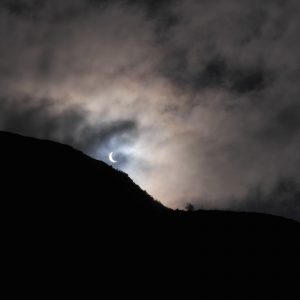
Photo by Rob Bruce. The view of the eclipse from Edinburgh’s Arthur’s Seat was magical. Many observers were ill-prepared without anything much to view it with but in the event, a partial veil of scudding clouds made it possible to see the crescent sun at its moment of occlusion. The sunshine dimmed to a twilight, the land was shadowed and chilly. The birds fell silent but watchers on the hillside let out a few ragged whoops. As I watched, I felt so sorry for the children at my son’s High School that I could have wept. The school had ordered some eclipse glasses; there was a waiting list and those who did not have them were to be refused permission to go into the playground due to fears they would stare too long at the sun and damage their eyes.

Scotland’s Pal-ocracy Makes England Look Like a Beacon of Democracy


Where civil liberties are concerned, Scotland makes England look like a beacon of democracy. Scotland does not have strong independent bodies defending individual freedom. There is less emphasis on this in its education and culture than south of the border. I recently mentioned to a young friend studying Higher History that this year is the 800th anniversary of the Magna Carta. “Who’s she?” he replied. Since then, I have asked a number of others including students at Scottish universities and have yet to find one who has ever heard of this historic document which guarantees the rights and liberties of the citizen against autocracy. They have all heard of the Declaration of Arbroath but only the ‘Braveheart’ section about the yoke of the English oppressor.

In 1742, philosopher David Hume wrote: “It is a very comfortable reflection to the lovers of liberty that this peculiar privilege of Britain is of a kind that cannot easily be wrested from us and must last as long as our government remains in any degree free and independent.”

http://press-pubs.uchicago.edu/founders/documents/amendI_speechs2.html

But an independent-minded observer of Scotland must conclude that civil liberties are in retreat here since the advent of a Scottish Parliament. We appear to be losing some of the recourse that citizens of Britain have historically possessed.

Top Gear, RIP.


I enjoyed Top Gear. You would think from the reaction I get to this statement from some of my friends that I was voicing support for Islamic State or something. But when my kids were younger it was one of the best family viewing experiences that we had. I will remember it fondly for that reason.


Is the Southbank Centre right to exclude Scotland from its flagship exhibition on British history?

The big new exhibition at the Southbank Centre in London “History is Now” is meant to address British postwar history. It does not do so. As a Scot who voted ‘No’ in the referendum I found the experience of visiting this show profoundly depressing. I left with an increased sense that a ‘British’ identity has become problematic, dislocated and fragile, and that the ties that bind the countries that make up the Union are fraying.

On #KingsmanTheSecretService and the Porno Society.

A friend of mine was kind enough to say recently that she had found the piece I wrote below about the movie Kingsman The Secret Service really helpful. Her 15-year-old daughter had been to the movie with friends and because my friend had read my blog, she was able to raise with her daughter the fact that there is a graphic image of  anal penetration in the closing minutes of the movie. Her daughter said “Oh Mum, it’s all right, the woman wanted that done to her.” My friend responded that this scene represented a male fantasy. My friend then went on to say that she felt sorry for all the young women who might be thinking: ‘What’s wrong with me, that I don’t enjoy this?”

The scene is a glimpse into the porno world which I generally manage to avoid. But taking place as it does in a mainstream movie now heavily advertised on TV as a DVD or download – it’s another example of how mainstream that current has become.

Lavrenti Beria and The Collapse of the Soviet Union

A column from The Herald 1992 on an article by Donald Rayfield in the Scottish Slavonic Review.


That Lavrenti Beria was a monster is well enough known, though the full extent of his activities is still dimly understood. Apart from developing state terror as an instrument of policy, he killed and tortured personally, for the pleasure of it. He became Stalin’s secret police chief. When the Soviet Union finally acknowledged its responsibility for the Katyn Massacre of 1943 – when more or less the entire Polish officer squad was wiped out by the Soviet secret police – it named Beria as the guilty man, though his recommendation was countersigned by Stalin and others.

Quiz about physically disabled students.

 This is a quiz from a fundraising event for physically disabled school students at George Watson’s College. The questions are based on the short descriptions of inspiring people who overcame disability as children and young people below. Answers are at the foot.


1 Whose musical feet found a path to success?

2 Who turned out to be a lot brighter than his teacher thought?


‘Dramatising Scotland’s Past’ at Scotland’s History Festival 2014

Actor and Gaelic singer Dolina Maclennan began this event at Scotland’s History Festival ‘Previously…’ with a reading from her recently published book, ‘Dolina: An Island Girl’s Journey’. http://www.theislandsbooktrust.com/store/books/dolina-an-island-girls-journey/

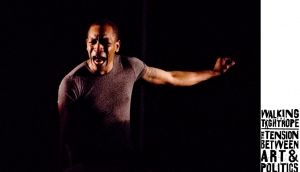
Maclennan read a passage about her memories of touring the Highlands and Islands in 1973 with the huge theatrical success of that time ‘The Cheviot, the Stag and the Black, Black Oil’ , a play about the Highland clearances, and land rights. Dolina recalled the audience member who rose to her feet to deliver a Gaelic curse to the actor playing land agent Patrick Sellar; rolling up the gaffa tape on a pencil to use it again; travelling with pots and pans and taking £5 from the cast each Thursday to feed them for the week. She linked the tumultous reception the play received in its tour across Scotland to a surge of nationalism which sent 11 SNP MPs to Westminster a year later.
 
James McArdle and Gordon Kennedy. Photo: Manuel Harlan

History? James McArdle (James I) and Gordon Kennedy (Murdac Stewart). Photo: Manuel Harlan
 
Dramatising Scotland’s Past:  free event at Scotland’s History Festival, ‘Previously…’ Adam House on November 19, 2014.

Albie Sachs – lecture transcript

This a slightly abridged text of the lecture given by the ANC veteran and South African constitutional court judge Albie Sachs at the National Gallery of Scotland on June 25 2009 in Edinburgh, transcribed from my shorthand note.

Advice

Hillwalking with my father, he would say: Take the slow way Over the shoulder of the hill. Follow the lie of the land.

“Were we just wrong Jim?” – Sillars and devolution

From Arnold Kemp’s book, a personal history of post-war Scotland “The Hollow Drum”.

…Jim Sillars told me a story about himself which, he said, explained his character. When he was 15 he was apprenticed to a plasterer and was one of a team working on a job. Although he was the junior apprentice he found he was expected to do the labouring. On further inquiry he discovered from the boss that the job had been priced to allow for three labourers, a junior apprentice, a senior apprentice and a journeyman. The boss had not employed any labourers; he was skimming more profit by making the junior apprentice do the donkey-work.

Sillars walked off the job. There was an enormous row. His father was called to a meeting. But it was to no avail and that day the plastering trade lost a recruit. 

Why I believe in Britain – on the eve of Scotland’s independence vote in 2014

From Prospect magazine website, September 11, 2014. One of Scotland’s best-known plays is Peter Pan. At the dramatic moment when the fairy Tinkerbell, traditionally played by a spotlight which flickers and then seems to go out, is close to death. Peter Pan turns to the audience and says she can only be saved if the audience demonstrates that they do believe in fairies by clapping their hands, which generally results in thunderous applause from adults and children alike.