Island Children’s Hostel Problems
Some island children must stay in a hostel to go to school – and not all hostels are a home from home. Jackie Kemp reported in the Education Guardian in 2007.
A deep dive into why the aesthetics of a book cover shape our reading experience — and whether that judgement is fair.
Read More Buy NowSome island children must stay in a hostel to go to school – and not all hostels are a home from home. Jackie Kemp reported in the Education Guardian in 2007.
IT IS prom night and the young people are dressed to the nines – the girls in elegant dresses, make-up and heels, the boys in tuxedos or kilts. Stepping out of the stretch limos and Humvees their parents have hired, they are excited, all ready to celebrate leaving school – primary school, that is. Their average age is 11.
Across Scotland , the pre-teen prom – an American-style celebration to mark the end of primary school – is catching on. But while some parents like the idea others are concerned . Which is it: rite of passage or too much, too young?
Unlike the obese children often pictured when weight problems are discussed, ordinary chubby children can be much harder to spot as having a problem. Evidence shows that parents, teachers and even health professionals can struggle to identify the children whose body mass index puts them at risk of weight-related illness. This is presenting something of a problem in Scotland, where a government programme is requiring every health board to get a certain number of overweight children into treatment programmes.
Artist, nationalist and activist; Born September 12, 1946; Died May 19, 2008..
KEN Skeel, who has died aged 61, was a veteran of the campaign for a Scottish parliament, free thinker and raconteur.
His wit and courage never failed him and after hearing he had terminal cancer he jokingly told his partner, Nell, that for his funeral arrangements he wanted to be thrown into a smouldering volcano.
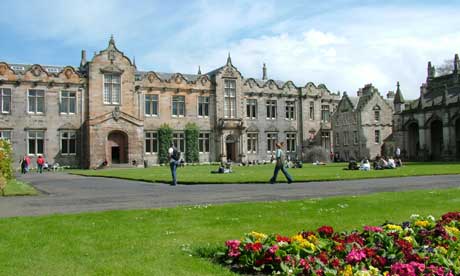
American accents mingle with Scots and posh English in the narrow streets of medieval St Andrews, a hotspot for US students, with 1,160 undergraduates and postgraduates. That’s more than one-seventh of the university’s entire student population.
Rows are forecast across breakfast tables this morning as parents try to persuade teenage children that their English exams are more important than the X Factor.
Scottish heads are furious that the ITV show scheduled its first auditions for 10,000 hopefuls in Hampden Park football stadium yesterday, the day before the Scottish equivalent of GCSE English. The second round, involving thousands of hopefuls, is due to take place today in the same venue.
The rector of Dingwall Academy, Graham Mackenzie, spoke for many when he said: “This is appalling. I have seen a copy of the letter the children have been sent. In big bold letters, it congratulates them for being selected. It tells them this is their first step on the road to stardom and that this decision may change their lives. It also tells them to rehearse and practise to impress the judges.
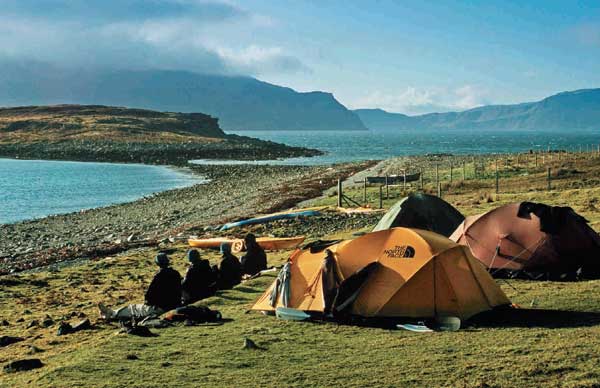
The smile on the boy’s face said it all. Sailing single-handed across a sea loch would be a special moment for any child. But for Reggie Fernie, who uses a wheelchair, it was an adventure he never thought he would have.
It was a moment to treasure for the staff at Carrongrange special school, too. The school is pursuing the new freedoms offered by Scotland’s curriculum for excellence to work with other children’s services in the area to radically extend its outdoor programme for pupils with special needs. Seeing the effect has been an education, says the head, Gillian Robertson.
As developers plan to make Scotland’s capital’s 15 per cent bigger, city architects draw up their own bid to save its cultural soul
A massive redevelopment of Edinburgh’s waterfront which will increase the size of the city by almost 15 per cent is attracting widespread opposition.
The last and biggest phase of the project, turning almost 300 acres of docks into 16,000 homes, is expected to get outline planning permission in July. But critics are mounting a last-ditch attempt to get the project ‘called in’ for scrutiny by the Scottish government.
TAKING five children canoeing in France was always going to be an adventure. The polyglot Dutchman who is supplying our gear seems a good man to ask for advice on the route but he gives a shrug that is almost more Gallic than the real thing. “I wouldn’t go that way, ” he says. “It is just flat water. It is very boring – go down there. There is white water. Don’t worry, it is very safe.”
The Guardian
Friday February 29, 2008
Archie Hind, who has died aged 79, was the author of just one published novel, The Dear Green Place. A passionate account of a working-class man’s desire to become a writer, published in 1966, it is one of the finest to come out of 20th-century Glasgow and won four prizes, including the Guardian fiction award.
WHAT makes an apple fall from a tree? Newton knew the answer to that one – gravity – but even he would have had trouble predicting the exact date that a particular fruit would hit the ground.
“I was called in to see the teacher just a few days after my son Alex started school. The teacher said he wouldn’t sit at his desk. We had just suffered a sudden bereavement in the family. I tried to explain how he might be feeling, but she didn’t seem to want to know.”
For Anne Cranston, this was the beginning of several years of difficult consultations. “It’s very upsetting, hearing teachers being negative about your child. I would sit on the little chairs in the classroom and I wouldn’t know what to say.”
Oh, the scaldies call us tinker dirt and they sconce our bairns in school, But who cares what a scaldy says, for scaldy’s but a fool. They never hear the yorlin’s song, nor see the flax in bloom, For they’re aye cooped up in houses when the yellow’s on the broom.
READERS of travellers’ tales such as Betsy Whyte’s the Yellow on the Broom will be familiarwith the hardship and intolerance that Scotland ‘s gypsies have suffered. It’s easy to assume that those days are long gone. But for one gypsy family, it appears that little has changed.
“I went to the north pole this morning. We created a whole world using our imagination cream. We always need that for maths lessons. Everyone was on a sled. We calculated how much we all weighed and how many huskies it would take to pull us and how long it would take us to get there. It was fun.”
Rubbing herself with imagination cream may be all in a day’s work for theatre professional Fiona Rennie, but it is a new departure for the maths department of Buchie high school in Moray. The project, which is designed to “sprinkle a little magic” over what can be a dry subject, is a product of Scotland’s cultural coordinators, an invention of the previous Labour administration that went along with a theory of the “cultural entitlement” of all citizens. Both, however, are now being binned by the current SNP Scottish government.
“Don’t head off into town and spend a fortune on weekend-priced drinks, when you can come to your very own union instead. New this term: fantastic, better-than-ever drinks promotions – trebles+mixer (incl Red Bull) for £2.50 – new DJ line-up, stilt-walking, stage dancers and fire performers.”
This rather desperate promotion for the Newcastle student union bar tells a story. Those who look back fondly on an old-style university education may remember passing long hours in a union bar offering perhaps little more in-house entertainment than hard chairs, cheap beer and intense conversation.
Fire dancers forsooth, older readers may shriek, surprised at the efforts that have to be made to lure students into the bars that are provided for them nowadays.
ROBERT was a student with a bright future as a musician, but that was before he fell from a mountain 14 years ago. Since his rock-climbing accident, he can’t move around so well and few people can understand what he is saying.
No sign of open diagnosis on children’s hospital
FAST forward to 2012. You might be aware that this is the year London hosts the Olympics. It is also when the east of Scotland ‘s new children’s hospital is scheduled to open its doors. A shining palace of health, it will be a place where those who come to be treated will be children first and sick second.
Perhaps it will also have a shiny, blue, two-storey helter-skelter like London ‘s new children’s hospital, the Evalina, which was recently visited by a focus group from Edinburgh.
“We don’t want a cheap box, we want something that is really outstanding, that has a wow factor, ” says consultant paediatric surgeon Bill Manson.
THE SCOTTISH government has ruled out a last-minute intervention to stop the expansion of Europe’s largest quarry, Glensanda.
Tomorrow Highland Council will formally approve the extraction of an additional 400 million tonnes of aggregate, making the superquarry one of the three or four largest in the world.
Campaigners had built their hopes on the SNP government preventing mountain tops being removed from Morvern and blasted into aggregate for building roads in the south of England. The John Muir Trust, named after the pioneering conservationist, is backing locals who are “outraged” that no independent inquiry has been carried out into the expansion and that it has been left to the council to make a decision.
“If you are selling off your sociology textbooks to a second-hand dealer, you are probably better to say they are cultural studies. You will get a better price.”
This admission by William Outhwaite, a professor of sociology at Sussex University, is an indication of the sliding status of the subject. Once the most glamorous of subjects, the leftwing equivalent of a Swiss finishing school, sociology flourished in the second half of the last century, particularly at the postwar universities and the polytechnics. But the wave of expansion of higher education is leaving sociology departments stranded, and many report that it is more difficult to attract undergraduates.
‘I REMEMBER as a child doing the washing with my grandmother. She had one of those old twin-tubs and we would haul the washing out with poles and put it through a mangle and hang it up. It was heavy work but I loved it. I liked it because it gave me a sense of satisfaction but also because I was having a great time with my gran.”