Wee Willie Winkie – the Real Story – Excerpt 2 from ‘The Guid Scots Tongue’
This is the second excerpt from Robert Kemp’s 1950 series of radio broadcasts about the Scots language. At a school, our scholar of Scots – Jean – converses with a…

This is the second excerpt from Robert Kemp’s 1950 series of radio broadcasts about the Scots language. At a school, our scholar of Scots – Jean – converses with a…
Excerpt from a radio series about the Scots language by Robert Kemp
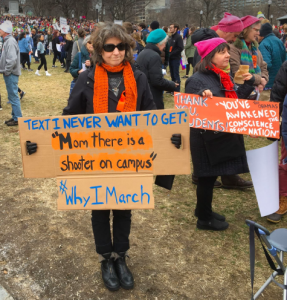
Boston, March 24. Her voice breaking and shaking with anger, a survivor of the massacre at Florida’s Marjory Stoneman Douglas High School addressed the crowd on Boston Common; “We are not special, we are not particularly articulate”. Leonor Munoz’ message was that she was an ordinary teenager at an ordinary school on an ordinary day and that what happened to her could happen in any high school on any main street in any town in America. The fun and anticipation of a teenage Valentine’s Day – she said a little about that – ended when she went outside in response to a fire alarm to be told “Code Red: Run”. Leonor’s older sister Beca, a student at Northeastern University spoke too – she received a text from her sister that day saying “Active Shooter on Campus – Do Not Call”. For the crowd of thousands on a grey end-of-winter afternoon clustered around the Common, straining to hear the speeches, that is the text, as one mother’s handmade sign said, that nobody ever wants to receive. Everyone can relate to what is becoming an all-too-ordinary story. Teacher and former Marine Graciela Mohamedi told the crowd: “The opposition will call you snowflakes. But do you know what in Massachusetts we call thousands upon thousands of snowflakes rising on a wind of change? We call that a blizzard!’
Feb 28, 2018 – Boston. A former spy chief discusses Brexit. At Harvard’s school of government today, a lunchtime talk “Brexit’s Impact on the Future of International Security: A Conversation…
Imagine the two main parties of the British political system as two massive, heavy velvet curtains, a little moth-eaten, frayed. People are swinging on them and they are on the…
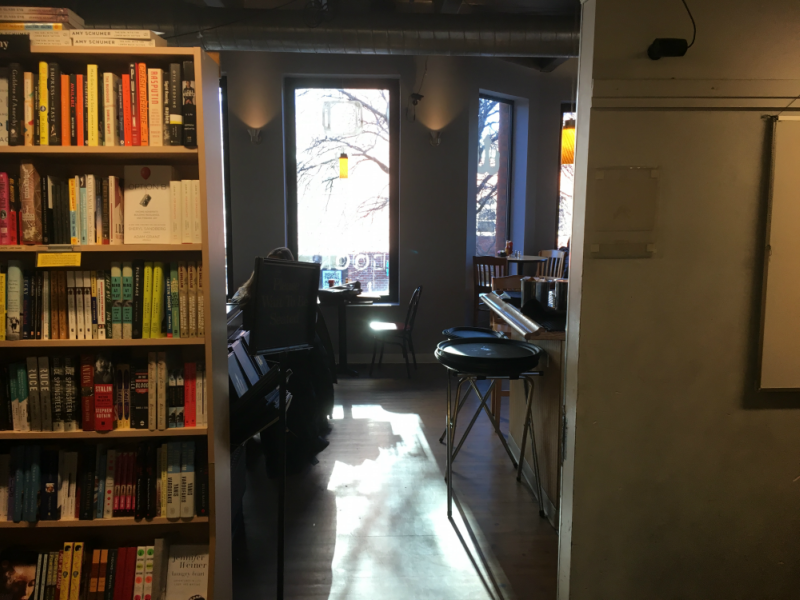
Like other cities, Boston has many fewer independent bookshops than it once did. But there is one still standing among the boutiques of Newbury St, the smartest shopping street in town. Trident Booksellers has been there since 1984 and it seems to be still going strong.
At the end of 2017, my two home countries of the USA and Scotland are going in different directions in terms of tax reform. While the Scottish government is introducing more progressive taxes, the US is in the process of passing a controversial bill which cuts tax bigly for the rich.
Paul Wiessmeyer, who I wrote about this week on my “Boson Blog” contacted me about this family of refugees who are hoping to be reunited Monday. On DECEMBER 18, a Turkish Airlines flight 1525 that originated in the Sudan, will land in Dusseldorf, Germany at 13.05 PM. Among the passengers will be an Eritrean mother and her four young sons, recently granted permission to leave a Sudanese refugee camp to be reunited with their father Asmerom in Germany. This will be the first time they see each other in four years.
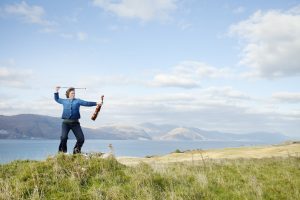
There is a point in Mairi Campbell’s one-woman coming of age show Pulse where in an attempt to convey inarticulable emotion she writhes on the ground speaking gibberish. As she plays wild notes on her viola, animated scribbles light up the backdrop. Struggling with unrequited love for a priest, travelling alone in Mexico, in a culture she doesn’t understand, she has lost her way.
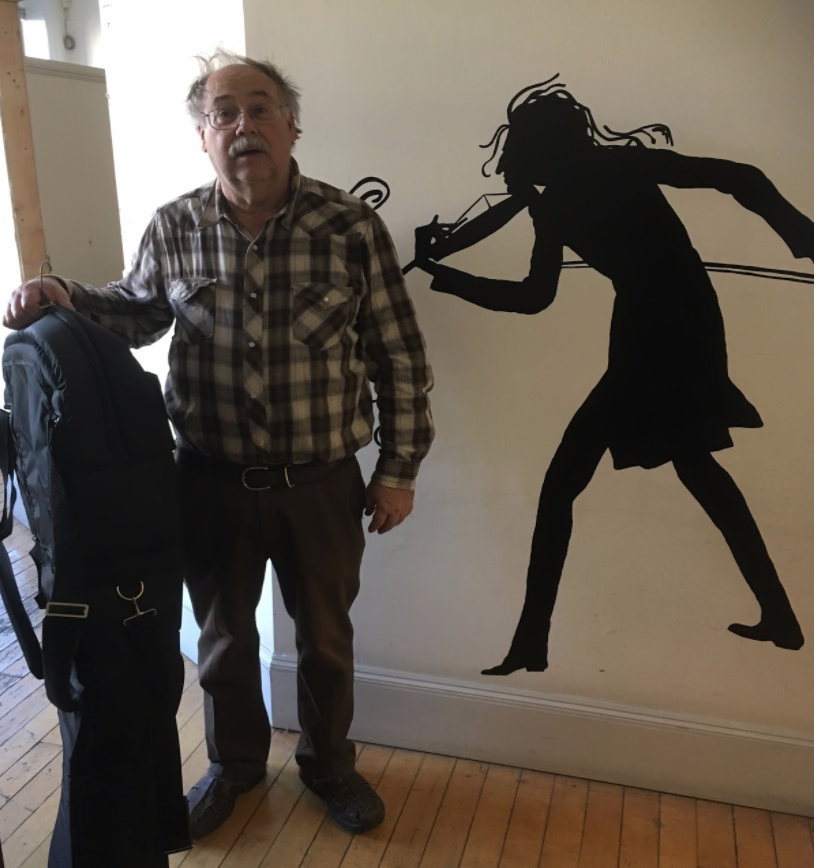
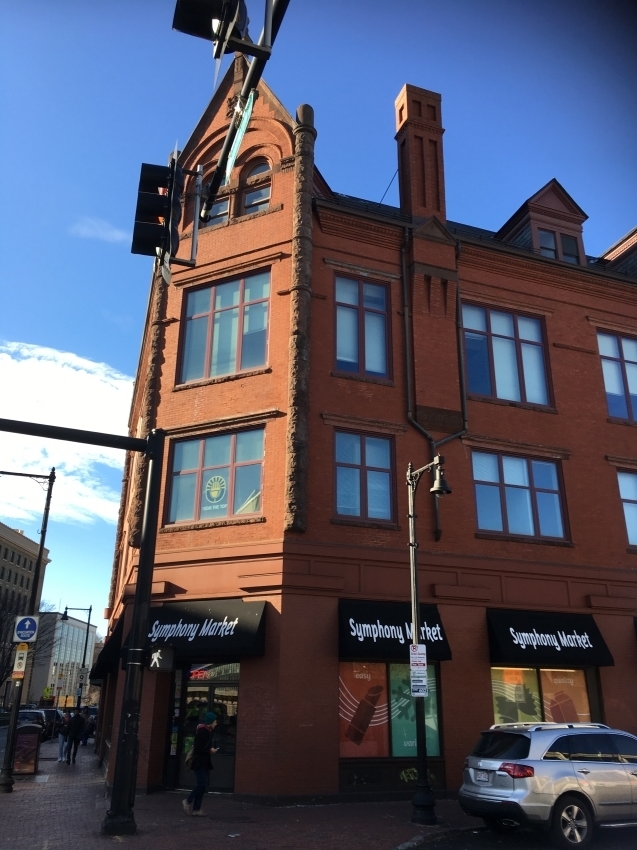
A middle-aged man stands at a street corner waiting for his customers, wrapped up against the December chill. Master violinmaker Paul Wiessmeyer, along with several others, has been summarily evicted from a Harry-Potter-ish building in Boston’s music quarter.
The place, 295 Huntington Ave was easy to miss – you could walk past the unprepossessing entrance without guessing what was inside up the narrow staircase. Built as a hotel a century or so ago, it became a cultural ecosystem about 60 years ago. There was a symbiosis in its corridors where music students, performers and media types rubbed shoulders.
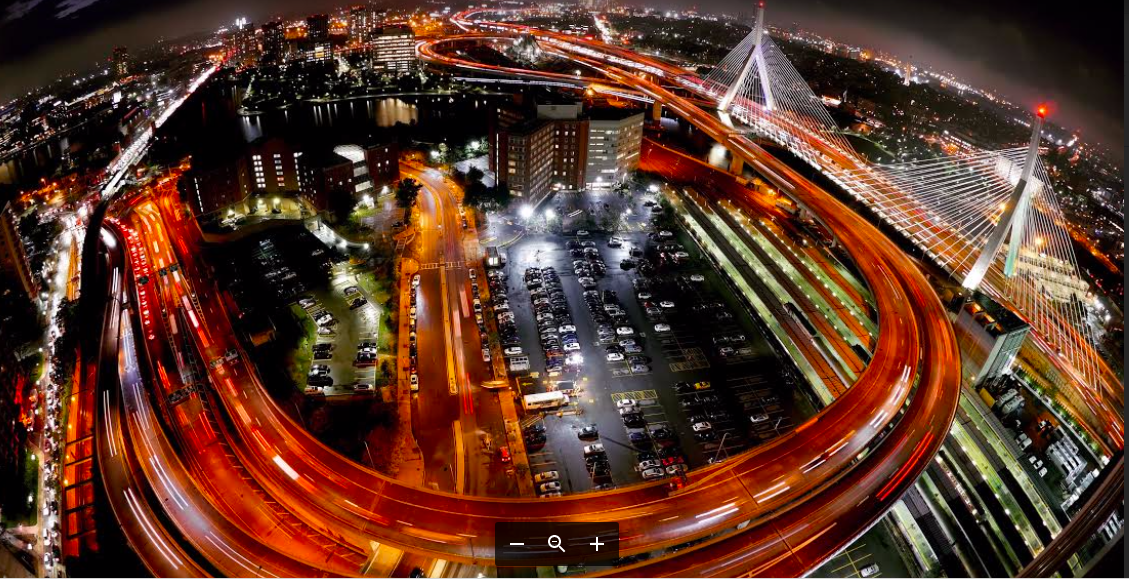
Photo: Rob Bruce and William Bruce
This is a think piece about atonomous cars. it is written as a dialogue between three characters. Jim is visiting old friends Roy and Elspeth in their Boston apartment after a conference. Roy is a neoist, enthusiastic about new develoments. Elspeth is a Luddite. Jim is an environmentalist who loves trains.
In the corner apartment overlooking the city, Elspeth was unpacking a Whole Foods bag, in between flipping a clean towel onto the bathroom rail and kicking her gym shoes under the sofa. She greeted them at the door. “Jim! How lovely.”
After Jim had admired the view – two windowed walls overlooking the nexus of highways leading commuters out of the city, they sat at the breakfast bar and shared a bottle of wine, chewing over old times, while Roy and Elspeth produced dinner, chopping vegetables for a salad, frying fish.
After dinner, the argument began. Moving to the sitting area of the tiny living room area of the Webster’s apartment, set like an eyrie above the city’s nexus of highways, they surveyed the jammed outward-bound traffic across three lines of the interstate.
This month marks 50 years since the death of the playwright Robert Kemp. To commemorate this, I have created a memoir which is downloadable here as a PDF, readable on Kindle or any other device. This is a work in progress – a corrected and finalised version will appear soon. Comments and contributions welcome via Facebook or Twitter @jackiekemp.
Earlier this year when writing for the Guardian about the ongoing political row around Scotland’s performance in the international comparison table known as PISA, I visited Currie High School on the outskirts of Edinburgh and spoke to a group of young people who were gathered in the lab to discuss their experience of science at school with me. After the chat, where the students were generally enthusiastic and complimentary about their science lessons, I asked if anyone would consider becoming a High School Science teacher. Silence. Why not? “I just can’t stand children, Miss” answered one bright spark. After a pause, another offered the reason that it would be just “too much hard work” – and there was a chorus of agreement with this sentiment.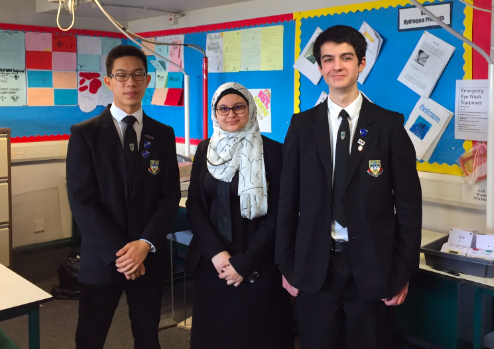 (some students from Currie)
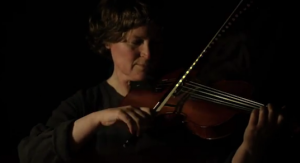
Scots musical artist Mairi Campbell is in Boston to perform in WGBH Celtic Sojourn at the Cutler Majestic and touring. On Dec 2 at the Shea Theater in Turner Falls she will perform ‘Pulse’, a musical drawn from her own life which she performed throughout the 2017 Edinburgh Fringe, gaining some five star reviews.
Not many musicians could hope to fill a theatre with a one-woman experimental musical about their own lives. But Mairi Campbell’s ‘Pulse’ in which she acts, sings, plays the fiddle and dances the story of her own musical coming of age has been touring Scotland for the last two years, showcasing the best of modern Scots culture at Celtic Connections in 2016 and at the Edinburgh Fringe in 2017. Mairi is an old friend of mine and below is a piece I wrote about the show at its inception in 2015.
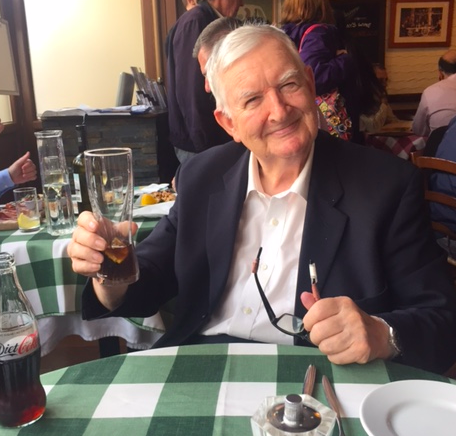
The theme of the 70th Edinburgh International Festival this year is remembering the ‘Spirit of 47’. Among the audience is at least one faithful festival-goer who was there at the start – my uncle David Kemp. Here are some of David’s reminiscences of his many Festivals, stretching back to those post-war years when the colour and beauty of art returned to a traumatised world.
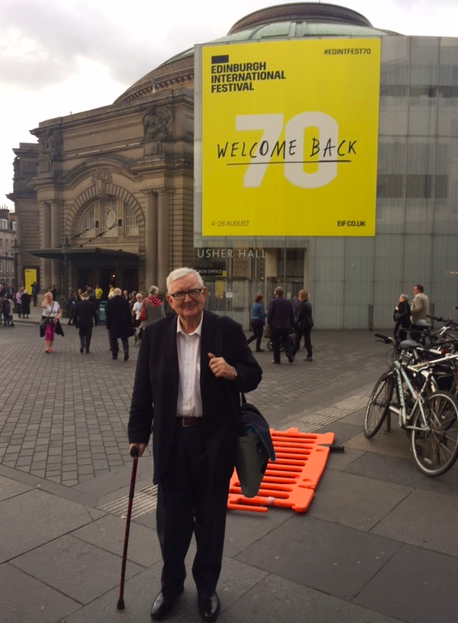
David Kemp outside the Usher Hall, Edinburgh before the Mariinsky/ RSNO concert on 23/08/2017
A poem about encountering Rembrandt’s work on different occasions, in London, Amsterdam and Boston
The summer after leaving for Uni They all came back, trailing clouds Of crazy hair and bad tattoos. The brought us new words: “Heteronormative”, “Post-democracy” Changing all, like snowflakes, which, When…
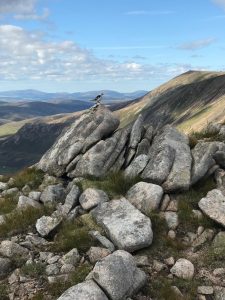
A Snow Bunting looks across a mountain landscape with little sign of human habitation. This photograph was taken by my husband Rob Bruce on our Highland holiday this year, on land owned by a reclusive Malaysian businessman.